 New Naqqali
- Lines
- P043.L01–P044.L06
- Where
- room (house outside the city)
- Who
- narrator; the dead girl
- Kind
- reflection · Optional scene
Who and what is here
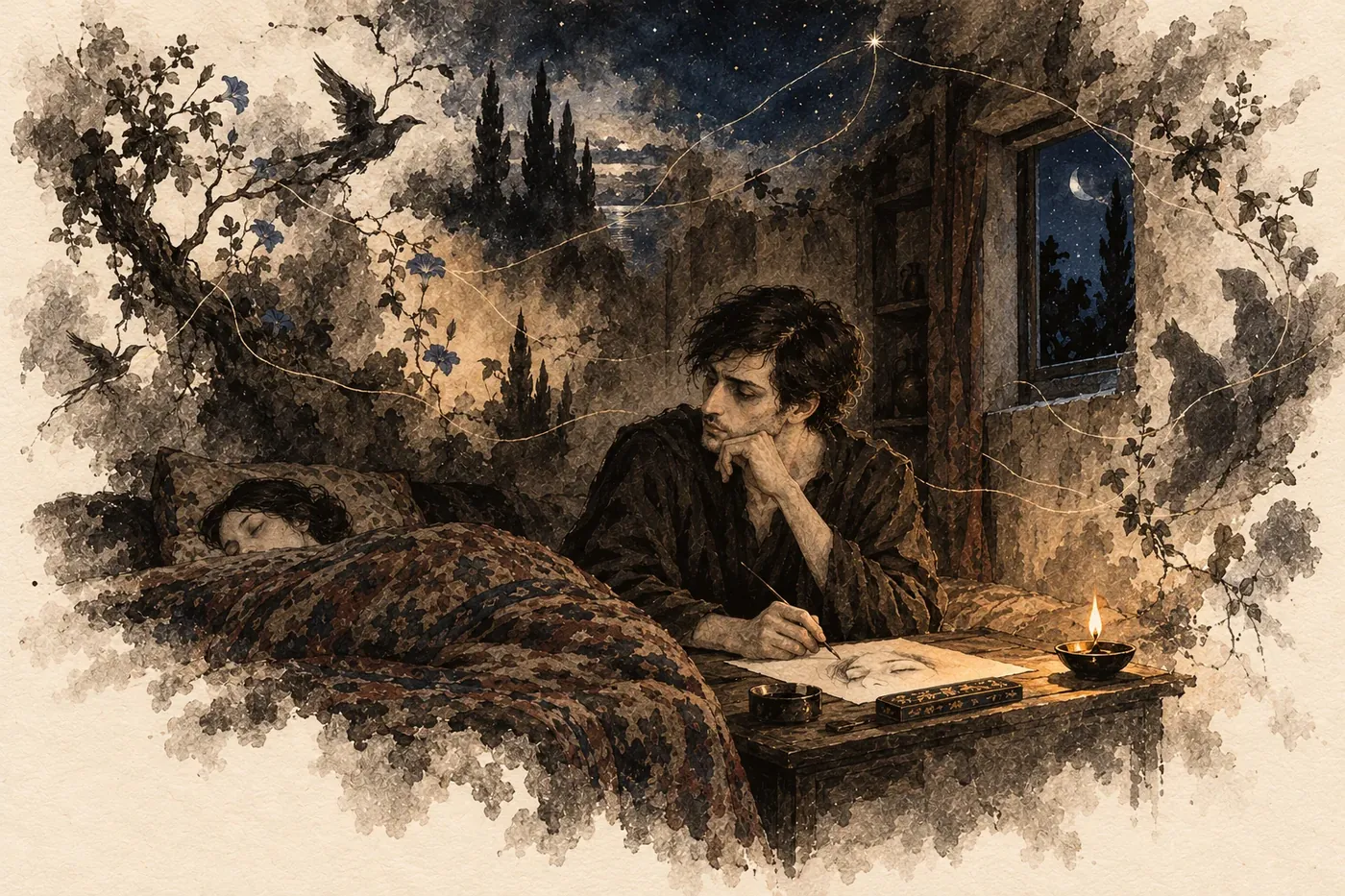
For the illustration The room dissolving into threads that connect the narrator to stars, plants and shadows.
The text of the scene
Sadegh Hedayat’s Persian beside our literal English, line by line.
در این لحظه افکارم منجمد شده بود، یک زندگی منحصربهفرد عجیب در من تولید شد.
At that moment my thoughts had frozen; a strange and singular life arose within me.
چون زندگیم مربوط بههمهٔ هستیهایی میشد که دور من بودند، بههمهٔ سایههایی که در اطرافم میلرزیدند
For my life became connected to all the beings around me, to all the shadows trembling around me,
و وابستگی عمیق و جداییناپذیر با دنیا و حرکت موجودات و طبیعت داشتم و بهوسیلهٔ رشتههای نامرئی جریان اضطرابی بین من و همهٔ عناصر طبیعت برقرار شده بود.
and I had a deep and inseparable bond with the world and the movement of beings and nature, and by invisible threads a current of agitation had been established between me and all the elements of nature.
من قادر بودم بهآسانی بهرموز نقاشیهای قدیمی، بهاسرار کتابهای مشکل فلسفه، بهحماقت ازلی اشکال و انواع پی ببرم؛
I was able easily to grasp the symbols of old paintings, the secrets of difficult philosophical books, the primordial stupidity of forms and kinds;
زیرا در این لحظه من در گردش زمین و افلاک، در نشو و نمای رستنیها و جنبش جانوران شرکت داشتم،
because at that moment I participated in the turning of the earth and heavens, in the growth of plants and movement of animals;
گذشته و آینده، دور و نزدیک، با زندگی احساساتی من شریک و توأم شده بود.
past and future, far and near, had become joined and mingled with my emotional life.
در اینجور مواقع هرکس بهیک عادت قوی زندگی خود، بهیک وسواس خود، پناهنده میشود:
At times like this everyone takes refuge in a strong habit of their life, in an obsession of their own:
عرقخور میرود مست میکند، نویسنده مینویسد، حجار سنگتراشی میکند
the drinker goes and gets drunk, the writer writes, the stonecutter carves stone,
و هرکدام دق دل و عقدهٔ خودشان را بهوسیلهٔ فرار در محرک قوی زندگی خود خالی میکنند.
and each empties out their pent-up bitterness and complexes by escaping into the powerful driving force of their life.
و در این مواقع است که یکنفر هنرمند حقیقی میتواند از خودش شاهکاری بهوجود بیاورد.
And it is at such times that a true artist can bring forth a masterpiece.
ولی من! من که بیذوق و بیچاره بودم، یک نقاش روی جلد قلمدان، چه میتوانستم بکنم؟
But I! I, who was talentless and wretched, a painter of pen-case covers—what could I do?
با این تصاویر خشک و براق و بیروح که همهاش بهیک شکل بود چه میتوانستم بکشم که شاهکار بشود؟
With these dry, glossy, soulless pictures, all of the same form, what could I draw that would become a masterpiece?
اما در تمام هستی خودم ذوق سرشار و حرارت مفرطی حس میکردم، یکجور ویر و شور مخصوصی بود،
But throughout my whole being I felt overflowing inspiration and excessive heat, a particular kind of urge and excitement;
میخواستم این چشمهایی که برای همیشه بسته شده بود روی کاغذ بکشم و برای خودم نگه دارم.
I wanted to draw on paper those eyes that were closed forever and keep them for myself.
این حس مرا وادار کرد که تصمیم خود را عملی بکنم. یعنی دست خودم نبود.
This feeling forced me to carry out my decision. That is, it was not under my control.
آنهم وقتی که آدم با یک مرده محبوس است. همین فکر، شادی مخصوصی در من تولید کرد.
And this when one is shut in with a corpse. This very thought produced a particular joy in me.
← Scene 12: Cold hair: the dead girl and the mandrake embraceScene 14: Drawing the corpse by candlelight →