 New Naqqali
- Lines
- P044.L07–P047.L03
- Where
- room (house outside the city)
- Who
- narrator; the dead girl
- Kind
- action · Optional scene
- Echoes
- Scene 3: The house among ruins and the pen-case motif
Who and what is here
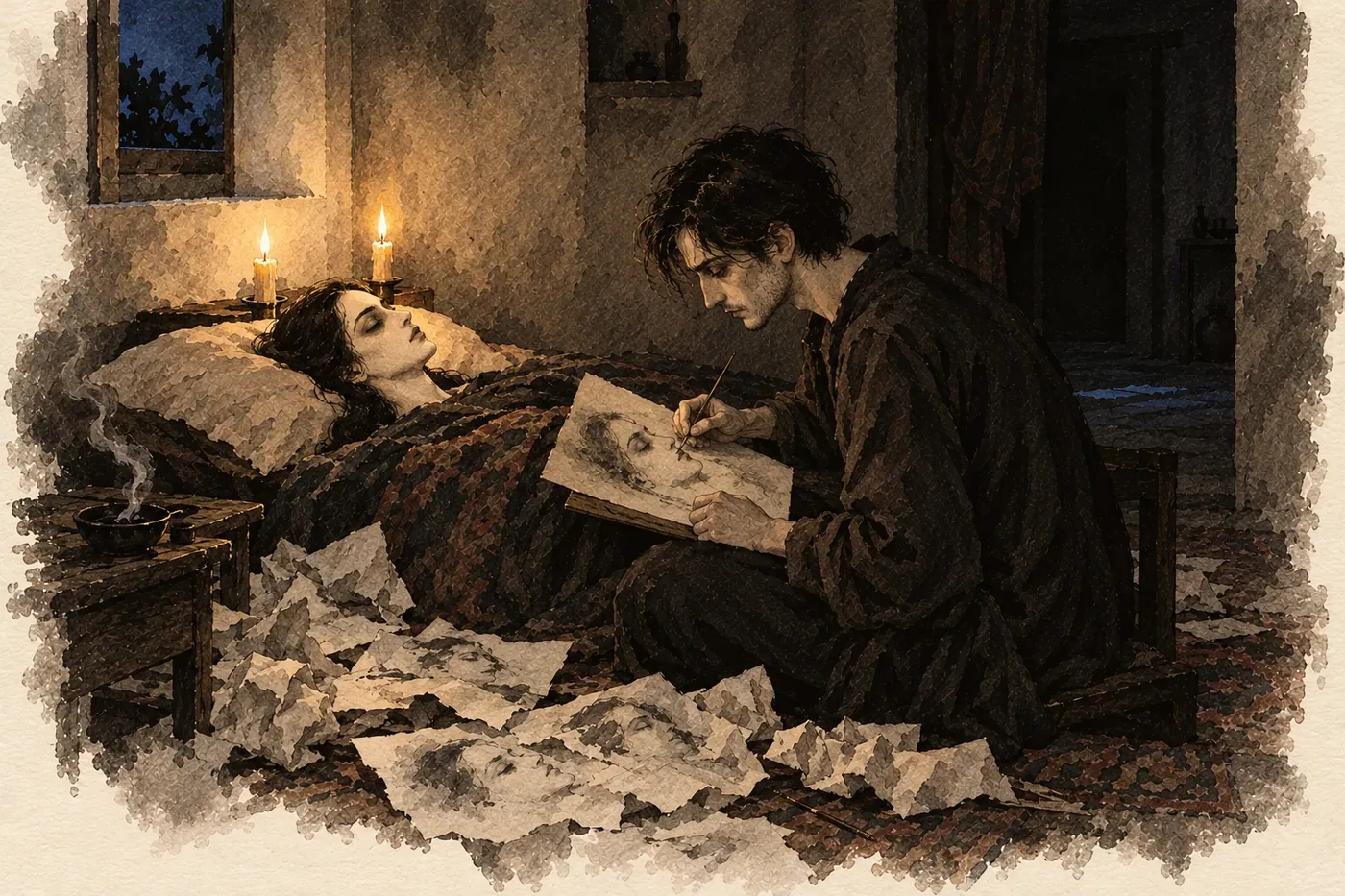
For the illustration Two candles over a dead woman's head; the painter at her bedside, torn sheets around him.
The text of the scene
Sadegh Hedayat’s Persian beside our literal English, line by line.
بالاخره چراغ را که دود میکرد خاموش کردم، دو شمعدان آوردم و بالای سر او روشن کردم،
At last I put out the lamp, which was smoking, brought two candlesticks, and lit them above her head;
جلو نور لرزان شمع حالت صورتش آرامتر شد و در سایهروشن اطاق حالت مرموز و اثیری بهخودش گرفت.
in the trembling candlelight the expression of her face grew calmer and in the half-light of the room took on a mysterious, ethereal aspect.
کاغذ و لوازم کارم را برداشتم، آمدم کنار تخت او ـ چون دیگر این تخت مال او بود ـ
I took my paper and working materials and came beside her bed—for the bed now belonged to her—
میخواستم این شکلی که خیلی آهسته و خرده خرده محکوم به تجزیه و نیستی بود،
I wanted this form that very slowly, little by little, was condemned to decomposition and nonexistence,
این شکلی که ظاهراً بیحرکت و بهیک حالت بود سرفارغ از رویش بکشم،
this form which was apparently motionless and in one position, to draw from it at leisure,
روی کاغذ خطوط اصلی آنرا ضبط بکنم، همان خطوطی که از این صورت در من مؤثر بود انتخاب بکنم.
to record its principal lines on paper, to select those very lines of this face that affected me.
نقاشی هرچند مختصر و ساده باشد ولی باید تأثیر بکند و روحی داشته باشد.
A drawing, however slight and simple it may be, must have an effect and possess a soul.
اما من که عادت به نقاشی چاپی روی جلد قلمدان کرده بودم حالا باید فکر خودم را بکار بیندازم و خیال خودم،
But I, who was accustomed to printed-looking painting on pen-case covers, now had to set my own thought and imagination to work,
یعنی آن موهومی که از صورت او در من تأثیر داشت پیش خودم مجسم بکنم،
that is, to envision for myself the phantom impression of her face that affected me,
یک نگاه به صورت او بیندازم، بعد چشمم را ببندم و خطهایی که از صورت او انتخاب میکردم روی کاغذ بیاورم
to cast a glance at her face, then close my eyes and put upon paper the lines I selected from her face,
تا به این وسیله با فکر خودم شاید تریاکی برای روح شکنجهشدهام پیدا بکنم.
so that by this means, through my own thought, I might perhaps find an opium for my tormented soul.
بالاخره در زندگی بیحرکت خطها و اشکال پناه بردم.
At last I took refuge in the motionless life of lines and shapes.
این موضوع با شیوهٔ نقاشی مردهٔ من تناسب خاصی داشت. نقاشی از روی مرده ـ اصلاً من نقاش مردهها بودم.
This subject had a particular suitability to my dead style of painting. Painting from a corpse—indeed, I was a painter of the dead.
ولی چشمها، چشمهای بستهٔ او، آیا لازم داشتم که دوباره آنها را ببینم؟
But the eyes, her closed eyes—did I need to see them again?
آیا بهقدر کافی در فکر و مغز من مجسم نبودند؟
Were they not sufficiently formed in my thoughts and brain?
نمیدانم تا نزدیک صبح چندبار از روی صورت او نقاشی کردم!
I do not know how many times, until nearly morning, I drew from her face!
ولی هیچکدام موافق میلم نمیشد. هرچه میکشیدم پاره میکردم ـ
But none was to my liking. Whatever I drew, I tore up—
از این کار نه خسته میشدم و نه گذشت زمان را حس میکردم.
I neither grew tired of this work nor felt the passage of time.
← Scene 13: Communion with all beingsScene 15: The eyes open at dawn →