 New Naqqali
- Kind
- Person
- Persian
- راوی
- Also called
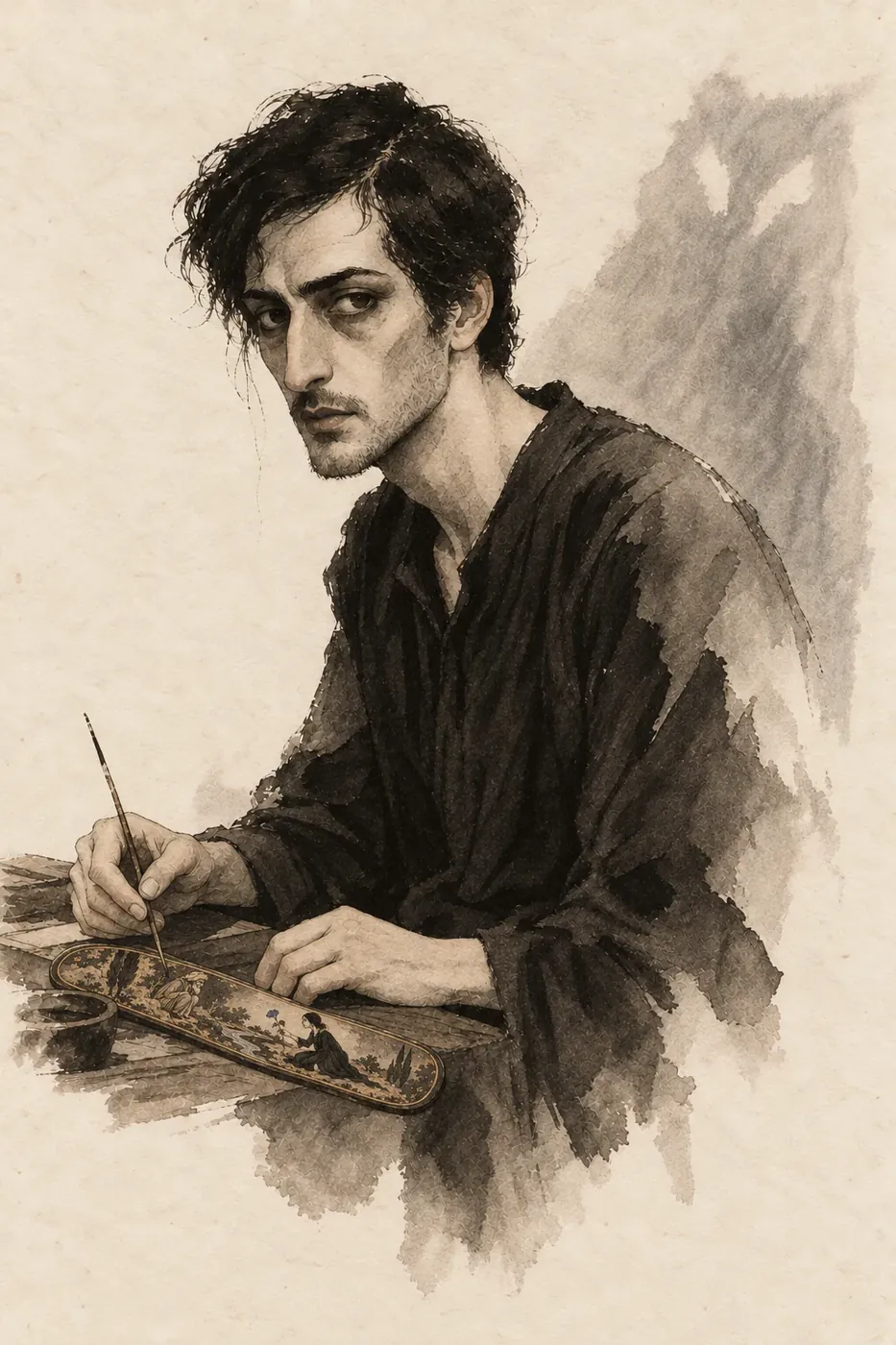
- نقاش مردهها، نقاش روی جلد قلمدان
- Linked
- child of Bugam-Dasinursed by Naneh-Joonraised by The aunt (mother-in-law)husband of The harlot (the narrator’s wife)becomes The old junk dealerdouble of The narrator’s shadow
- First appears
- P011.L01
- Lines
- 31
- GNML id
ent_narrator
In the scenes
- Scene 2: A passing gleam; life within four wallsP007.L01–P011.L03
- Scene 13: Communion with all beingsP043.L01–P044.L06
- Scene 14: Drawing the corpse by candlelightP044.L07–P047.L03
- Scene 25: Her face on the jarP075.L01–P076.L06
- Scene 29: Wine of my life for the shadow's throatP085.L01–P093.L07
- Scene 35: The cobra ordealP102.L01–P104.L02
- Scene 36: The poisoned wine left as keepsakeP105.L01–P107.L05
- Scene 39: Procurer of her loversP111.L01–P113.L05
- Scene 43: The tomb-room and the harlot's nameP122.L01–P128.L02
- Scene 52: The nurse in the courtyard; prayers against deathP151.L01–P154.L04
- Scene 60: Shadow on the bathhouse wallP176.L01–P177.L03
- Scene 61: The picture on the pen case before himP178.L01–P178.L05
- Scene 62: Talking to the mirror under opiumP179.L01–P180.L10
- Scene 64: Buying the jar from the junk dealerP183.L01–P183.L06
- Scene 66: The harlot enters in all seven cosmeticsP187.L01–P188.L05
- Scene 70: The first night with the knife; the stolen shirtP195.L01–P195.L25
- Scene 74: The owl on the wallP202.L01–P204.L03
- Scene 75: 'Undo your neck-scarf': the last embraceP205.L01–P207.L25
- Scene 76: Her eye in his fist; the old man in the mirrorP208.L01–P209.L09
Where the text names them
تمام روز مشغولیات من نقاشی روی جلد قلمدان بود.
All day my occupation was painting on pen-case covers.
و شغل مضحک نقاشی روی قلمدان اختیار کرده بودم برای اینکه خودم را گیج بکنم، برای اینکه وقت را بکشم.
and I had adopted the ridiculous occupation of painting pen cases in order to stupefy myself, in order to kill time.
ولی من! من که بیذوق و بیچاره بودم، یک نقاش روی جلد قلمدان، چه میتوانستم بکنم؟
But I! I, who was talentless and wretched, a painter of pen-case covers—what could I do?
اما من که عادت به نقاشی چاپی روی جلد قلمدان کرده بودم حالا باید فکر خودم را بکار بیندازم و خیال خودم،
But I, who was accustomed to printed-looking painting on pen-case covers, now had to set my own thought and imagination to work,
این موضوع با شیوهٔ نقاشی مردهٔ من تناسب خاصی داشت. نقاشی از روی مرده ـ اصلاً من نقاش مردهها بودم.
This subject had a particular suitability to my dead style of painting. Painting from a corpse—indeed, I was a painter of the dead.
هر دوی آنها یکی و اصلا کار یک نقاش بدبخت روی قلمدانساز بود.
Both of them were one and the same, indeed the work of one wretched painter of pen cases.
هرکس دیروز مرا دیده، جوان شکسته و ناخوشی دیده است؛ ولی امروز پیرمرد قوزی میبیند که موهای سفید، چشمهای واسوخته و لب شکری دارد.
Whoever saw me yesterday saw a broken and sick young man; but today sees a hunchbacked old man with white hair, inflamed eyes, and a harelip.
چون در نتیجهٔ این آزمایش اختلال فکری برایش پیدا شده بوده، زندگی سابق خود را بهکلی فراموش کرده و بچه را نمیشناخته.
For as a result of this ordeal he had suffered a mental disturbance, had completely forgotten his former life, and did not recognize the child.
از این بهبعد من بهجز یک نانخور زیادی و بیگانه چیز دیگری نبودهام.
From then on I was nothing but an extra, alien mouth to feed.
یک بوگامداسی چه چیز بهتری میتواند بهرسم یادگار برای بچهاش بگذارد؟
What better thing could a Bogam-dasi leave as a keepsake for her child?
ولی جاکش بدبختی بودم که همهٔ احمقها به ریشم میخندیدند.
but I was a miserable procurer whom all the fools laughed at.
بالاخره من از کار و جنبش افتادم و خانهنشین شدم ـ مثل مردهٔ متحرک.
In the end I became incapable of work and movement and stayed at home—like a moving corpse.
And 19 more lines: see them all in the registry.