 New Naqqali
- Lines
- P151.L01–P154.L04
- Where
- his room; the courtyard
- Who
- narrator; Naneh-Joon; her daughter-in-law
- Kind
- reflection · Optional scene
Who and what is here
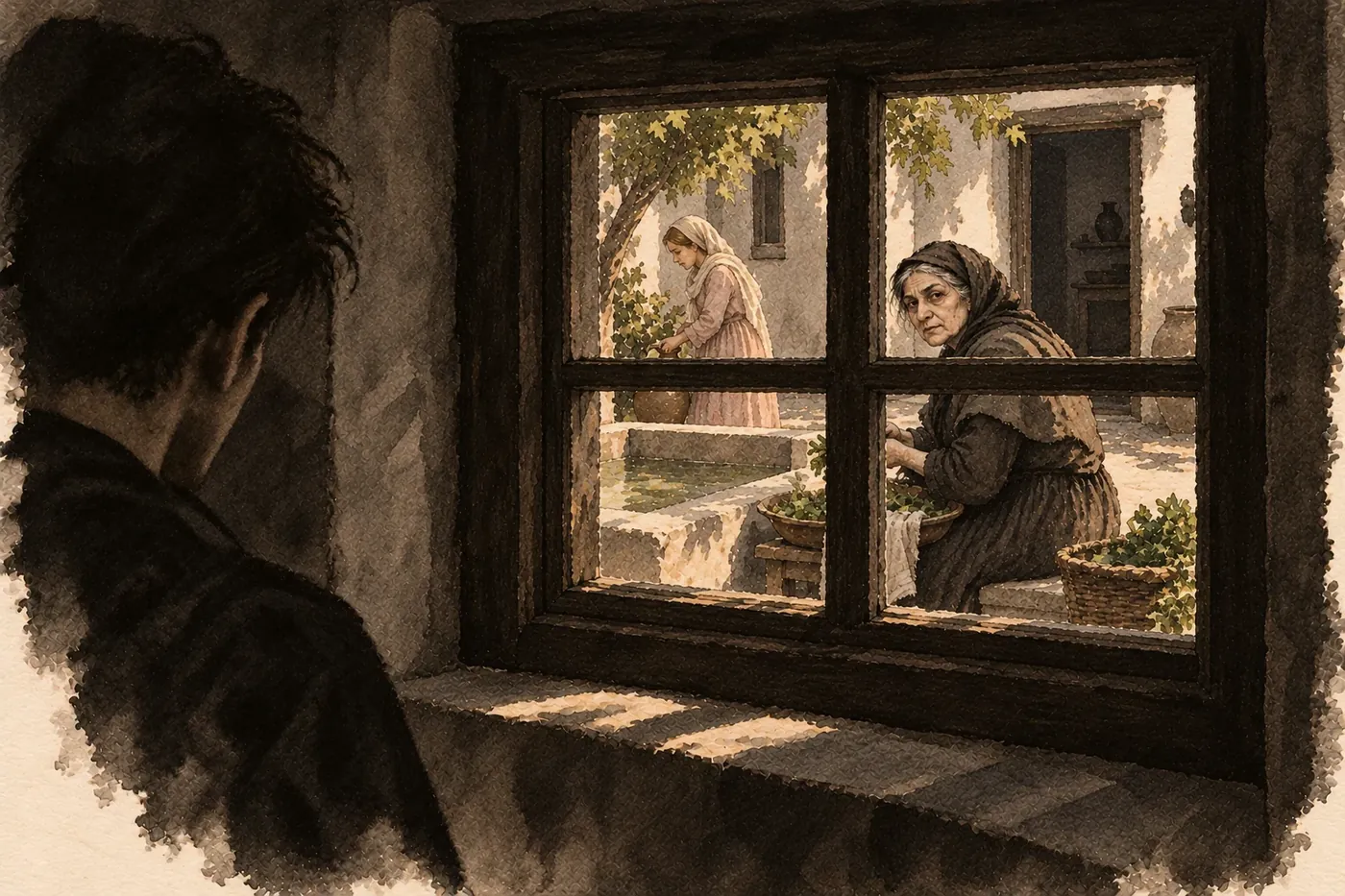
For the illustration The nurse cleaning vegetables in the sunlit courtyard, seen from a dark window.
The text of the scene
Sadegh Hedayat’s Persian beside our literal English, line by line.
از پای منقل که بلند شدم رفتم دریچهٔ رو به حیاطمان، دیدم دایهام جلو آفتاب نشسته بود سبزی پاک میکرد.
When I got up from beside the brazier, I went to the window facing our courtyard; I saw that my nurse was sitting in the sun cleaning vegetables.
شنیدم به عروسش گفت: «همهمون دلضعفه شدیم؛ کاشکی خدا بکشدش راحتش کنه.»
I heard her say to her daughter-in-law, “We have all grown faint at heart; if only God would kill him and put him at ease.”
گویا حکیمباشی به آنها گفته بود که من خوب نمیشوم. اما من هیچ تعجبی نکردم. چقدر این مردم احمق هستند!
Apparently the physician had told them that I would not get well. But I was not surprised at all. How foolish these people are!
همینکه یک ساعت بعد برایم جوشانده آورد چشمانش از زور گریه سرخ شده بود و باد کرده بود. اما روبروی من زورکی لبخند زد.
When, an hour later, she brought me a decoction, her eyes had become red and swollen from so much crying. But in front of me she forced a smile.
جلو من بازی درمیآوردند، آنهم چقدر ناشی؟ به خیالشان من خودم نمیدانستم! ولی چرا این زن به من اظهار علاقه میکرد؟ چرا خودش را شریک درد من میدانست؟
They were acting in front of me, and how clumsily! They imagined I did not know myself! But why did this woman show affection for me? Why did she consider herself a sharer in my pain?
یک روز به او پول داده بودند و پستانهای ورچروکیدهٔ سیاهش را مثل دولچه توی لپ من چپانیده بود. کاش خوره به پستانهایش افتاده بود!
One day they had given her money, and she had thrust her shriveled black breasts into my cheek like a small water bucket. If only canker had eaten her breasts!
حالا که پستانهایش را میدیدم عقم مینشست که آنوقت با اشتهای هرچه تمامتر شیرهٔ زندگی او را میمکیدم و حرارت تنمان در هم داخل میشده.
Now when I saw her breasts I felt disgust at the thought that then, with the fullest appetite, I had sucked the sap of her life and the warmth of our bodies had mingled.
او تمام تن مرا دستمالی میکرده، و برای همین بود که حالا هم با جسارت مخصوصی که ممکن است یک زن بیشوهر داشته باشد نسبت به من رفتار میکرد.
She used to handle my entire body, and for this reason even now she behaved toward me with a particular boldness that an unmarried woman might have.
به همان چشم بچگی به من نگاه میکرد، چون یک وقتی مرا لب چاهک سرپا میگرفته. کی میداند شاید با من طبق هم میزده مثل خواهرخواندهای که زنها برای خودشان انتخاب میکنند.
She looked at me with the same eyes as in childhood, because once she had held me upright at the edge of the little privy pit. Who knows, perhaps she had even rubbed [tribadically] with me, like the adopted sisters women choose for themselves.
حالا هم با چه کنجکاوی و دقتی مرا زیرورو و به قول خودش تروخشک میکرد.
Even now, with what curiosity and attention she turned me over and, as she herself put it, tended to my every need.
اگر زنم، آن لکاته به من رسیدگی میکرد، من هرگز ننهجون را به خودم راه نمیدادم، چون پیش خودم گمان میکردم دایرهٔ فکر و حس زیبایی زنم بیش از دایهام بود و یا اینکه فقط شهوت این حس شرم و حیا را برای من تولید کرده بود.
If my wife, that harlot, had cared for me, I would never have allowed Naneh-Joon near me, because I thought to myself that my wife's range of thought and sense of beauty were greater than my nurse's, or else that desire alone had produced this feeling of shame and modesty in me.
از این جهت پیش دایهام کمتر رودرواسی داشتم و فقط او بود که به من رسیدگی میکرد.
For this reason I felt less constraint before my nurse, and she alone was the one who cared for me.
لابد دایهام معتقد بود که تقدیر اینطور بوده، ستارهاش این بوده.
My nurse must have believed that fate had been this way, that this had been her star.
بعلاوه او از ناخوشی من سوء استفاده میکرد و همهٔ درد دلهای خانوادگی، تفریحات، جنگ و جدالها و روح سادهٔ موذی و گدامنش خودش را برای من شرح میداد و دل پری که از عروسش داشت مثل اینکه هووی اوست و از عشق و شهوت پسرش نسبت به او دزدیده بود، با چه کینهای نقل میکرد!
Besides, she took advantage of my illness and related to me all her family grievances, amusements, quarrels, and her own simple, spiteful, beggarly spirit; and with what rancor she related her resentment toward her daughter-in-law, as though the woman were her co-wife and had stolen from her the love and desire of her son!
باید عروسش خوشگل باشد! من از دریچهٔ رو به حیاط او را دیدهام، چشمهای میشی، موی بور و دماغ کوچک قلمی داشت.
Her daughter-in-law must be pretty! I had seen her through the window facing the courtyard; she had hazel eyes, fair hair, and a small, slender nose.
دایهام گاهی از معجزات انبیاء برایم صحبت میکرد، به خیال خودش میخواست مرا به این وسیله تسلیت بدهد. ولی من به فکر پست و حماقت او حسرت میبردم.
My nurse sometimes spoke to me of the miracles of the prophets; she imagined she could console me in this way. But I envied her lowly mind and stupidity.
گاهی برایم خبرچینی میکرد، مثلا چند روز پیش به من گفت که دخترم ـ یعنی آن لکاته ـ به ساعت خوب، پیرهن قیامت برای بچه میدوخته، برای بچه خودش. بعد مثل اینکه او هم میدانست به من دلداری داد.
Sometimes she brought me gossip; for example, a few days earlier she told me that her daughter—that harlot—was sewing a burial shirt for her own child at an auspicious hour. Then, as though she too knew, she offered me consolation.
گاهی میرود برایم از در و همسایه دوا درمان میآورد، پیش جادوگر، فالگیر و جامزن میرود، سر کتاب باز میکند و راجع به من با آنها مشورت میکند.
Sometimes she goes among the neighbors to obtain remedies for me, goes to sorcerers, fortune-tellers, and diviners, opens books for divination, and consults them about me.
چهارشنبه آخر سال رفته بود فالگوش، یک کاسه آورد که در آن پیاز، برنج و روغن خرابشده بود. گفت اینها را به نیت سلامتی من گدایی کرده و همه این گند و کثافتها را دزدکی به خورد من میداد.
On the last Wednesday of the year she had gone to listen for omens. She brought a bowl containing onions, rice, and spoiled oil. She said she had begged these things for my recovery, and secretly fed me all that filth and refuse.
فاصله به فاصله هم جوشاندههای حکیمباشی را به ناف من میبست ـ همان جوشاندههای بیپیری که برایم تجویز کرده بود: پر زوفا، ربسوس، کافور، پر سیاوشان، بابونه، روغن غاز، تخم کتان، تخم صنوبر، نشاسته، خاکهشیر و هزار جور مزخرفات دیگر...
From time to time she also bound the physician’s decoctions to my navel—the same wretched decoctions he had prescribed: hyssop, licorice extract, camphor, maidenhair fern, chamomile, goose fat, flaxseed, pine seed, starch, flixweed seed, and a thousand other absurdities...
چند روز پیش یک کتاب دعا برایم آورده بود که رویش یک وجب خاک نشسته بود. نه تنها کتاب دعا بلکه هیچ جور کتاب و نوشته و افکار رجالهها به درد من نمیخورد.
A few days ago she had brought me a prayer book upon which a handbreadth of dust had settled. Not only a prayer book, but no kind of book or writing or ideas of the rabble were of any use to me.
چه احتیاجی به دروغ و دونگهای آنها داشتم؟ آیا من خودم نتیجه یک رشته نسلهای گذشته نبودم و تجربیات موروثی آنها در من باقی نبود؟ آیا گذشته در خود من نبود؟
What need had I of their lies and pretenses? Was I not myself the result of a succession of past generations, and did their inherited experiences not remain in me? Was the past not within me?
ولی هیچوقت نه مسجد و نه صدای اذان و نه وضو و نه اخ و تف انداختن و دولا راست شدن در مقابل یک قادر متعال و صاحب اختیار مطلق که باید به زبان عربی با او اختلاط کرد در من تأثیری نداشته است.
But neither the mosque nor the call to prayer nor ablution nor spitting and bending down and straightening up before an almighty being possessed of absolute power, with whom one must converse in Arabic, had ever had any effect on me.
اگرچه سابق بر این وقتی سلامت بودم چند بار اجبارا به مسجد رفتهام و سعی میکردم که قلب خود را با سایر مردم جور و همآهنگ بکنم.
Although formerly, when I was well, I had gone to the mosque several times under compulsion and had tried to bring my heart into harmony with other people.
اما چشمم روی کاشیهای لعابی و نقش و نگار دیوار مسجد که مرا در خوابهای گوارا میبرد و بیاختیار به این وسیله راه گریزی برای خودم پیدا میکردم خیره میشد.
But my eyes would become fixed on the glazed tiles and designs upon the mosque walls, which carried me into pleasant dreams, and thus, involuntarily, I found a way of escape for myself.
در موقع دعا کردن چشمهای خودم را میبستم و کف دستم را جلو صورتم میگرفتم. در این شبی که برای خودم ایجاد کرده بودم مثل لغاتی که بدون مسئولیت فکری در خواب تکرار میکنند من دعا میخواندم.
While praying I closed my eyes and held my palms before my face. In this night I had created for myself, I recited prayers as one repeats words in a dream without mental responsibility.
ولی تلفظ این کلمات از ته دل نبود، چون من بیشتر خوشم میآمد با یک نفر دوست یا آشنا حرف بزنم تا با خدا ـ با قادر متعال! چون خدا از سر من زیاد بود.
But the utterance of these words was not from the bottom of my heart, because I preferred to speak with a friend or acquaintance rather than with God—with the Almighty! For God was too much for me.
زمانی که در یک رختخواب گرم و نمناک خوابیده بودم همه این مسائل برایم به اندازه جوی ارزش نداشت؛ و در این موقع نمیخواستم بدانم که حقیقتا خدایی وجود دارد یا اینکه فقط مظهر فرمانروایان روی زمین است که برای استحکام مقام الوهیت و چاپیدن رعایای خود تصور کردهاند، تصویر روی زمین را به آسمان منعکس کردهاند!
As I lay in a warm, damp bed, all these matters were not worth a grain of barley to me; and at that moment I did not wish to know whether a God truly existed, or whether he was merely a representation invented by earthly rulers to reinforce their divine status and exploit their subjects, projecting an image of the earth into heaven!
فقط میخواستم بدانم که شب را به صبح میرسانم یا نه؟ حس میکردم در مقابل مرگ، مذهب و ایمان و اعتقاد چقدر سست و بچگانه و تقریبا یک جور تفریح برای اشخاص تندرست و خوشبخت بود!
I wanted only to know whether I would survive the night until morning. I felt how frail and childish religion, faith, and belief were in the face of death—almost a kind of amusement for healthy and fortunate people!
در مقابل حقیقت وحشتناک مرگ و حالات جانگدازی که طی میکردم آنچه راجع به کیفر و پاداش روح و روز رستاخیز به من تلقین کرده بودند یک فریب بیمزه شده بود، و دعاهایی که به من یاد داده بودند در مقابل ترس از مرگ هیچ تأثیری نداشت.
In the face of the terrifying reality of death and the agonizing conditions I was passing through, what I had been taught about punishment and reward of the soul and the day of resurrection had become a tasteless deception, and the prayers I had been taught had no effect against the fear of death.
نه، ترس از مرگ گریبان مرا ول نمیکرد. کسانی که درد نکشیدهاند این کلمات را نمیفهمند.
No, the fear of death would not release its grip on me. People who have not suffered cannot understand these words.
به قدری حس زندگی در من زیاد شده بود که کوچکترین لحظه خوشی جبران ساعتهای دراز خفقان و اضطراب را میکرد. میدیدم که درد و رنج وجود دارد ولی خالی از هرگونه مفهوم و معنی بود.
My feeling of life had become so intense that the smallest moment of happiness compensated for long hours of suffocation and anxiety. I saw that pain and suffering existed, but they were devoid of any concept or meaning.
من میان رجالهها یک نژاد مجهول و ناشناس شده بودم، به طوری که فراموش کرده بودم که سابق بر این جزو دنیای آنها بودهام.
Among the rabble I had become an unknown, unrecognized race, so that I had forgotten that formerly I had belonged to their world.
چیزی که وحشتناک بود حس میکردم که نه زنده زنده هستم و نه مرده مرده؛ فقط یک مرده متحرک بودم که نه رابطه با دنیای زندهها داشتم و نه از فراموشی و آسایش مرگ استفاده میکردم.
What was terrifying was that I felt I was neither living as one alive nor dead as one dead; I was merely a moving corpse, having no connection with the world of the living and enjoying neither the oblivion nor the rest of death.
← Scene 51: The overturned soup; opium prescribedScene 53: Night window: call to prayer and drunken watchmen →