 New Naqqali
- Lines
- P122.L01–P128.L02
- Where
- room (house outside the city)
- Who
- narrator
- Kind
- reflection · Optional scene
Who and what is here
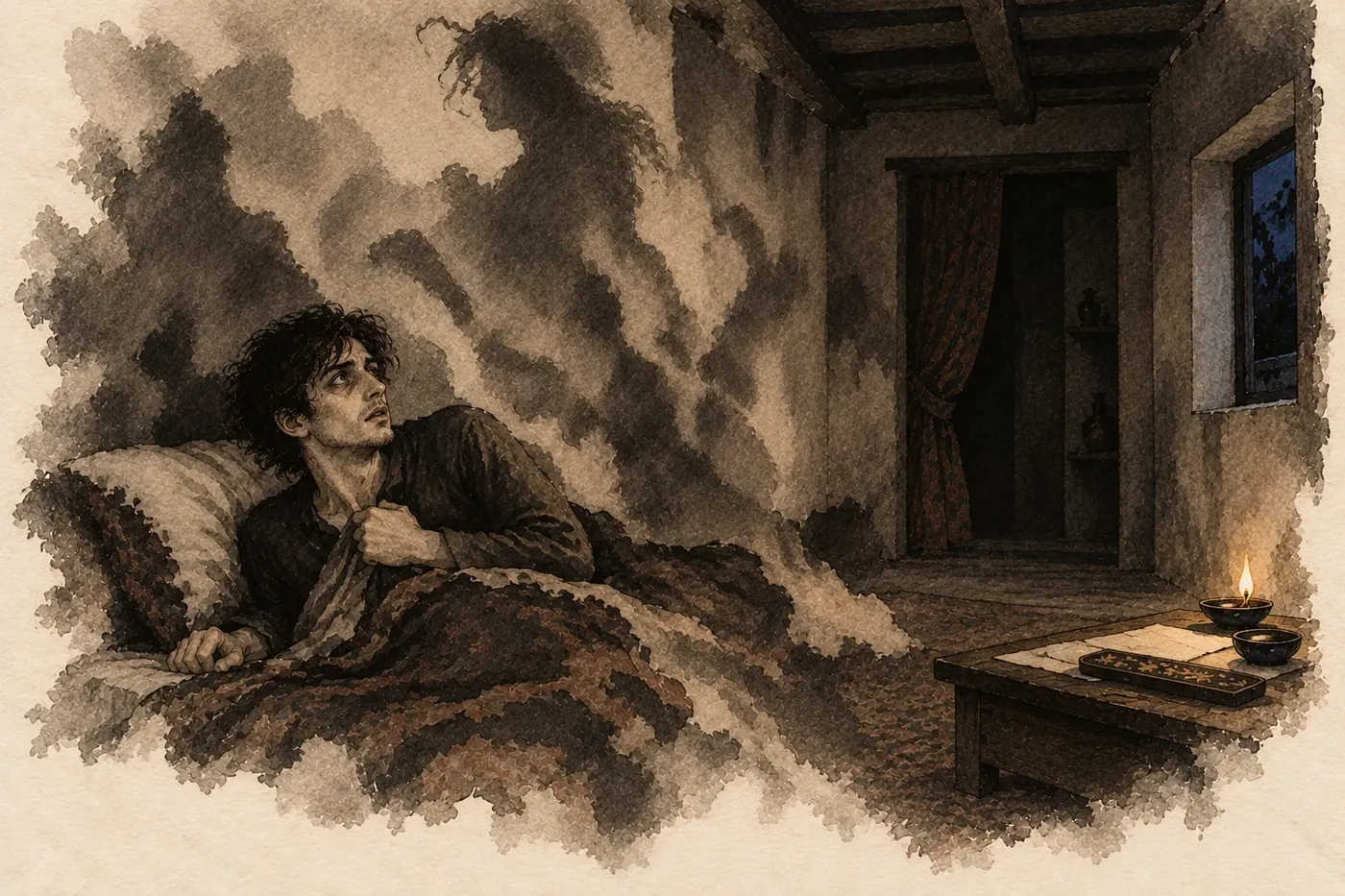
For the illustration A man in bed whose limbs seem to drift apart amid floating images.
The text of the scene
Sadegh Hedayat’s Persian beside our literal English, line by line.
در این اطاق که هر دم برای من تنگتر و تاریکتر از قبر میشد دائم چشم به راه زنم بودم؛ ولی او هرگز نمیآمد.
In this room, which each moment became narrower and darker than a grave for me, I was constantly waiting for my wife; but she never came.
آیا از دست او نبود که به این روز افتاده بودم؟
Was it not because of her that I had come to this condition?
شوخی نیست، سه سال، نه، دو سال و چهار ماه بود، ولی روز و ماه چیست؟
It is no joke: it had been three years—no, two years and four months—but what are day and month?
برای من معنی ندارد، برای کسی که در گور است زمان بیمعنی است.
They have no meaning for me; for someone who is in the grave, time is meaningless.
همهٔ دوندگیها، صداها و همهٔ تظاهرات زندگی دیگران، زندگی رجالهها که همهشان جسماً و روحاً یکجور ساخته شدهاند برای من عجیب و بیمعنی شده بود.
All the running about, the sounds, and all the manifestations of other people’s lives—the life of the rabble, all made alike in body and spirit—had become strange and meaningless to me.
از وقتی که بستری شده بودم در یک دنیای غریب و باورنکردنی بیدار شده بودم که احتیاجی به دنیای رجالهها نداشتم.
Since I had become bedridden I had awakened in a strange, unbelievable world in which I had no need of the world of the rabble.
یک دنیایی که در خودم بود، یک دنیای پر از مجهولات؛ و مثل این بود که مجبور بودم همهٔ سوراخسنبههای آن را سرکشی و وارسی بکنم.
A world within myself, a world full of unknowns; and it was as though I was compelled to visit and inspect all its nooks and crannies.
شب موقعی که وجود من در سرحد دو دنیا موج میزد، کمی قبل از دقیقهای که در یک خواب عمیق و تهی غوطهور بشوم، خواب میدیدم.
At night, when my existence surged at the frontier of two worlds, a little before the moment when I would sink into a deep and empty sleep, I dreamed.
به یک چشم به هم زدن، من زندگی دیگری به غیر از زندگی خودم را طی میکردم، در هوای دیگر نفس میکشیدم و دور بودم.
In the blink of an eye I passed through another life, other than my own; I breathed in another air and was far away.
مثل اینکه میخواستم از خودم بگریزم و سرنوشتم را تغییر بدهم.
It was as though I wanted to flee from myself and change my fate.
چشمم را که میبستم دنیای حقیقی خودم به من ظاهر میشد.
When I closed my eyes my true world appeared to me.
این تصویرها زندگی مخصوص به خود داشتند، آزادانه محو و دوباره پدیدار میشدند.
These images had a life particular to themselves; freely they faded and appeared again.
گویا ارادهٔ من در آنها مؤثر نبود. ولی این مطلب مسلّم هم نیست.
Apparently my will had no influence upon them. But this matter is not certain either.
مناظری که جلو من مجسم میشد خواب معمولی نبود، چون هنوز خوابم نبرده بود.
The scenes that took form before me were not an ordinary dream, for I had not yet fallen asleep.
من در سکوت و آرامش این تصویرها را از هم تفکیک میکردم و با یکدیگر میسنجیدم.
In silence and calm I distinguished these images from one another and compared them with one another.
به نظرم میآمد که تا این موقع خودم را نشناخته بودم، و دنیا آنطوری که تاکنون تصور میکردم مفهوم و قوهٔ خود را از دست داده بود
It seemed to me that until this moment I had not known myself, and the world as I had imagined it until now had lost its meaning and force
و به جایش تاریکی شب فرمانروایی داشت ـ چون به من نیاموخته بودند که به شب نگاه بکنم و شب را دوست داشته باشم.
and in its place the darkness of night ruled—because they had not taught me to look at the night and to love the night.
من نمیدانم در این وقت آیا بازویم به فرمانم بود یا نه!
I do not know whether at that time my arm was under my command or not!
گمان میکردم اگر دستم را به اختیار خودش میگذاشتم به وسیلهٔ تحریک مجهول و ناشناسی خودبهخود به کار میافتاد
I thought that if I left my hand to its own will, by means of an unknown and unfamiliar impulse it would set itself to work
بیآنکه بتوانم در حرکات آن دخل و تصرفی داشته باشم.
without my being able to interfere in or control its movements.
اگر دائم همهٔ تنم را مواظبت نمیکردم و بیاراده متوجه آن نبودم، قادر بود که کارهایی از آن سر بزند که هیچ انتظارش را نداشتم.
If I did not constantly watch my entire body and involuntarily attend to it, it was capable of doing things I did not expect at all.
این احساس از دیرزمانی در من پیدا شده بود که زندهزنده تجزیه میشدم.
This feeling had arisen in me long ago, that I was decomposing while still alive.
نه تنها جسمم، بلکه روحم همیشه با قلبم متناقض بود و با هم سازش نداشتند.
Not only my body, but my soul was always in contradiction with my heart, and they did not agree with each other.
همیشه یک نوع فسخ و تجزیهٔ غریبی را طی میکردم.
I was always passing through a strange kind of dissolution and disintegration.
گاهی فکر چیزهایی را میکردم که خودم نمیتوانستم باور کنم.
Sometimes I thought things that I myself could not believe.
گاهی حس ترحم در من تولید میشد، در صورتی که عقلم به من سرزنش میکرد.
Sometimes a feeling of pity arose in me, while my reason reproached me.
اغلب با یک نفر که حرف میزدم، یا کاری میکردم، راجع به موضوعهای گوناگون داخل بحث میشدم
Often, when I talked with someone, or did something, I entered into discussions of various subjects
در صورتی که حواسم جای دیگری بود به فکر خودم بودم و توی دلم به خودم ملامت میکردم.
while my attention was elsewhere; I was occupied with my own thoughts and inwardly blamed myself.
یک تودهٔ در حال فسخ و تجزیه بودم. گویا همیشه اینطور بوده و خواهم بود ـ یک مخلوط نامتناسب عجیب...
I was a mass in a state of dissolution and decomposition. Apparently I had always been and would be thus—an odd, ill-proportioned mixture...
چیزی که تحملناپذیر است حس میکردم از همهٔ این مردمی که میدیدم و میانشان زندگی میکردم دور هستم
Something unbearable was that I felt far from all these people whom I saw and among whom I lived,
ولی یک شباهت ظاهری، یک شباهت محو و دور و در عین حال نزدیک، مرا به آنها مربوط میکرد.
but an outward resemblance, a dim and distant and at the same time close resemblance, connected me to them.
همین احتیاجات مشترک زندگی بود که از تعجب من میکاست.
It was these very common needs of life that diminished my astonishment.
شباهتی که بیشتر از همه به من زجر میداد این بود که رجالهها هم مثل من از این لکاته ـ از زنم ـ خوششان میآمد و او هم بیشتر به آنها راغب بود.
The resemblance that tormented me more than anything was that the rabble, like me, also liked this harlot—my wife—and she was more inclined toward them.
حتم دارم که نقصی در وجود یکی از ما بوده است.
I am certain that there was a defect in the being of one of us.
اسمش را لکاته گذاشتم چون هیچ اسمی به این خوبی رویش نمیافتاد.
I gave her the name harlot because no name suited her so well.
نمیخواهم بگویم زنم، چون خاصیت زن و شوهری بین ما وجود نداشت و به خودم دروغ میگفتم.
I do not want to say my wife, because there was no husband-and-wife relationship between us and I would be lying to myself.
من همیشه از روز ازل او را لکاته نامیدهام؛ ولی این اسم کشش مخصوصی داشت؛
I have always, from the first day of eternity, called her harlot; but this name had a particular attraction;
اگر او را گرفتم برای این بود که اول او به طرف من آمد؛ آن هم از مکر و حیلهاش بود.
if I married her, it was because she first came toward me; that too was from her trickery and deceit.
نه، هیچ علاقهای به من نداشت. اصلاً چطور ممکن بود او به کسی علاقه پیدا بکند؟
No, she had no affection for me. How, indeed, was it possible for her to become attached to anyone?
یک زن هوسباز که یک مرد را برای شهوترانی، یکی را برای عشقبازی و یکی را برای شکنجه دادن لازم داشت.
A lustful woman who needed one man for sexual indulgence, one for lovemaking, and one for tormenting.
گمان نمیکنم که او به این تثلیث هم اکتفا میکرد!
I do not think she even contented herself with this trinity!
ولی مرا قطعاً برای شکنجه دادن انتخاب کرده بود؛ و در حقیقت بهتر از این نمیتوانست انتخاب بکند.
But she had certainly chosen me for tormenting; and in truth she could not have chosen better than this.
اما من او را گرفتم چون شبیه مادرش بود؛ چون یک شباهت محو و دور با خودم داشت.
But I married her because she resembled her mother; because she had a dim and distant resemblance to myself.
حالا او را نه تنها دوست داشتم، بلکه همهٔ ذرات تنم او را میخواست.
Now I not only loved her, but every particle of my body wanted her.
مخصوصاً میان تنم، چون نمیخواهم احساسات حقیقی را زیر لفاف موهوم عشق و علاقه و الهیات پنهان کنم.
Especially the middle of my body, for I do not want to hide true feelings beneath the imaginary covering of love, affection, and theology.
چون هوزوارشن ادبی به دهنم مزه نمیکند.
For literary huzvaresh does not taste good in my mouth.
گمان میکردم که یکجور تشعشع یا هاله ـ مثل هالهای که دور سر انبیا میکشند ـ میان بدنم موج میزد
I imagined that a sort of radiance or halo—like the halo drawn around prophets’ heads—was rippling within my body
و هالهٔ میان بدن او را لابد هالهٔ رنجور و ناخوش من میطلبید و با تمام قوا به طرف خودش میکشید.
and my sick and suffering halo must have been seeking the halo within her body and drawing it toward itself with all its strength.
حالم که بهتر شد تصمیم گرفتم بروم؛ بروم خود را گم بکنم ـ مثل سگ خورهگرفته که میداند باید بمیرد؛
When my condition improved, I decided to go; to go and lose myself—like a dog afflicted with mange that knows it must die;
مثل پرندگانی که هنگام مرگشان پنهان میشوند.
like birds that hide themselves at the time of their death.
← Scene 42: A cool hand in the darkScene 44: Flight through the geometric lanes →