 New Naqqali
- Lines
- P116.L01–P118.L06
- Where
- room (house outside the city)
- Who
- narrator; Naneh-Joon
- Kind
- memory · Optional scene
- Echoes
- Scene 10: Eyes like black diamond in tears
Who and what is here
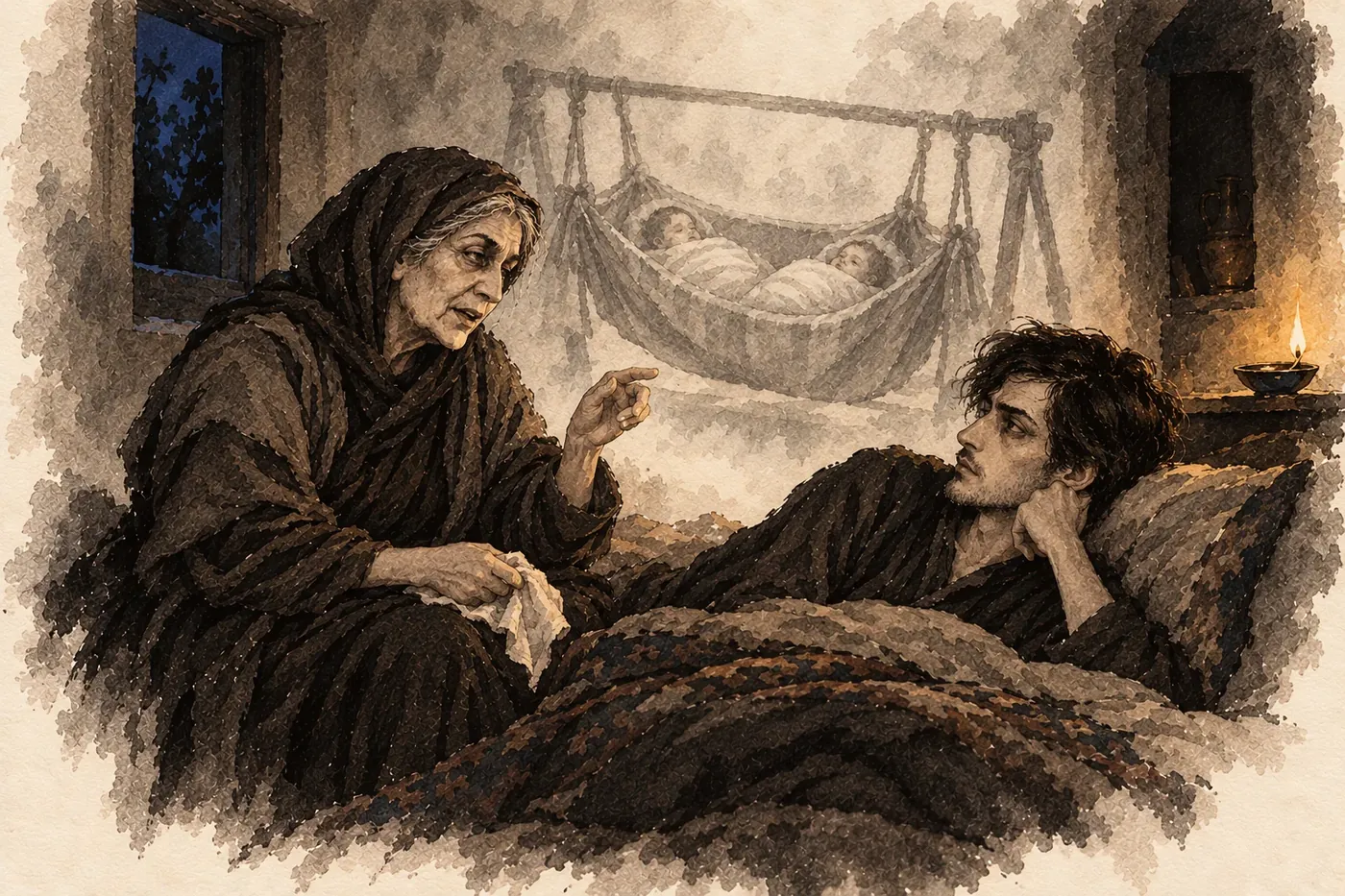
For the illustration An old nurse at a bedside; behind her, a ghostly double cradle with two infants.
The text of the scene
Sadegh Hedayat’s Persian beside our literal English, line by line.
حالم بدتر شده بود؛ فقط دایهام ـ که دایهٔ او هم بود ـ با صورت پیر و موهای خاکستری، گوشهٔ اطاق، کنار بالین من مینشست،
My condition had grown worse; only my nurse—who had been her nurse too—with her old face and gray hair sat in the corner of the room beside my pillow,
به پیشانیم آب سرد میزد و جوشانده برایم میآورد.
put cold water on my forehead, and brought me decoctions.
از حالات و اتفاقات بچگی من و آن لکاته صحبت میکرد.
She spoke of the circumstances and events of my childhood and that harlot’s.
مثلاً او به من گفت که زنم از توی ننو عادت داشته همیشه ناخن چپش را میجویده، بهقدری میجویده که زخم میشده؛
For instance, she told me that even in the cradle my wife had been accustomed always to biting her left fingernail, biting it so much that it became wounded;
به نظرم میآمد که این قصهها سن مرا به عقب میبُرد و حالت بچگی در من تولید میکرد
It seemed to me that these stories carried my age backward and produced in me a state of childhood
ـ چون مربوط به یادگارهای آن دوره بوده است وقتیکه خیلی کوچک بودم و در اطاقی که من و زنم توی ننو پهلوی هم خوابیده بودیم ـ یک ننوی بزرگ دو نفره.
—because they belonged to memories of that period when I was very small and my wife and I had lain beside each other in a cradle in a room—a large cradle for two.
درست یادم هست همین قصهها را میگفت. حالا بعضی از قسمتهای این قصهها که سابق بر این باور نمیکردم برایم امر طبیعی شده است.
I remember well that she told these same stories. Now some parts of these stories, which formerly I did not believe, have become natural things to me.
چون ناخوشی دنیای جدیدی در من تولید کرد، یک دنیای ناشناس، محو و پر از تصویرها و رنگها و میلهایی که در حال سلامت نمیشود تصور کرد؛
For illness produced a new world within me, an unknown, indistinct world full of images and colors and desires that cannot be imagined in health;
و گیرودارهای این متلها را با کیف و اضطراب ناگفتنی در خودم حس میکردم؛ حس میکردم که بچه شدهام؛
and I felt the commotions of these tales within myself with indescribable pleasure and anxiety; I felt that I had become a child;
و همین الآن که مشغول نوشتن هستم در احساسات شرکت میکنم، همهٔ این احساسات متعلق به الآن است و مال گذشته نیست.
and even now, when I am occupied with writing, I participate in those feelings; all these feelings belong to now, not to the past.
گویا حرکات، افکار، آرزوها و عادات مردمان پیشین که به توسط این متلها به نسلهای بعد انتقال داده شده یکی از واجبات زندگی بوده است.
Apparently the movements, thoughts, wishes, and habits of former people, transmitted by means of these tales to later generations, have been among life’s necessities.
هزاران سال است که همین حرفها را زدهاند، همین جماعها را کردهاند، همین گرفتاریهای بچگانه را داشتهاند.
For thousands of years they have said these same things, engaged in these same acts of intercourse, had these same childish troubles.
آیا سرتاسر زندگی یک قصهٔ مضحک، یک متل باور نکردنی و احمقانه نیست؟ آیا من فسانه و قصهٔ خودم را نمینویسم؟
Is not the whole of life a ridiculous story, an unbelievable and foolish tale? Am I not writing my own fable and story?
قصه فقط یک راه فرار برای آرزوهای ناکام است. آرزوهایی که به آن نرسیدهاند.
A story is only an escape route for unfulfilled wishes. Wishes that have not been attained.
آرزوهایی که هر متلسازی مطابق روحیهٔ محدود و موروثی خودش تصور کرده است.
Wishes that every maker of tales has imagined according to his own limited and inherited disposition.
کاش میتوانستم مانند زمانی که بچه و نادان بودم آهسته بخوابم ـ خواب راحت بیدغدغه.
If only I could sleep gently as when I was a child and ignorant—an easy, untroubled sleep.
← Scene 40: The physician of the rabbleScene 42: A cool hand in the dark →