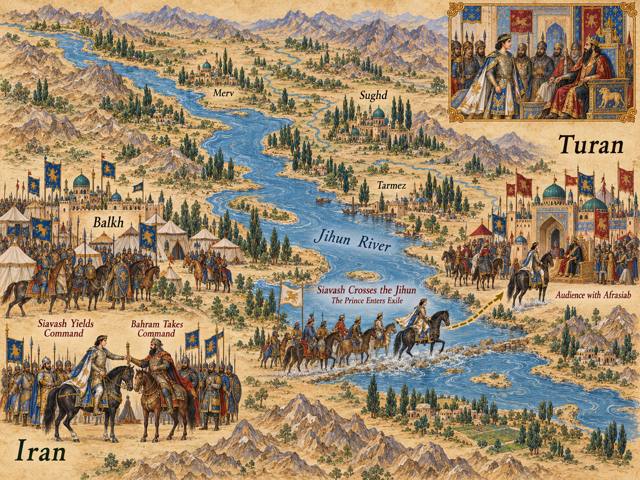
Siavash writes a last bitter letter to Kavus, hands the army and treasure to Bahram, and crosses the Jihun with three hundred riders. Piran meets him in splendor, weeps with him, and pledges his wealth, his kin and his protection.
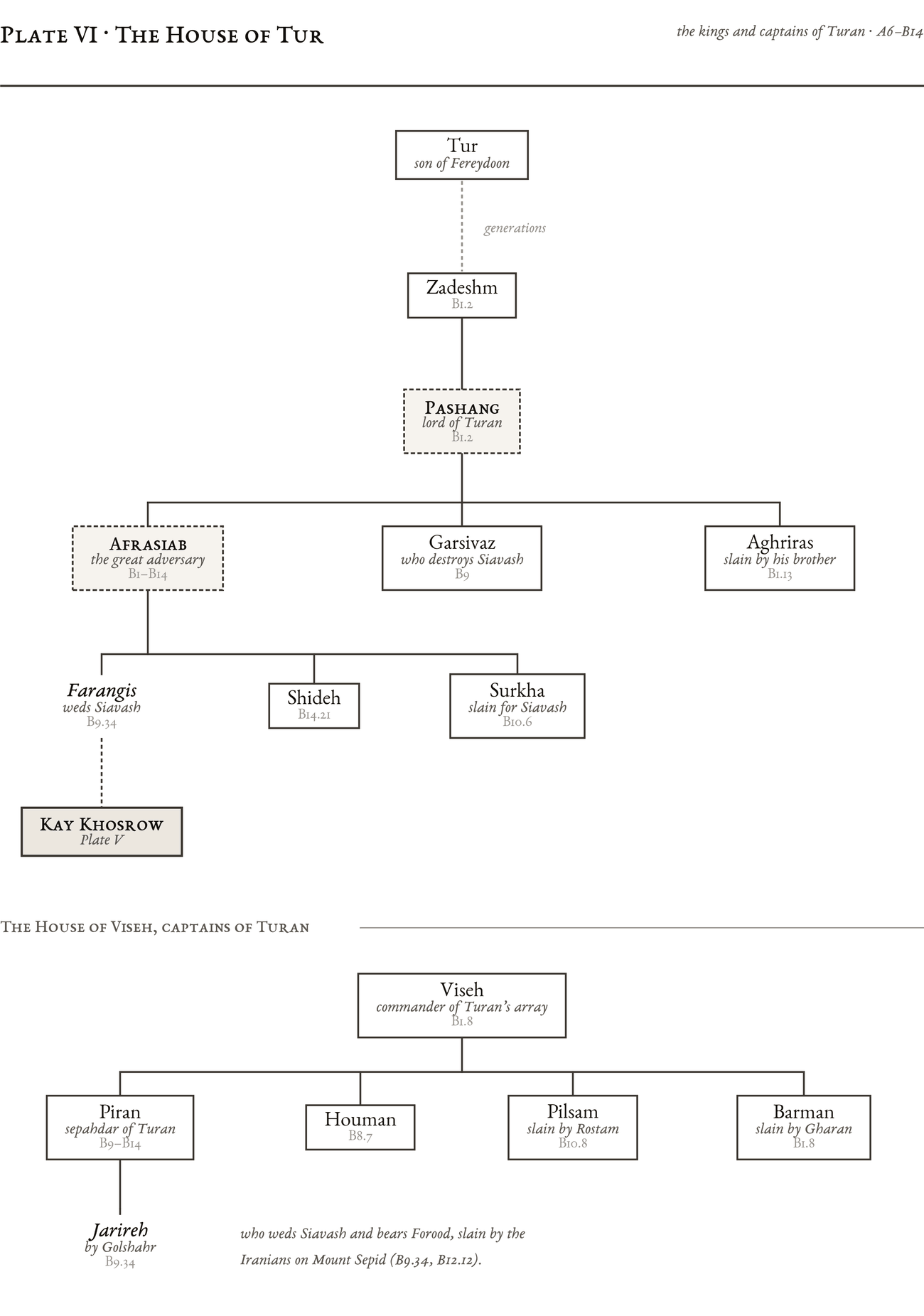
Piran urges the lonely prince to marry and offers his eldest daughter, Jarireh. Siavash gladly accepts, Piran’s wife Golshahr brings the richly dowered bride, and Siavash lives happily, forgetting Kavus as his standing at court grows.
Piran suggests that a marriage to Afrasiab’s daughter Farangis would suit Siavash better still. The prince, accepting that he may never see Iran or his friends again, weeps and agrees, asking that the plan be kept secret.
Returning from his campaign, Piran visits Siavash-Gard, marvels at the city and at Farangis, and feasts there for a week. At Afrasiab’s court he reports the tribute he has gathered and praises Siavash’s city in glowing terms, to the king’s delight.
Warned by his brothers, Piran rides for two days and nights and arrives as Farangis is being dragged to her death. He halts the guards, rebukes Afrasiab for following a Div’s counsel, and wins her life, promising to bring the child to the king. He takes her to Khutan.
Piran gives the infant to shepherds on Mount Ghola. At seven Kay Khosrow makes his own bow; by ten he hunts lions and leopards. The alarmed shepherd tells Piran, who rides to meet the boy, embraces him, and brings him home to raise in secret.
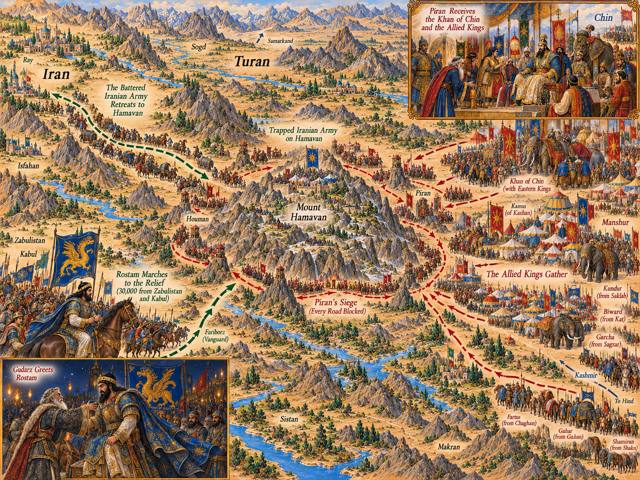
The Iranians march for three days without food and occupy Hamavan. Piran urges caution until reinforcements come, but Houman insists on pursuit. Scouts find the Iranians entrenched on the mountain, and Houman taunts them before summoning Piran’s whole army.
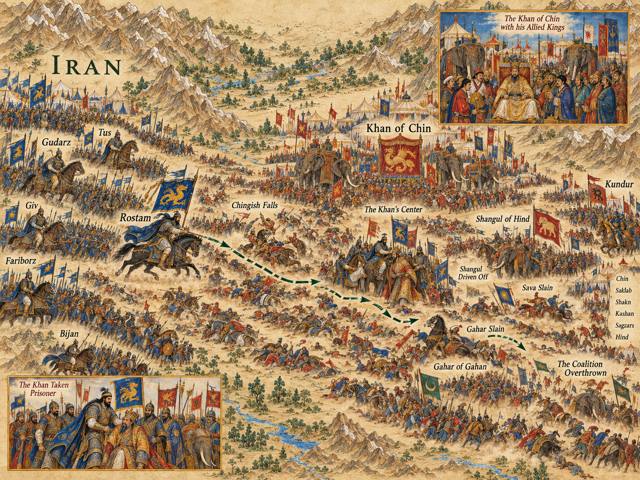
Piran warns his kinsmen and the Khan that Rostam has come for vengeance, while the kin of Kamus and Chingish swear to burn Sistan. Shangul, king of Hind, mocks the fear of ‘one Sagzi’ and promises to lead the attack. Houman foresees disaster.
Piran, riding past, sees the gibbet and Bijan bound, hears his story and has the execution stayed. At court he argues that killing Bijan will renew the feud over Siavash and bring Rostam and Gudarz down on Turan. Afrasiab yields and orders imprisonment instead.
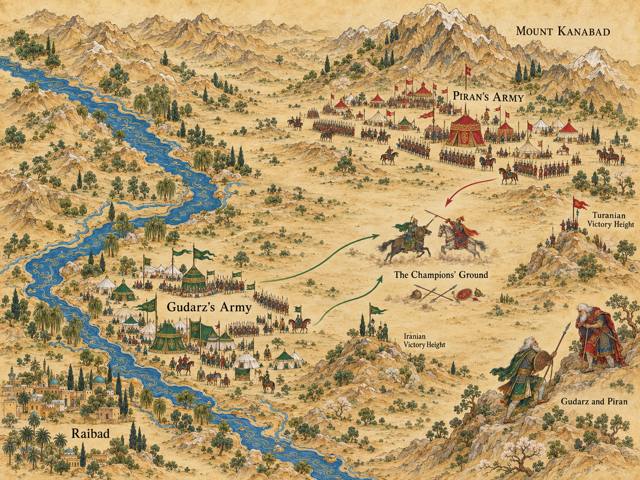
Giv finds Piran at Visagard; the two sides talk for two weeks beside the Jihun and settle nothing. Piran reports to Afrasiab, receives thirty thousand more men, hardens, refuses every term, and moves his army to Kanabad.
Alarmed by Iran’s mobilization, Piran writes to Gudarz offering peace: every province from Sistan to Sughd returned, treasure and hostages sent, or else the war decided by paired champions. His son Ruyin carries the letter, and Gudarz feasts him for a week without answering.
With no Turanian left, the two old chiefs fight. Gudarz’s arrow kills Piran’s horse, which falls and breaks his arm; he climbs the hill and refuses quarter. Gudarz follows on foot, takes a khanjar wound in the arm, and kills him with a javelin through the liver.
Turan’s watchman reports the disaster. Lahhak and Farshidvard climb to the lookout, see Piran and the ten dead, and mourn, but remember his last order. The leaderless army debates quarter, flight and battle; the brothers refuse to submit and choose the desert road.
 New Naqqali