 New Naqqali
Kisraکسری
The name given at birth to Qobad's son, the future Anooshirvan.
- In the poem
- First at D12.5, Qobad Returns and Reascends the Throne; last at E1.8, The Khan Proposes Alliance by Marriage
- Named
- 22 times, in 6 sections
- Main stories
- D12 Qobad and the Mazdakite Revolution (19); D13 Anooshirvan and the Road to the End-time (2); E1 The Story of Mahbud and Other Matters (1)
In the poem’s own words
Qobad Returns and Reascends the Throne
Qobad reaches the village to find a son born, and names him Kisra. The nobles come out with the boy Jamasp to beg pardon; Qobad forgives them and retakes the throne. He rewards Rizmehr, campaigns in Rum, founds cities, and opens canals.
- D12.5.4Qobad, on hearing, entered full of cheer;They named the newborn Kisra, bright and dear.
- D12.5.26Thus matters fared until young Kisra grew,A bold young prince whom all the kingdom knew.
Anooshirvan Overthrows Mazdak’s Faith
Mazdak demands that Kisra join his faith; the prince asks five months and gathers sages. At the appointed debate a Mobad demolishes the doctrine, Qobad renounces it, and Mazdak with three thousand followers is handed to Kisra, who plants them head down in a garden and hangs their leader.
- D12.7.9Know this: Kisra rejects the faith we teach;Shall such defiance stand beyond our reach?
- D12.7.18Then Mazdak took Prince Kisra’s hand; surpriseFilled Shah Qobad, who watched with wondering eyes.
- D12.7.20Qobad said, smiling, “Why should you declareSuch concern for the faith Kisra may bear?”
Anooshirvan Is Named Qobad’s Successor
Qobad, feeling death near, writes his testament on silk, leaving crown and throne to Kisra, and entrusts it to a Mobad. He dies at eighty and is entombed with crown and golden throne. The will is read to the assembled chiefs, and Kisra is crowned Anooshirvan.
- D12.8.7I give Kisra the honored throne and crown;May Fortune, after me, guard his renown.
- D12.8.25They set the heir upon the throne of state,And Kisra took the kingdom, crowned and great.
- D12.8.32Now Qobad’s story ends; I turn the page,And tell of Kisra in the coming age.
Anooshirvan’s Decree of Justice
The Shah divides the empire into four regions, then replaces the old share of the harvest with a land tax assessed by survey and paid in three installments, with relief for ruined crops and exemptions. Three ledgers record it. His decree to the collectors is read out.
- D13.3.17When Kisra took the throne, he set the rateBy land assessment, ending tithes of state.
Caesar Answers Anooshirvan
Caesar reads the letter, pales with anger, and dictates a reply: no Roman ever paid tribute to the kings of Iran, he has crown and troops of his own, and Iskandar’s conquests prove whose sword was greater. He demands tribute himself and dismisses the envoy.
- D13.10.20He gave no spoken answer to be heard,Nor spoke of Kisra with a bitter word.
The Khan Proposes Alliance by Marriage
Shaken by what his envoys report, the Khan resolves to bind the Shah by kinship and sends three nobles with a silk letter offering a daughter. Anooshirvan accepts on one condition: his own sage must view the women and satisfy himself of the girl’s descent.
- E1.8.79Though jewels rained within his women’s hall,He would give every coin at Kisra’s call.
On the maps
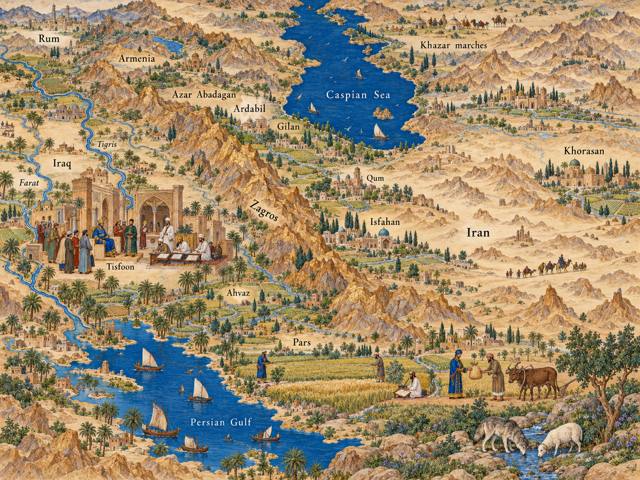
Where the name appears
More in the Glossary and the index of characters.