 New Naqqali
- Lines
- P101.L07–P101.L19
- Where
- Lingam temple, Benares
- Who
- the father; the Bogam-dasi (mother); musicians
- Kind
- memory · Optional scene
- Echoes
- Scene 5: The vision through the vent
Who and what is here
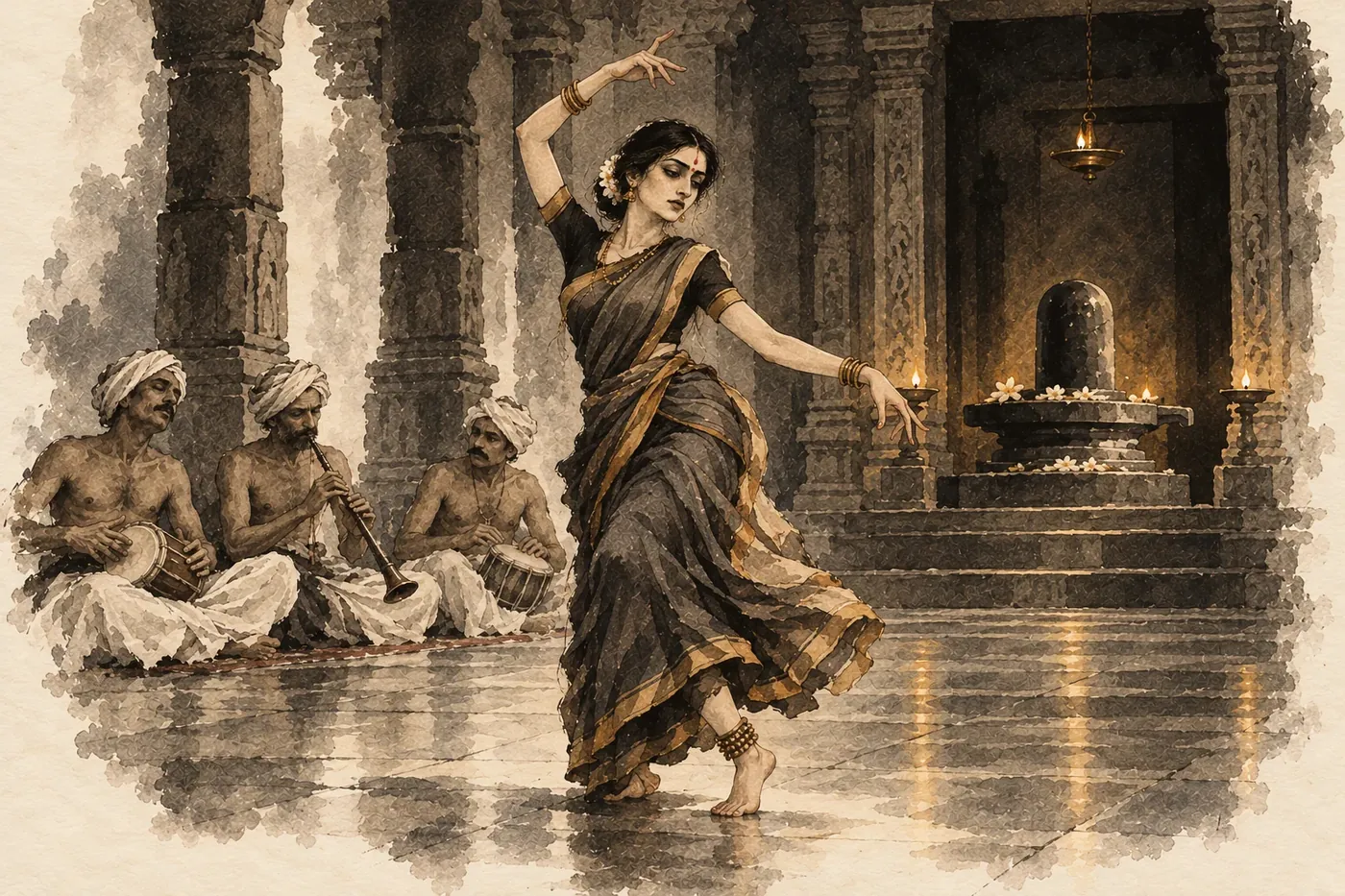
For the illustration A temple dancer in a silk sari, bangles at wrists and ankles, dancing before a Lingam to turbaned musicians.
The text of the scene
Sadegh Hedayat’s Persian beside our literal English, line by line.
بعد از مدتی پدرم عاشق یک دختر باکرهٔ بوگامداسی ـ رقاص معبد لینگم ـ میشود.
After a time my father falls in love with a virgin girl, a Bogam-dasi—the dancer of the Lingam temple.
کار این دختر رقص مذهبی جلوی بت بزرگ لینگم و خدمت بتکده بوده است ـ یک دختر خونگرم زیتونی با پستانهای لیمویی، چشمهای درشت مورب، ابروهای باریک بههمپیوسته، که میانش را خال سرخ میگذاشته.
The work of this girl was religious dancing before the great idol Lingam and service in the idol temple—a warm-blooded, olive-colored girl with lemon-shaped breasts, large slanting eyes, slender joined eyebrows, between which she placed a red mark.
حالا میتوانم پیش خودم تصورش را بکنم که بوگامداسی ـ یعنی مادرم ـ با ساری ابریشمی رنگین زردوزی، سینهٔ باز، سربند دیبا،
Now I can picture to myself the Bogam-dasi—that is, my mother—with an embroidered, colored silk sari, uncovered breast, and a silk headband,
گیسوی سنگین سیاهی که مانند شب ازلی تاریک و در پشت سرش گره زده بود، النگوهای مچ پا و مچ دستش، حلقهٔ طلایی که از پرهٔ بینی گذرانده بوده،
with heavy black hair dark as the primordial night, knotted behind her head, bangles at her ankles and wrists, and a golden ring passed through her nostril,
چشمهای درشت سیاه خمار و مورب، دندانهای براق با حرکات آهستهٔ موزونی که به آهنگ سهتار و تنبک و تنبور و سنج و کرنا میرقصیده،
with large languid, oblique black eyes and gleaming teeth, dancing in slow measured movements to the music of setar, tombak, tanbur, cymbals and horn,
یک آهنگ ملایم و یکنواخت که مردهای لخت شالمهبسته میزدهاند، آهنگ پرمعنی که همهٔ اسرار جادوگری و خرافات و شهوتها و دردهای مردم هند در آن مختصر و جمع شده بوده
a gentle and monotonous tune played by naked turbaned men, a meaningful tune in which all the secrets of sorcery, superstitions, lusts, and sufferings of the people of India were condensed and gathered,
و بهوسیلهٔ حرکات متناسب و اشارات شهوتانگیز ـ حرکات مقدس ـ بوگامداسی مثل برگ گل باز میشده، لرزشی بهطول شانه و بازوهایش میداده، خم میشده و دوباره جمع میشده است.
and through proportionate movements and lust-arousing gestures—sacred movements—the Bogam-dasi opened like a flower petal, sent a tremor along her shoulders and arms, bent and then drew herself together again.
این حرکات که مفهوم مخصوصی دربر داشته و بدون زبان حرف میزده است چه تأثیری ممکن است در پدرم کرده باشد؟
What effect might these movements, which bore a particular meaning and spoke without language, have had upon my father?
مخصوصاً بوی عرق گس و یا فلفلی او که مخلوط با عطر موگرا و روغن صندل میشده، به مفهوم شهوتی این منظره میافزوده است،
Especially the astringent or peppery odor of her sweat, mixed with the perfume of mogra and sandalwood oil, added to the sensual meaning of this scene,
عطری که بوی شیرهٔ درختهای دوردست را دارد و به احساسات دور و خفهشده جان میدهد.
a fragrance that has the smell of the sap of distant trees and gives life to distant and stifled feelings.
بوی مجری دوا، بوی دواهایی که در اطاق بچهداری نگه میدارند و از هند میآید، روغنهای ناشناس سرزمینی که پر از معنی و آداب و رسوم قدیم است لابد بوی جوشاندههای مرا میداده.
The smell of a medicine case, the smell of medicines kept in a nursery and brought from India, the unknown oils of a land full of meaning and ancient customs, must have smelled like my medicinal decoctions.
همهٔ اینها یادگارهای دور و کشتهشدهٔ پدرم را بیدار کرده.
All these awakened the distant, dead memories of my father.
پدرم بهقدری شیفتهٔ بوگامداسی میشود که به مذهب دختر رقاص ـ به مذهب لینگم ـ میگرود؛ ولی پس از چندی که دختر آبستن میشود او را از خدمت معبد بیرون میکنند.
My father becomes so enamored of the Bogam-dasi that he adopts the religion of the dancing girl—the religion of Lingam; but after a while, when the girl becomes pregnant, they expel her from temple service.
← Scene 33: Naneh-Joon, the aunt, and the twin brothersScene 35: The cobra ordeal →