 New Naqqali
- Lines
- P100.L01–P101.L06
- Where
- the family house; India
- Who
- narrator; Naneh-Joon; his wife; the aunt; father and uncle
- Kind
- memory · Optional scene
Who and what is here
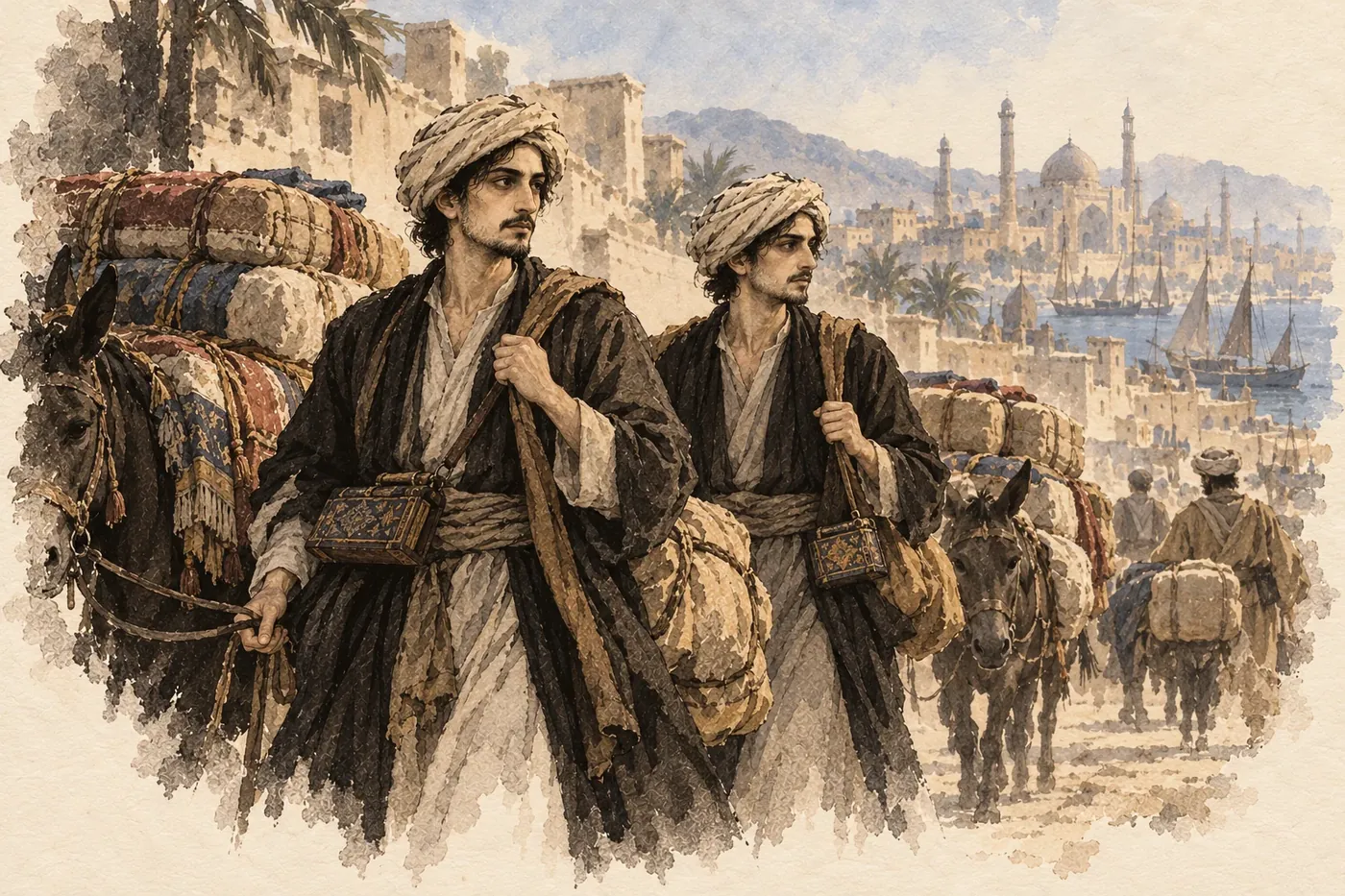
For the illustration Two identical young merchants with bales of cloth and pen cases setting out for India.
The text of the scene
Sadegh Hedayat’s Persian beside our literal English, line by line.
اینها رابطهٔ من با دنیای خارجی بود. اما از دنیای داخلی، فقط دایهام و یک زن لکاته برایم مانده بود.
These were my connections with the outer world. But of the inner world, only my nurse and a harlot woman remained to me.
ولی ننهجون دایهٔ او هم هست، دایهٔ هردومان است؛
But Naneh-Joon is also her nurse, the nurse of both of us;
چون نه تنها من و زنم خویش و قوم نزدیک بودیم بلکه ننهجون هردومان را با هم شیر داده بود.
for not only were my wife and I close relatives, but Naneh-Joon had nursed both of us together.
اصلاً مادر او مادر من هم بود؛ چون من اصلاً مادر و پدرم را ندیدهام
In fact her mother was my mother too; for I never saw my mother and father,
و مادر او ـ آن زن بلندبالا که موهای خاکستری داشت ـ مرا بزرگ کرد.
and her mother—that tall woman with gray hair—raised me.
مادر او بود که مثل مادرم دوستش داشتم و برای همین علاقه بود که دخترش را به زنی گرفتم.
It was her mother whom I loved like my own mother, and it was because of this affection that I took her daughter as my wife.
از پدر و مادرم چندجور حکایت شنیدهام، فقط یکی از این حکایتها که ننهجون برایم نقل کرد پیش خودم تصور میکنم باید حقیقی باشد.
I have heard several kinds of stories about my father and mother; I imagine to myself that only one of these stories, which Naneh-Joon told me, must be true.
ننهجون برایم گفت که پدر و عمویم برادر دوقلو بودهاند، هردو آنها یک شکل، یک قیافه و یک اخلاق داشتهاند و حتی صدایشان یکجور بوده بطوری که تشخیص آنها از یکدیگر کار آسانی نبوده است.
Naneh-Joon told me that my father and uncle had been twin brothers; both had the same form, the same appearance, and the same disposition, and even their voices were alike, so that distinguishing them from one another had not been easy.
علاوه بر این یک رابطهٔ معنوی و حس همدردی هم بین آنها وجود داشته، به این معنی که اگر یکی از آنها ناخوش میشده دیگری هم ناخوش میشده است؛ به قول مردم، مثل سیبی که نصف کرده باشند.
Besides this, a spiritual connection and a feeling of fellow-suffering existed between them; meaning that if one became ill, the other also became ill; as people say, like an apple cut in half.
بالاخره هردوی آنها شغل تجارت را پیش میگیرند و در سن بیست سالگی به هندوستان میروند
Finally both of them take up trade and at the age of twenty go to India
و اجناس ری را از قبیل پارچههای مختلف مثل منیره، پارچهٔ گلدار، پارچهٔ پنبهای، جبه، شال، سوزن، ظروف سفالی، گل سرشور و جلد قلمدان به هندوستان میبردند و میفروختند.
and take goods from Ray, such as various fabrics including monireh, flowered cloth, cotton cloth, robes, shawls, needles, earthenware vessels, washing clay, and pen-case covers to India and sell them.
پدرم در شهر بنارس بوده و عمویم را به شهرهای دیگر هند برای کارهای تجارتی میفرستاده.
My father was in the city of Benares and would send my uncle to other Indian cities on business.
← Scene 32: The old junk dealer under the archScene 34: The Bogam-dasi of the Lingam temple →