 New Naqqali
- Lines
- P014.L01–P015.L11
- Where
- room (house outside the city)
- Who
- narrator; the uncle (hunchbacked old man)
- Kind
- action · Optional scene
Who and what is here
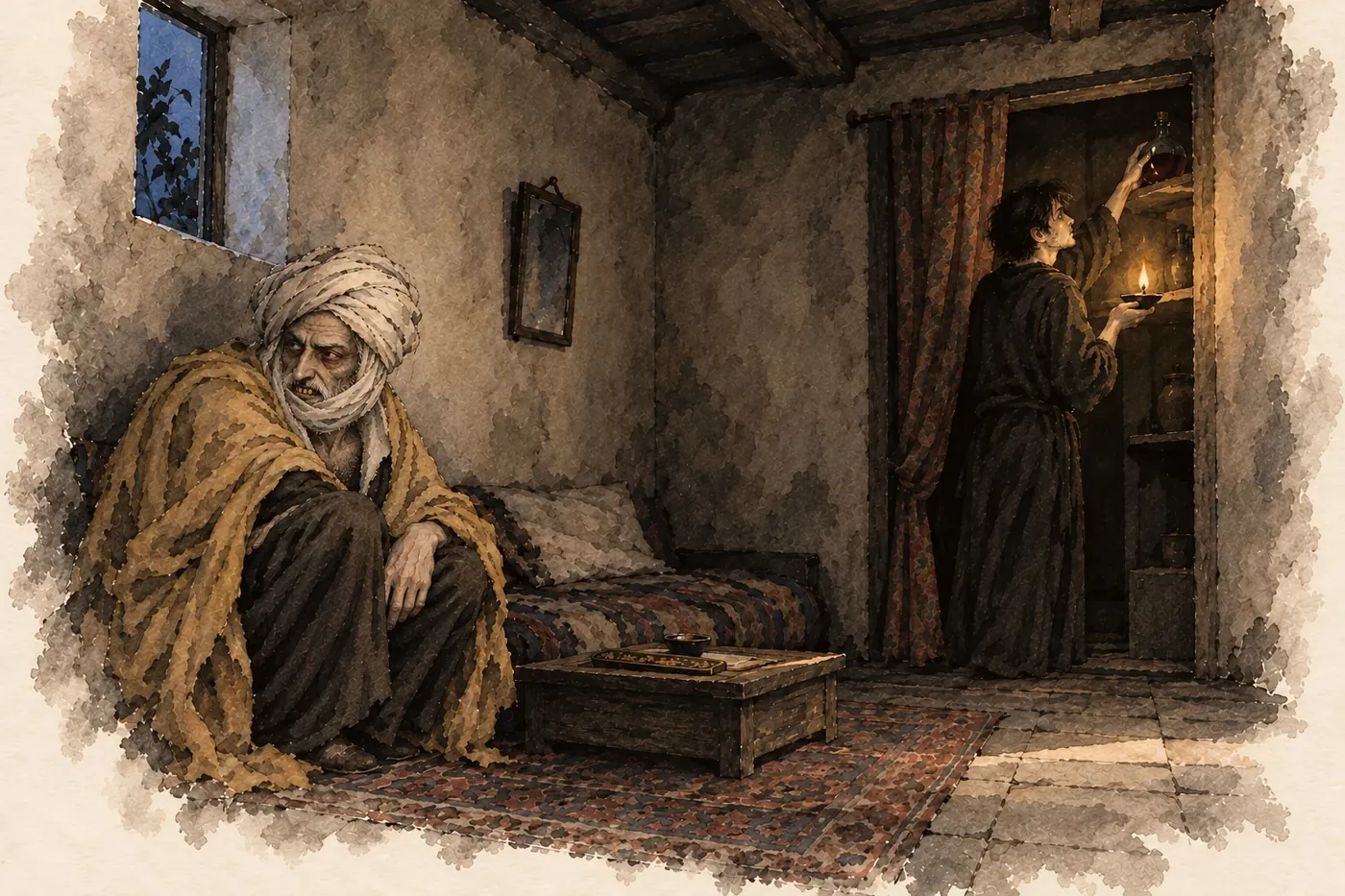
For the illustration A hunched old man in yellow cloak and Indian turban squatting in the corner while the narrator, lamp in hand, searches a dark closet.
The text of the scene
Sadegh Hedayat’s Persian beside our literal English, line by line.
این مجلس در عین حال به نظرم دور و نزدیک میآمد.
This scene seemed to me, at the same time, distant and near.
درست یادم نیست ـ حالا قضیهای بخاطرم آمد ـ گفتم: باید یادبودهای خودم را بنویسم، ولی این پیشآمد خیلی بعد اتفاق افتاده و ربطی به موضوع ندارد و در اثر همین اتفاق از نقاشی بکلی دست کشیدم.
I do not remember exactly—now an incident came to my mind—I said: I must write my memories, but this event happened much later and has nothing to do with the subject, and as a result of this very event I gave up painting altogether.
دو ماه پیش ـ نه ـ دو ماه و چهار روز میگذرد.
Two months ago—no—two months and four days have passed.
سیزدهٔ نوروز بود. همهٔ مردم بیرون شهر هجوم آورده بودند؛
It was the thirteenth of Nowruz. All the people had crowded outside the city;
من پنجرهٔ اطاقم را بسته بودم، برای اینکه سرفارغ نقاشی بکنم.
I had closed the window of my room so that I could paint with an untroubled mind.
نزدیک غروب، گرم نقاشی بودم؛ یکمرتبه در باز شد و عمویم وارد شد؛ یعنی خودش گفت که عموی من است.
Near sunset I was absorbed in painting; suddenly the door opened and my uncle entered; that is, he himself said that he was my uncle.
من هرگز او را ندیده بودم ـ چون از ابتدای جوانی به مسافرت دوردستی رفته بود ـ.
I had never seen him—because he had gone on a distant journey at the beginning of his youth.
گویا ناخدای کشتی بود، تصور کردم شاید کار تجارتی با من دارد، چون شنیده بودم که تجارت هم میکند.
Apparently he was a ship’s captain; I imagined he might have commercial business with me, since I had heard that he also traded.
به هر حال عمویم پیرمردی بود قوزکرده که شالمهٔ هندی دور سرش بسته بود، عبای زرد پارهای روی دوشش بود، و سر و رویش را با شال گردن پیچیده بود،
In any case, my uncle was a hunchbacked old man who had an Indian turban tied around his head, a torn yellow cloak over his shoulders, and his head and face wrapped in a scarf,
یخهاش باز بود و سینهٔ پشمآلودش دیده میشد.
his collar was open and his hairy chest could be seen.
ریش کوسهاش را که از زیر شال گردن بیرون آمده بود میشد دانهدانه شمرد.
The sparse hairs of his beard that came out from beneath the scarf could be counted one by one.
یک شباهت دور و مضحک با من داشت. مثل اینکه عکس من روی آینهٔ دق افتاده باشد.
He had a distant and ridiculous resemblance to me. It was as though my reflection had fallen on a distorting mirror.
من همیشه شکل پدرم را پیش خودم همینجور تصور میکردم.
I had always pictured my father’s appearance to myself in just this way.
به محض ورود رفت کنار اطاق چمباتمه زد.
As soon as he entered, he went to the side of the room and squatted.
من به فکرم رسید که برای پذیرایی او چیزی تهیه بکنم.
It occurred to me that I should prepare something to offer him.
چراغ را روشن کردم، رفتم در پستوی تاریک اطاقم، هر گوشه را وارسی کردم تا شاید بتوانم چیزی باب دندان او پیدا کنم ـ اگرچه میدانستم که در خانه چیزی به هم نمیرسد، چون نه تریاک برایم مانده بود و نه مشروب ـ.
I lit the lamp, went into the dark back closet of my room, and searched every corner in the hope of finding something to his liking—although I knew there was nothing in the house, for I had neither opium nor liquor left.
ناگهان نگاهم به بالای رف افتاد گویا به من الهام شد، دیدم یک بغلی شراب کهنه که به من ارث رسیده بود ـ گویا به مناسبت تولد من این شراب را انداخته بودند ـ بالای رف بود.
Suddenly my gaze fell on the high shelf, as though it were revealed to me; I saw that a flask of old wine that I had inherited—apparently they had made this wine on the occasion of my birth—was on the shelf.
هیچوقت من به این صرافت نیفتاده بودم؛ اصلاً به کلی یادم رفته بود که چنین چیزی در خانه هست.
I had never thought of it; indeed I had completely forgotten that such a thing was in the house.
← Scene 3: The house among ruins and the pen-case motifScene 5: The vision through the vent →