 New Naqqali
- Lines
- P077.L01–P079.L05
- Where
- room (house outside the city)
- Who
- narrator
- Kind
- reflection · Optional scene
- Echoes
- Scene 25: Her face on the jar
Who and what is here
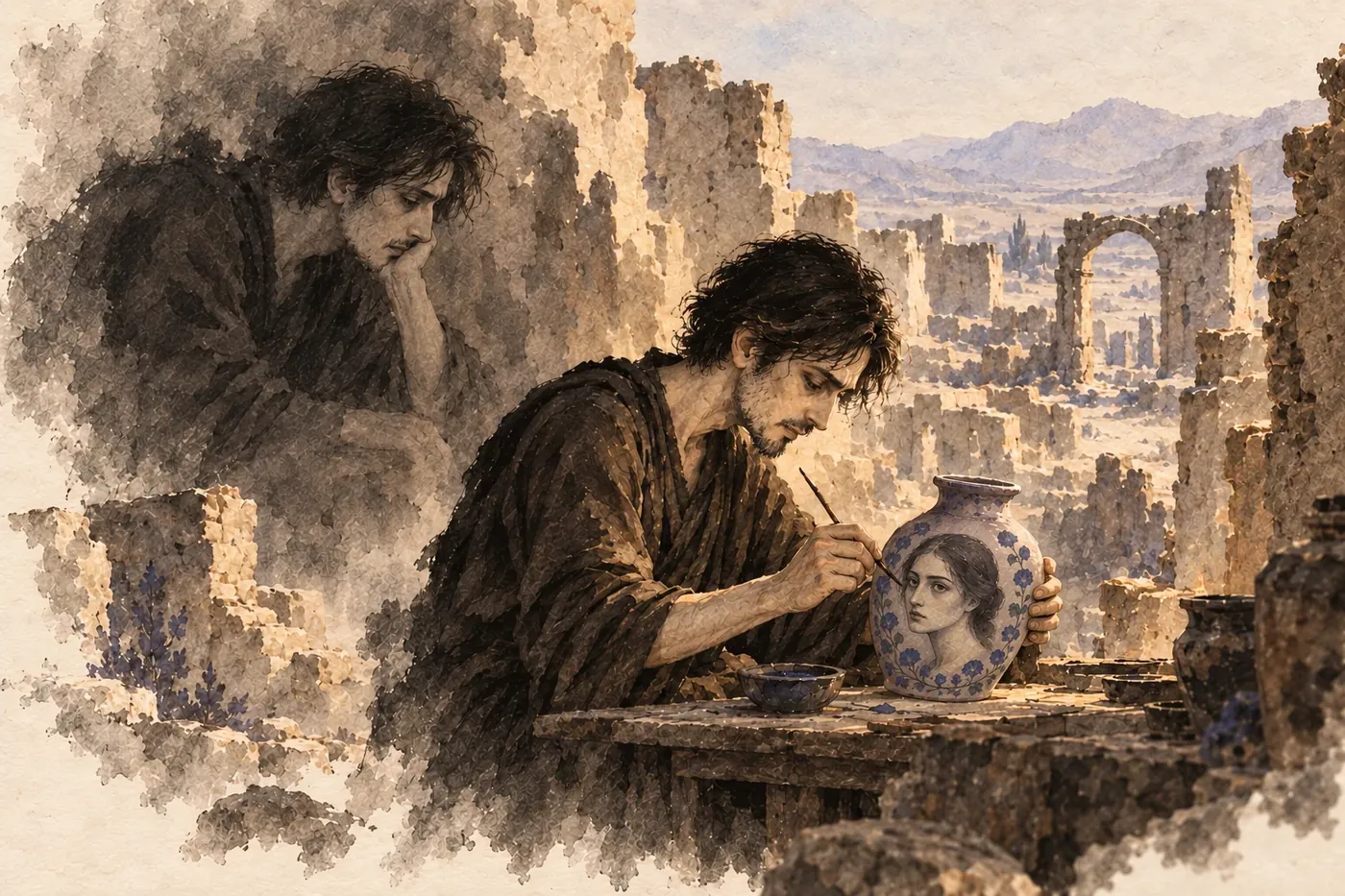
For the illustration A ghostly ancient painter at work in ruined mud-brick Ray, mirroring the narrator.
The text of the scene
Sadegh Hedayat’s Persian beside our literal English, line by line.
کسی نمیتواند پی ببرد که چه احساسی بهمن دست داد! میخواستم از خودم بگریزم. آیا چنین اتفاقی ممکن بود؟
No one can understand what feeling came over me! I wanted to escape from myself. Was such a thing possible?
تمام بدبختیهای زندگیم دوباره جلو چشمم مجسم شد. آیا فقط چشمهای یک نفر در زندگیم کافی نبود؟
All the misfortunes of my life appeared again before my eyes. Were the eyes of one person not enough in my life?
حالا دو نفر با همان چشمها، چشمهایی که مال او بود، بهمن نگاه میکردند! نه، قطعا تحملناپذیر بود.
Now two people with those same eyes, eyes that belonged to her, were looking at me! No, it was certainly unbearable.
چشمی که خودش آنجا نزدیک کوه کنار تنهٔ درخت سرو، پهلوی رودخانهٔ خشک بهخاک سپرده شده بود.
Eyes whose owner had been buried there near the mountain by the trunk of the cypress tree, beside the dry river.
زیر گلهای نیلوفر کبود، در میان خون غلیظ، در میان کرم و جانوران و گزندگانی که دور او جشن گرفته بودند
Under the blue morning glories, amid thick blood, amid worms and creatures and vermin that were feasting around her
و ریشهٔ گیاهان بهزودی در حدقهٔ آن فرو میرفت که شیرهاش را بمکد حالا با زندگی قوی سرشار بهمن نگاه میکرد!
and the roots of plants would soon penetrate her eye sockets to suck their juices—now looked at me brimming with powerful life!
من خودم را تا ایناندازه بدبخت و نفرینزده گمان نمیکردم، ولی بهواسطهٔ حس جنایتی که در من پنهان بود،
I had not imagined myself so miserable and accursed, but because of a sense of crime hidden within me,
در عین حال خوشی بیدلیلی، خوشی غریبی بهمن دست داد؛ چون فهمیدم که یک نفر همدرد قدیمی داشتهام.
at the same time a causeless happiness, a strange happiness, came over me; for I understood that I had had an old fellow-sufferer.
آیا این نقاش قدیم، نقاشی که روی این کوزه را صدها شاید هزاران سال پیش نقاشی کرده بود همدرد من نبود؟
Was this ancient painter, the painter who had painted this jar hundreds, perhaps thousands, of years ago, not a fellow-sufferer of mine?
تا اینلحظه من خودم را بدبختترین موجودات میدانستم؛ ولی پی بردم زمانی که روی آن کوهها در آن خانهها و آبادیهای ویران که با خشتهای وزین ساخته شده بود
Until this moment I regarded myself as the most miserable of beings; but I realized that at a time when, on those mountains, in those houses and ruined settlements built of heavy bricks,
مردمانی زندگانی میکردند که حالا استخوان آنها پوسیده شده و شاید ذرات قسمتهای مختلف تن آنها در گلهای نیلوفر کبود زندگی میکرد،
people lived whose bones had now decayed and perhaps particles of the different parts of their bodies lived in blue morning glories,
میان این مردمان یک نفر نقاش فلکزده، یک نفر نقاش نفرینشده، شاید یک نفر قلمدانساز بدبخت مثل من وجود داشته، درست مثل من.
among those people there had been a wretched painter, an accursed painter, perhaps an unfortunate pen-case maker like me, exactly like me.
و حالا پی بردم، فقط میتوانستم بفهمم که او هم در میان دو چشم درشت سیاه میسوخته و میگداخته، درست مثل من.
And now I realized, I could only understand that he too had burned and melted within two large black eyes, exactly like me.
← Scene 25: Her face on the jarScene 27: Opium before the two portraits; the fall down the well →