 New Naqqali
- Lines
- P167.L01–P175.L04
- Where
- room (house outside the city)
- Who
- narrator
- Kind
- reflection · Optional scene
Who and what is here
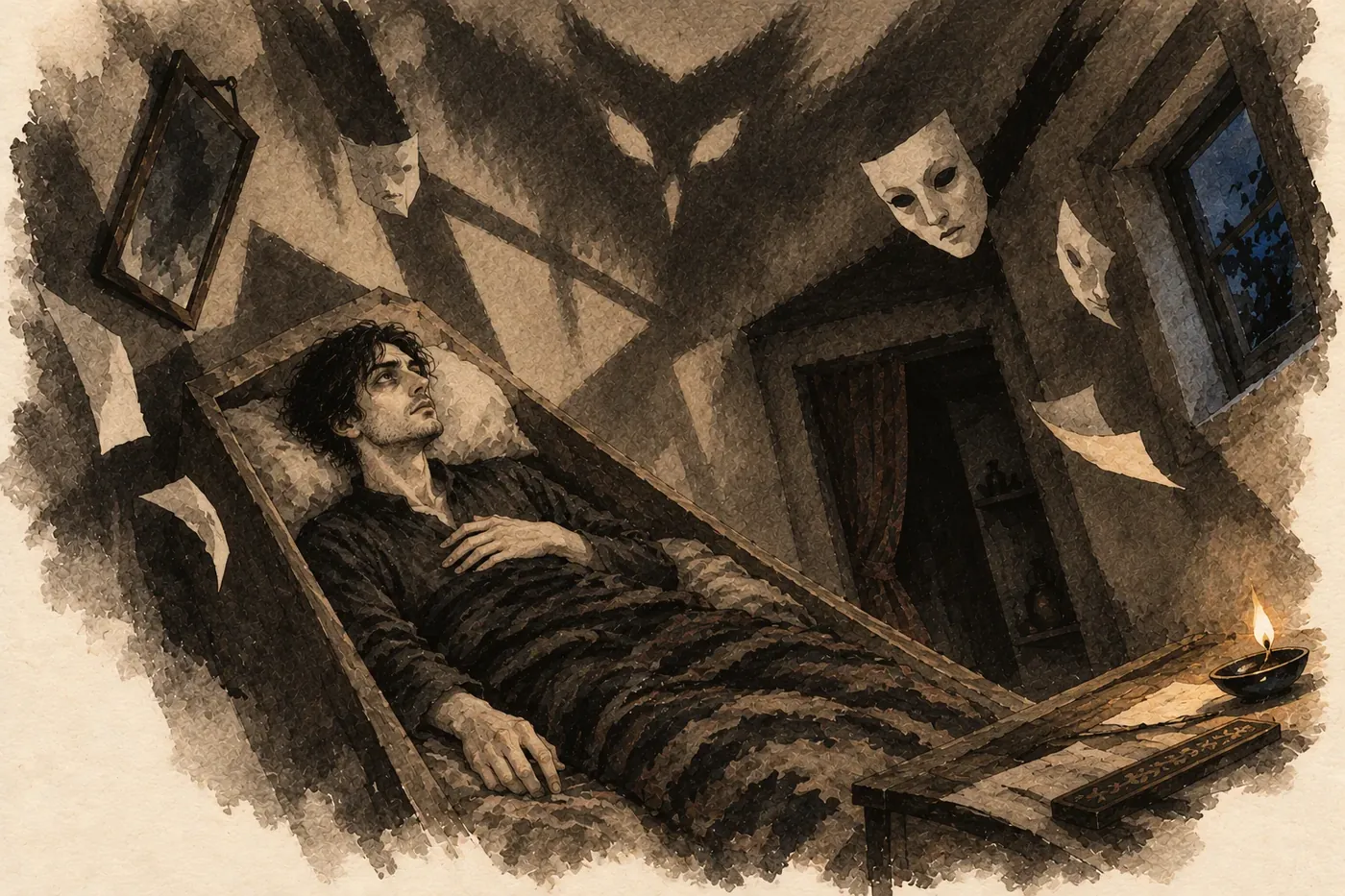
For the illustration Pillow feathers turning to blades and a bed becoming a gravestone in a nightmare montage.
The text of the scene
Sadegh Hedayat’s Persian beside our literal English, line by line.
مثل اینکه من مأمور آمرزش زندهها بودم! ولی تمام این مسخرهبازیها در من هیچ تأثیری نداشت.
As though I were responsible for granting forgiveness to the living! But all these ridiculous performances had no effect upon me.
برعکس کیف میکردم که رجالهها هم اگرچه موقتی و دروغی اما اقلا چند ثانیه عوالم مرا طی میکردند.
On the contrary, I took pleasure in the fact that the rabble too, though temporarily and falsely, passed for at least a few seconds through my realms.
آیا اطاق من یک تابوت نبود؟ رختخوابم سردتر و تاریکتر از گور نبود؟ رختخوابی که همیشه افتاده بود و مرا دعوت به خوابیدن میکرد.
Was my room not a coffin? Was my bed not colder and darker than a grave? A bed that always lay there inviting me to sleep.
چندین بار این فکر برایم آمده بود که در تابوت هستم. شبها به نظرم اطاقم کوچک میشد و مرا فشار میداد.
Many times the thought had occurred to me that I was inside a coffin. At night it seemed that my room grew smaller and pressed against me.
آیا در گور همین احساس را نمیکنند؟ آیا کسی از احساسات بعد از مرگ خبر دارد؟
Do they not feel the same thing in the grave? Does anyone know about feelings after death?
اگرچه خون در بدن میایستد و بعد از یک شبانهروز بعضی از اعضای بدن شروع به تجزیه شدن میکنند ولی تا مدتی بعد از مرگ موی سر و ناخن میروید.
Although the blood stops in the body and after a day and a night some of the bodily parts begin decomposing, hair and nails grow for a time after death.
آیا احساسات و فکر هم بعد از ایستادن قلب از بین میروند و یا تا مدتی از باقیمانده خونی که در عروق کوچک هست زندگی مبهمی را دنبال میکنند؟
Do feelings and thought likewise disappear after the heart stops, or do they for a time continue an obscure life on the remaining blood in the small vessels?
حس مرگ خودش ترسناک است چه برسد به آنکه حس بکنند که مردهاند!
The feeling of death is itself frightening, let alone feeling that one is dead!
پیرهایی هستند که با لبخند میمیرند، مثل اینکه به خواب میروند، و یا پیهسوزی که خاموش میشود.
There are old people who die with a smile, as though falling asleep, or like an oil lamp going out.
اما یک نفر جوان قوی که ناگهان میمیرد و همه قوای بدنش تا مدتی بر ضد مرگ میجنگد چه احساسی خواهد داشت؟
But what would a strong young person feel, who dies suddenly and whose bodily powers continue fighting against death for a time?
بارها به فکر مرگ و تجزیه ذرات تنم افتاده بودم، بهطوری که این فکر مرا نمیترسانید، برعکس آرزوی حقیقی میکردم که نیست و نابود بشوم.
Often I had thought about death and the disintegration of the particles of my body, in such a way that this thought did not frighten me; on the contrary I truly wished to cease to be and be annihilated.
از تنها چیزی که میترسیدم این بود که ذرات تنم در ذرات تن رجالهها برود. این فکر برایم تحملناپذیر بود.
The only thing I feared was that particles of my body should enter the particles of the rabble’s bodies. This thought was unbearable to me.
گاهی دلم میخواست بعد از مرگ دستهای دراز با انگشتان بلند حساسی داشتم تا همه ذرات تن خودم را به دقت جمعآوری میکردم و دودستی نگاه میداشتم تا ذرات تن من که مال من هستند در تن رجالهها نروند.
Sometimes I wished that after death I had long hands with long sensitive fingers, so that I could carefully gather all the particles of my body and hold them in both hands, lest the particles of my body, which belong to me, pass into the bodies of the rabble.
گاهی فکر میکردم آنچه را که میدیدم، کسانی که دم مرگ هستند آنها هم میدیدند. اضطراب و هول و هراس و میل زندگی در من فروکش کرده بود؛
Sometimes I thought that what I saw was also seen by those at the point of death. Anxiety, dread, terror, and the desire for life had subsided within me;
از دور ریختن عقایدی که به من تلقین شده بود آرامش مخصوصی در خودم حس میکردم. تنها چیزی که از من دلجویی میکرد امید نیستی پس از مرگ بود.
In casting away beliefs that had been instilled in me, I felt a particular peace. The only thing that comforted me was the hope of nonexistence after death.
فکر زندگی دوباره مرا میترسانید و خسته میکرد. من هنوز به این دنیایی که در آن زندگی میکردم انس نگرفته بودم، دنیای دیگر به چه درد من میخورد؟
The thought of another life frightened and exhausted me. I had not yet become accustomed to this world in which I lived; what use would another world be to me?
حس میکردم که این دنیا برای من نبود، برای یک دسته آدمهای بیحیا، پررو، گدامنش، معلوماتفروش، چاروادار و چشم و دل گرسنه بود؛
I felt that this world was not for me, but for a group of shameless, brazen, beggarly, knowledge-peddling, muleteer[-like], and greedy people;
برای کسانی که به فراخور دنیا آفریده شده بودند و از زورمندان زمین و آسمان مثل سگ گرسنه جلو دکان قصابی که برای یک تکه لثه دم میجنباند، گدایی میکردند و تملق میگفتند.
for those who had been created to suit the world and who begged and flattered the powerful of earth and heaven like a hungry dog wagging its tail before a butcher’s shop for a scrap of gristle.
فکر زندگی دوباره مرا میترسانید و خسته میکرد. نه، من احتیاجی به دیدن اینهمه دنیاهای قیآور و اینهمه قیافههای نکبتبار نداشتم.
The thought of another life frightened and exhausted me. No, I had no need to see so many nauseating worlds and so many wretched faces.
مگر خدا آنقدر ندیدهبدیده بود که دنیاهای خودش را بچشم من بکشد؟ اما من تعریف دروغی نمیتوانم بکنم و در صورتی که دنیای جدیدی را باید طی کرد،
Was God so lacking in experience that he had to parade his worlds before my eyes? But I cannot give a false account, and if a new world had to be traversed,
آرزومند بودم که فکر و احساسات کرخت و کند شده میداشتم؛ بدون زحمت نفس میکشیدم؛ و بیآنکه احساس خستگی کنم، میتوانستم در سایه ستونهای یک معبد لینگم برای خودم زندگی را به سر ببرم.
I wished to have thoughts and feelings made numb and dull; to breathe without effort; and, without feeling fatigue, to pass my life in the shade of the pillars of a Lingam temple.
پرسه میزدم بطوری که آفتاب چشمم را نمیزد، حرف مردم و صدای زندگی گوشم را نمیخراشید.
I would wander in such a way that the sun did not strike my eyes and people’s words and the sound of life did not scrape my ears.
هر چه بیشتر در خودم فرو میرفتم، مثل جانورانی که زمستان در یک سوراخ پنهان میشوند، صدای دیگران را با گوشم میشنیدم و صدای خودم را در گلویم میشنیدم.
The more I withdrew into myself, like animals that hide in a hole during winter, the more I heard others’ voices with my ears and my own voice in my throat.
تنهایی و انزوایی که پشت سرم پنهان شده بود مانند شبهای ازلی غلیظ و متراکم بود، شبهایی که تاریکی چسبنده، غلیظ و مسری دارند و منتظرند روی سر شهرهای خلوت که پر از خوابهای شهوت و کینه است فرود بیایند.
The solitude and isolation concealed behind me were thick and dense like primordial nights, nights possessing a sticky, thick, contagious darkness, waiting to descend upon deserted cities filled with dreams of lust and hatred.
ولی من در مقابل این گلویی که برای خودم بودم بیش از یک نوع اثبات مطلق و مجنون چیز دیگری نبودم.
But facing this throat that I was to myself, I was nothing more than a kind of absolute and mad affirmation.
فشاری که در موقع تولید مثل دو نفر را برای دفع تنهایی به هم میچسباند در نتیجه همین جنبه جنونآمیز است که در هر کس وجود دارد و با تأسفی آمیخته است که آهسته به سوی عمق مرگ متمایل میشود...
The pressure that, at the time of procreation, joins two people together to dispel loneliness results from this same mad aspect existing in everyone, mingled with a regret that slowly inclines toward the depths of death...
تنها مرگ است که دروغ نمیگوید! حضور مرگ همه موهومات را نیست و نابود میکند.
Only death does not lie! The presence of death destroys all illusions.
ما بچه مرگ هستیم و مرگ است که ما را از فریبهای زندگی نجات میدهد، و در ته زندگی اوست که ما را صدا میزند و به سوی خودش میخواند.
We are children of death, and it is death that rescues us from the deceptions of life; at the bottom of life it calls us and summons us toward itself.
در سنهایی که ما هنوز زبان مردم را نمیفهمیم اگر گاهی در میان بازی مکث میکنیم، برای این است که صدای مرگ را بشنویم.
At ages when we do not yet understand people’s language, if we sometimes pause in the middle of play, it is to hear the voice of death.
و در تمام مدت زندگی مرگ است که به ما اشاره میکند.
And throughout life it is death that makes signs to us.
آیا برای کسی اتفاق نیفتاده که ناگهان و بدون دلیل به فکر فروبرود و بهقدری در فکر غوطهور بشود که از زمان و مکان خودش بیخبر بشود و نداند که فکر چه چیز را میکند؟
Has it not happened to anyone that suddenly and for no reason he falls into thought and becomes so immersed in thought that he loses awareness of his time and place and does not know what he is thinking of?
آنوقت بعد باید کوشش بکند برای اینکه به وضعیت و دنیای ظاهری خودش دوباره آگاه و آشنا بشود. این صدای مرگ است.
Then afterward he must make an effort to become aware of and acquainted again with his outward condition and world. This is the voice of death.
در این رختخواب نمناکی که بوی عرق گرفته بود وقتی که پلکهای چشمم سنگین میشد و میخواستم خودم را تسلیم نیستی و شب جاودانی بکنم همه یادبودهای گمشده و ترسهای فراموششدهام از سر نو جان میگرفت—
In this damp bed that smelled of sweat, when my eyelids grew heavy and I wanted to surrender myself to nonexistence and eternal night, all my lost memories and forgotten fears came alive anew—
ترس اینکه پرهای متکا تیغه خنجر بشود؛ دگمه سترهام بیاندازه بزرگ به اندازه سنگ آسیا بشود؛
the fear that the pillow feathers might become dagger blades; that the button of my coat might become enormously large, the size of a millstone;
ترس اینکه تکه نان لواشی که به زمین میافتد مثل شیشه بشکند؛ دلواپسی اینکه اگر خوابم ببرد روغن پیهسوز به زمین بریزد و شهر آتش بگیرد؛
the fear that a piece of lavash bread falling to the floor might break like glass; the worry that if I fell asleep the oil lamp’s oil would spill on the ground and the city catch fire;
وسواس اینکه پاهای سگ جلو دکان قصابی مثل سم اسب صدا بدهد؛ دلهره اینکه پیرمرد خنزرپنزری جلو بساطش به خنده بیفتد—آنقدر بخندد که جلو صدای خودش را نتواند بگیرد—؛
the obsession that the paws of the dog before the butcher’s shop might sound like horse hooves; the apprehension that the old junk dealer before his wares might burst into laughter—laugh so hard he could not stop the sound of his own voice—;
ترس اینکه کرم توی پاشویه حوض خانهمان مار هندی بشود؛
the fear that a worm in the washing basin of our house’s pool might become an Indian snake;
ترس اینکه رختخوابم سنگ قبر بشود و بهوسیله لولا دور خودش بلغزد مرا مدفون بکند و دندانهای مرمر به هم قفل بشود؛
the fear that my bed might become a gravestone, pivot on hinges, bury me, and have marble teeth lock together;
هول و هراس اینکه صدایم ببرد و هرچه فریاد بزنم کسی به دادم نرسد...
the terror and dread that my voice might disappear and no matter how much I shouted no one would come to my aid...
من آرزو میکردم که بچگی خودم را بیاد بیاورم، اما وقتی که میآمد و آنرا حس میکردم مثل همان ایام سخت و دردناک بود!
I wished to recall my childhood, but when it came back and I felt it, it was like those same hard and painful days!
سرفههایی که صدای سرفه یابوهای سیاه لاغر جلو دکان قصابی را میداد، اجبار انداختن خلط و ترس اینکه مبادا لکه خون در آن پیدا بشود—
Coughs that sounded like the coughs of the thin black packhorses in front of the butcher’s shop, the necessity of spitting out phlegm and the fear that a spot of blood might appear in it—
خون این ماده سیال ولرم و شورمزه که از ته بدن بیرون میآید که شیره زندگی است و ناچار باید قی کرد؛
blood, this flowing lukewarm salty substance that comes from the depths of the body, which is the juice of life and must inevitably be vomited up;
و تهدید دائمی مرگ که همه افکار او را بدون امید برگشت لگدمال میکند و میگذرد بدون بیم و هراس نبود.
and the constant threat of death, which tramples all one’s thoughts without hope of return and passes on—[all this] was not without fear and dread.
زندگی با خونسردی و بیاعتنایی صورتک هرکسی را به خودش ظاهر میسازد؛ گویا هرکسی چندین صورت با خودش دارد!
Life, coldly and indifferently, reveals each person’s mask to himself; as though everyone carries several faces with him!
بعضیها فقط یکی از این صورتکها را دائماً استعمال میکنند که طبیعتاً چرک میشود و چین و چروک میخورد. این دسته صرفهجو هستند.
Some use only one of these masks constantly, which naturally becomes dirty and wrinkled. These are the economical ones.
دسته دیگر صورتکهای خودشان را برای زاد و رود خودشان نگه میدارند؛
Another group preserves its masks for its offspring;
و بعضی دیگر پیوسته صورتشان را تغییر میدهند ولی همینکه پا به سن گذاشتند میفهمند که این آخرین صورتک آنها بوده و به زودی مستعمل و خراب میشود؛
and others continually change their faces, but as soon as they grow older they realize that this has been their last mask and that soon it will become worn and ruined;
آنوقت صورت حقیقی آنها از پشت صورتک آخری بیرون میآید.
then their true face emerges from behind the last mask.
نمیدانم دیوارهای اطاقم چه تأثیر زهرآلودی با خودش داشت که افکار مرا مسموم میکرد!
I do not know what poisonous influence the walls of my room possessed that poisoned my thoughts!
من حتم داشتم که پیش از مرگ یک نفر دیوانه زنجیری در این اطاق بوده؛
I was certain that before his death a chained madman had been in this room;
نه تنها دیوارهای اطاقم بلکه منظره بیرون، آن مرد قصاب، پیرمرد خنزرپنزری، دایهام، آن لکاته، و همه کسانی که میدیدم و همچنین کاسه آشی که تویش آش جو میخوردم، و لباسهایی که تنم بود،
not only my room’s walls, but the outside view, the butcher, the old junk dealer, my nurse, that harlot, and everyone I saw, as well as the bowl from which I ate barley soup and the clothes on my body,
همه اینها دست به یکی کرده بودند برای اینکه این افکار را در من تولید بکنند.
all these had joined together to produce these thoughts in me.
← Scene 58: A coffin passes the windowScene 60: Shadow on the bathhouse wall →