 New Naqqali
- Lines
- P146.L01–P147.L16
- Where
- his room in winter, around the korsi
- Who
- narrator (as child); Naneh-Joon; his wife (as child)
- Kind
- memory · Strong scene
- Echoes
- Scene 3: The house among ruins and the pen-case motif, Scene 5: The vision through the vent, Scene 35: The cobra ordeal
Who and what is here
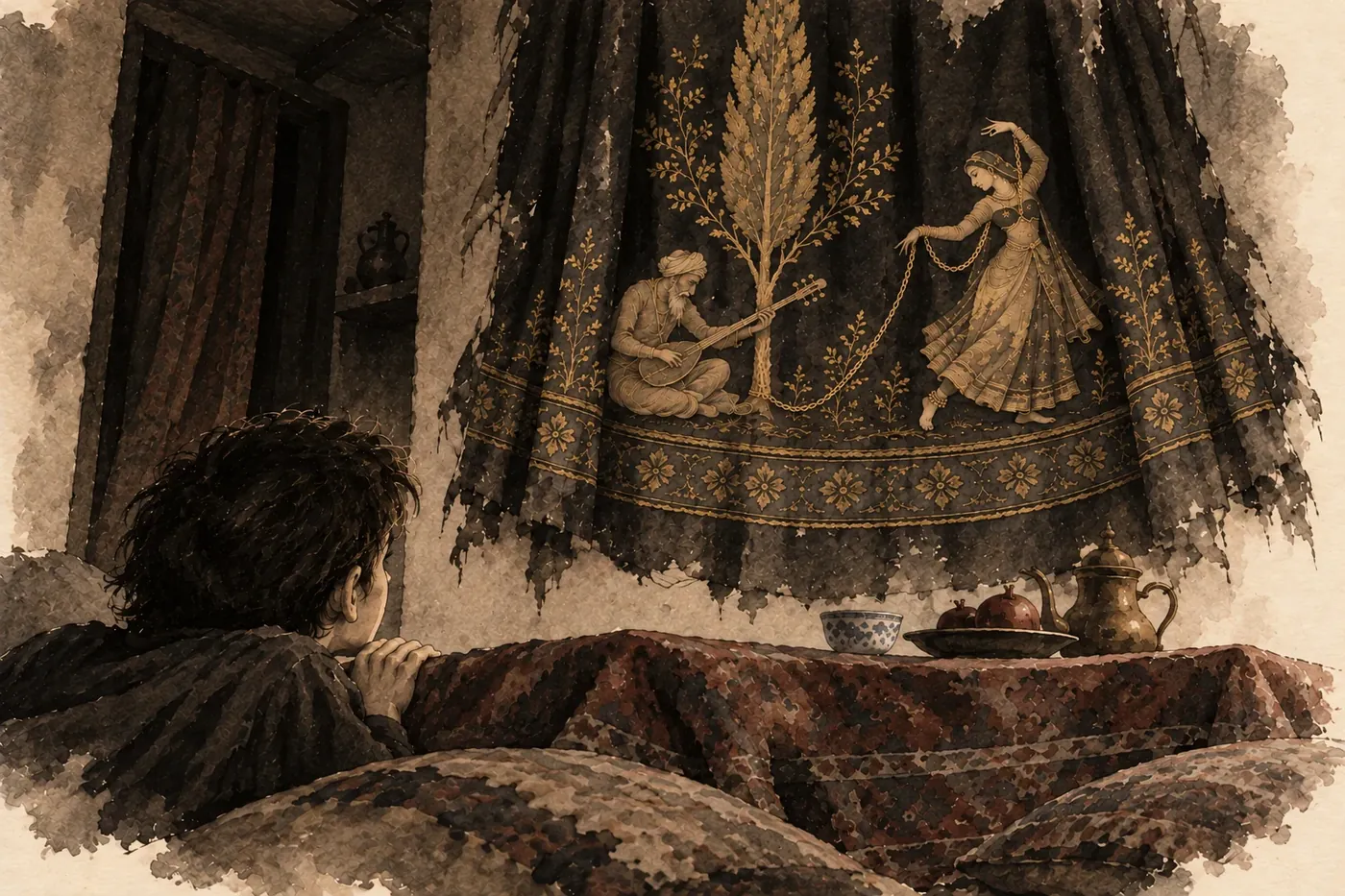
For the illustration A child's view of an Indian curtain: old man with a setar under a cypress, chained dancer before him.
The text of the scene
Sadegh Hedayat’s Persian beside our literal English, line by line.
وارد اطاقم که میشد روی خلط خودم را که در لگن انداخته بودم میپوشاندم.
When she entered my room, I covered the phlegm I had spat into the basin.
ولی پیش دایهام هیچ جور رودرواسی نداشتم.
But before my nurse I had no embarrassment of any kind.
چرا این زن که هیچ رابطهای با من نداشت خودش را آنقدر داخل زندگی من کرده بود.
Why had this woman, who had no relation to me, involved herself so deeply in my life?
یادم است در همین اطاق، روی آبانبار، زمستانها کرسی میگذاشتند.
I remember that in this very room, above the cistern, they used to set up a korsi in winter.
من و دایهام با همین لکاته دور کرسی میخوابیدیم.
My nurse and I slept around the korsi with this very harlot.
تاریکروشن، چشمهایم بازمیشد نقش روی پرده گلدوزی که جلو در آویزان بود در مقابل چشمم جان میگرفت؛
In the half-light, when my eyes opened, the design on the embroidered curtain hanging before the door came alive before my eyes.
رویش یک پیرمرد قوزکرده شبیه جوکیان هند شالمه بسته زیر یک درخت سرو نشسته بود و سازی شبیه سهتار در دست داشت و یک دختر جوان خوشگل مانند بوگامداسی رقاصه بتکدههای هند دستهایش را زنجیر کرده بود و مثل این بود که مجبور است جلو پیرمرد برقصد!
On it a hunchbacked old man, resembling an Indian ascetic and wearing a turban, sat beneath a cypress tree, holding an instrument resembling a setar, while a beautiful young girl, like a Bugam-Dasi, a dancer from the temples of India, had her hands chained and seemed compelled to dance before him!
پیش خودم تصور میکردم شاید این پیرمرد را هم در یک سیاهچال با یک مارناگ انداخته بودند که به این شکل درآمده بود و موهای سر و ریشش سفید شده بود.
I imagined that perhaps this old man too had been thrown into a dungeon with a naga snake, had taken on this appearance, and his hair and beard had turned white.
از این پردههای زردوزی هندی بود که شاید پدر یا عمویم از ممالک دور فرستاده بودند.
It was one of those Indian gold-embroidered curtains that perhaps my father or uncle had sent from distant lands.
به این شکل که زیاد دقیق میشدم میترسیدم.
When I looked too closely at this design I was afraid.
دایهام را خوابآلود بیدار میکردم، او با نفس بدبو و موهای خشن سیاهش که به صورتم مالیده میشد مرا به خودش میچسبانید.
I woke my drowsy nurse; with her foul breath and coarse black hair rubbing against my face, she pressed me against herself.
صبح که چشمم باز شد او به همان شکل در نظرم جلوه کرد.
In the morning when I opened my eyes, she appeared to me in the same form.
فقط خطهای صورتش گودتر و سختتر شده بود.
Only the lines of her face had become deeper and harder.
اغلب برای فراموشی، برای فرار از خودم، ایام بچگی خودم را به یاد میآورم. برای اینکه خودم را در حال قبل از ناخوشی حس بکنم؛
Often, for forgetfulness, to escape from myself, I recall the days of my childhood, to feel myself as I was before illness;
هنوز حس میکردم که بچه هستم و برای مرگم، برای معدوم شدنم یک نفس دومی بود که به حال من ترحم میآورد، به حال این بچهای که خواهد مرد.
I still felt that I was a child, and for my death, for my annihilation, there was a second self that took pity on me, on this child who would die.
در مواقع ترسناک زندگی خودم همینکه صورت آرام دایهام را میدیدم، صورت رنگپریده، چشمهای گود و بیحرکت و کدر و پرههای نازک بینی و پیشانی استخوانی پهن او را که میدیدم، یادگارهای آنوقت در من بیدار میشد.
In the frightening moments of my life, as soon as I saw my nurse's calm face—her pale face, sunken, motionless and dull eyes, thin nostrils, and broad bony forehead—the memories of that time awakened in me.
شاید امواج مرموزی از او تراوش میکرد که باعث تسکین من میشد.
Perhaps mysterious waves emanated from her and gave me relief.
یک خال گوشتی روی شقیقهاش بود که رویش مو درآورده بود.
There was a fleshy mole on her temple with hair growing out of it.
گویا فقط امروز متوجه خال او شدم، پیشتر که به صورتش نگاه میکردم اینطور دقیق نمیشدم.
It was as though only today I noticed her mole; before, when I looked at her face, I had not looked so closely.
اگر چه ننهجون ظاهراً تغییر کرده بود ولی افکارش به حال خود باقی مانده بود.
Although Naneh-Joon had apparently changed, her thoughts had remained as they were.
فقط به زندگی بیشتر اظهار علاقه میکرد و از مرگ میترسید.
Only, she expressed more attachment to life and feared death.
مگسهایی که اول پاییز به اطاق پناه میآوردند.
The flies that took refuge in the room at the beginning of autumn.
به نظرم میآمد که طول زمان و تغییراتی که ممکن بود آدمها در چندین سال انجام بکنند برای من این سرعت سیر و جریان هزاران بار مضاعف و تندتر شده بود.
It seemed to me that the span of time and changes that people might undergo over several years had, for me, a course and current thousands of times multiplied and faster,
در صورتی که خوشی آن به طور معکوس به طرف صفر میرفت و شاید از صفر هم تجاوز میکرد.
while its happiness moved inversely toward zero and perhaps even passed beyond zero.
کسانی هستند که از بیست سالگی شروع به جانکندن میکنند در صورتی که بسیاری از مردم فقط در هنگام مرگشان خیلی آرام و آهسته مثل پیهسوزی که روغنش تمام بشود خاموش میشوند.
There are people who begin dying at twenty, whereas many people go out only at their death, very quietly and slowly, like an oil lamp whose oil has run out.
← Scene 49: The water jar breaks; morningScene 51: The overturned soup; opium prescribed →