 New Naqqali
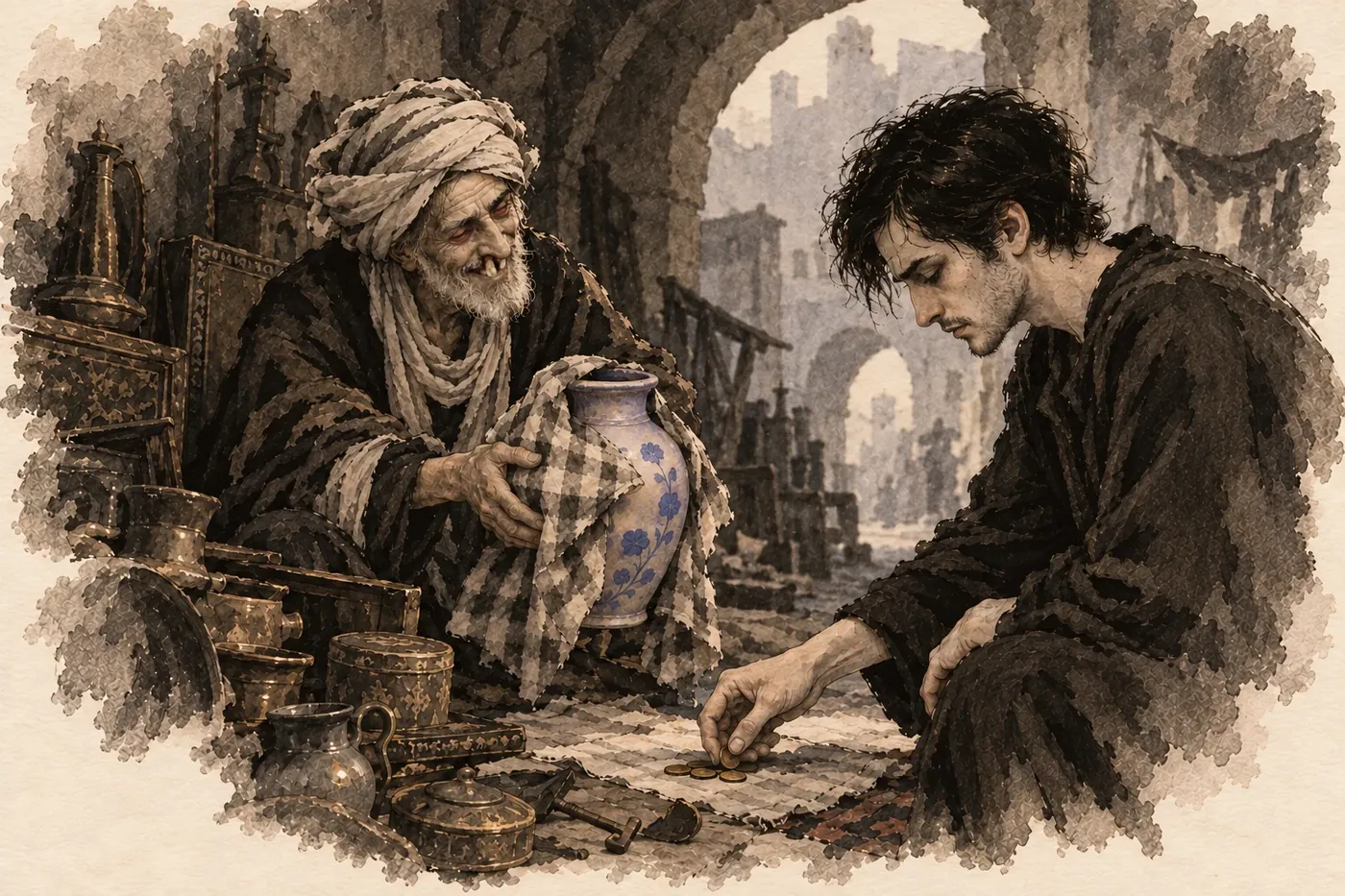
I remember that on that same day I went over to the old man’s wares and asked the price of his jar. From inside his neck-scarf, two rotten teeth showed through his harelip. He laughed, a dry, grating laugh that made your hair stand on end, and said: “Buying it without seeing it? This jar is nothing much, eh.1 Take it, young man, and may it bring you luck.” In a peculiar tone he said: “It’s nothing much; may it bring you luck.” I put my hand in my pocket and laid two dirhams and four pennies2 on the corner of his cloth. He laughed again, a grating laugh that made your hair stand on end. I was so ashamed I wanted to sink into the ground. I covered my face with my hands and went back. From all his wares there rises the rusty smell of dirty, cast-off things that life has finished with. Perhaps he wanted to thrust life’s cast-off things in people’s faces! To show them to people! Was he not old and cast off himself? The things on his cloth were all dead, dirty and worn out; yet what stubborn life, what meaningful shapes they had! These dead things left such a mark on me as living people could never have left.
Notes
- “This jar is nothing much” (qabeli nadareh): a polite formula of Persian shopkeepers, who offer the goods as if they were a gift before naming a price. The old man says it in his own way, with a laugh. ↩
- dirhams and pennies (pashiz): old coin names. The pashiz was the smallest copper coin; together they make a trifling sum. ↩
This scene on the loop
The lit bead is this scene; red beads are the thread you pick. Gold arcs join it to the scenes it echoes (23, 32, 77). Pick a thread to see where that figure or object comes back; tap any bead to read that scene. The whole loop, with every thread and echo.
This scene in the Persian and literal English, line by line · the scene’s page, with who and what is in it · all scenes