 New Naqqali
These were my ties with the outside world. But of the inner world, only my nurse and a harlot1 were left to me. But Naneh-Joon2 is her nurse too; she is the nurse of us both. For not only were my wife and I close kin, Naneh-Joon had nursed us both together. In fact her mother was my mother too, for I never saw my mother or my father, and it was her mother, that tall woman with gray hair, who brought me up. It was her mother that I loved like my own mother, and it was because of that love that I took her daughter as my wife.
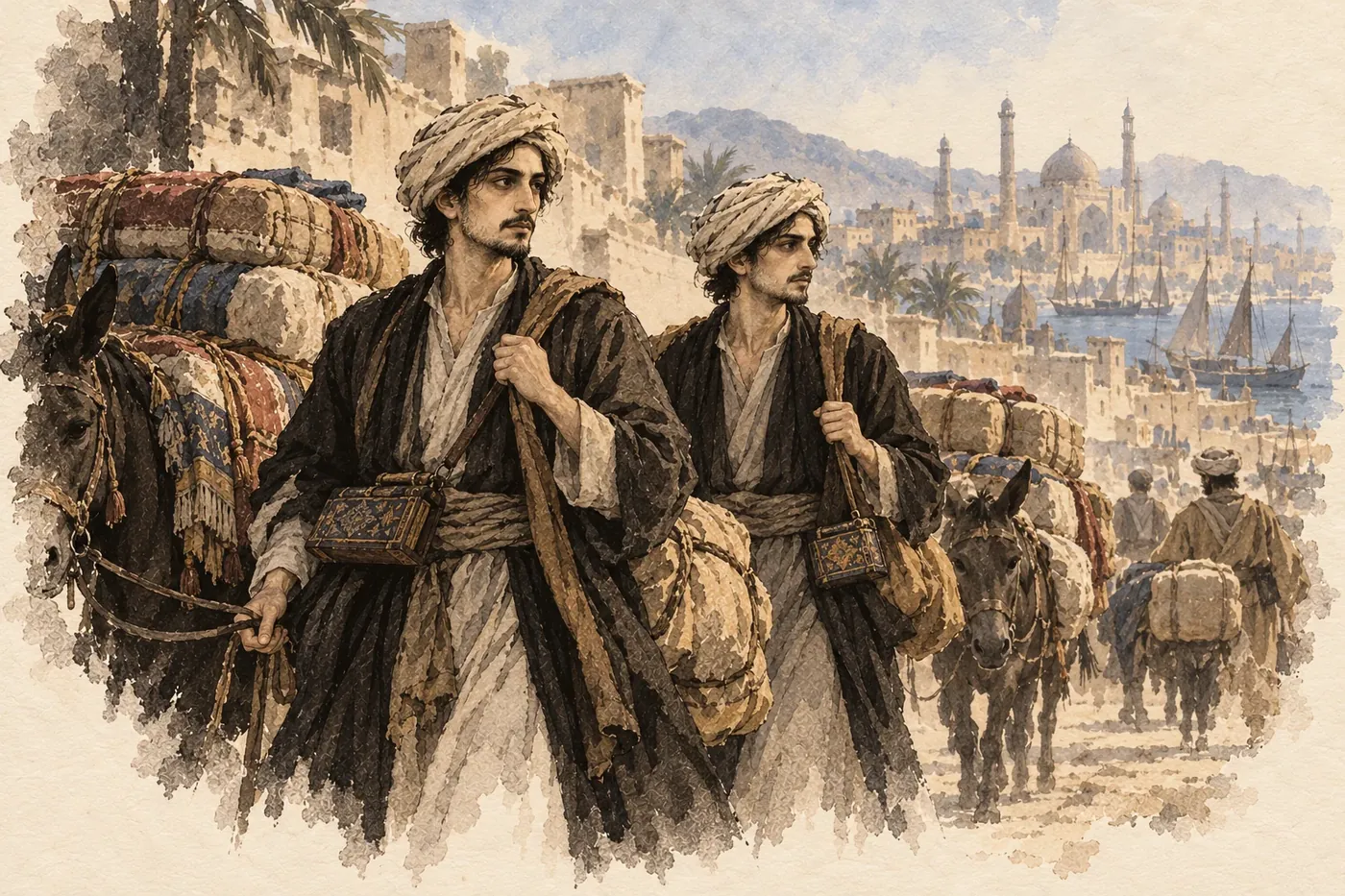
I have heard several kinds of stories about my father and mother. I believe only one of them, the one Naneh-Joon told me, must be true. Naneh-Joon told me that my father and my uncle were twin brothers. They had the same build, the same face and the same nature, and even their voices were alike, so that it was not easy to tell one from the other. Besides this, there was a bond of the spirit between them, a shared feeling, so that if one of them fell ill, the other fell ill too; as people say, they were like an apple cut in half. In time they both take up trade, and at the age of twenty they go to India. They used to take the goods of Ray to India and sell them: all kinds of cloth, such as monireh,3 flowered cloth and cotton, and robes, shawls, needles, earthenware, washing clay and pen-case covers. My father stayed in the city of Benares, and sent my uncle to the other cities of India on business.
Notes
- the harlot (lakkateh): Hedayat’s word for the narrator’s wife is a coarse insult, something like “slut” or “tramp”: a loose, worthless woman. From here on it is the name the narrator gives her again and again. ↩
- Naneh-Joon: “Nanny dear”, the homely name for the old wet-nurse who fed both children at her breast and stayed on in the household. ↩
- monireh: a kind of cloth of the time. The rest of the list is the ordinary stock of a Persian bazaar, down to washing clay, a soft clay used for washing the hair. ↩
This scene on the loop
The lit bead is this scene; red beads are the thread you pick. Pick a thread to see where that figure or object comes back; tap any bead to read that scene. The whole loop, with every thread and echo.
This scene in the Persian and literal English, line by line · the scene’s page, with who and what is in it · all scenes