 New Naqqali
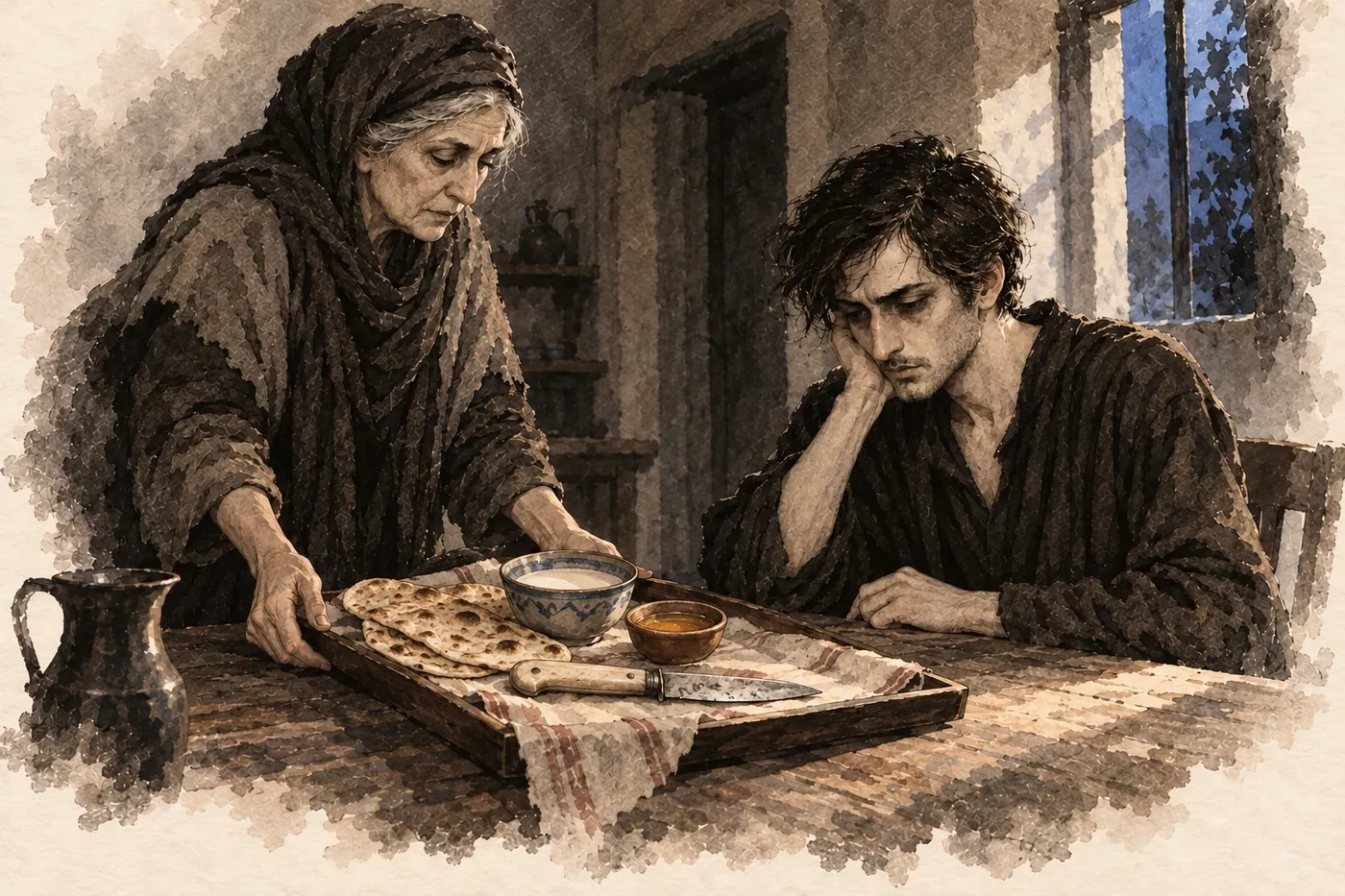
Naneh-Joon brought me she-donkey’s milk, honey and flatbread. Beside my breakfast on the tray she had also put a bone-handled knife, and she told me she had seen it among the old junk dealer’s wares and bought it. Then she raised her eyebrows and said: “Might come in handy!” I picked up the knife and looked at it. It was my own knife. Then Naneh-Joon said, complaining and hurt: “Yes! My daughter (that is, that harlot) says first thing this morning, ‘You stole my shirt last night.’ I don’t want it on my conscience! But yesterday your wife saw some spotting… We knew the baby… She said herself she got pregnant in the bathhouse.1 When I went to rub her back last night, I saw her arm was all bruises. She showed me and said, ‘I went down into the cellar at the wrong hour, and the ones better than us pinched me.’”2 Then she said again: “Did you have any idea your wife has been pregnant a long time?” I laughed and said: “The baby must look like the old Quran-reciter. It must have stirred at his face!”3 Then Naneh-Joon went out of the door with a changed look on her face. It seemed she had not expected that answer. I got up at once, and with a trembling hand I took the bone-handled knife into the back closet of my room, put it in its box and shut the lid.
No, it could never be that the baby had stirred at my face. It must have stirred at the old junk dealer’s face!
Notes
- pregnant in the bathhouse: an old folk excuse, that a woman could conceive from water in the public bath that a man had bathed in. ↩
- the ones better than us (az ma behtaran): a cautious name for the jinn, used so as not to call them by name. They were thought to haunt dark places such as cellars at certain hours. ↩
- stirred at his face: a folk belief that a baby takes after the face its mother is looking at when she first feels it move. ↩
This scene on the loop
The lit bead is this scene; red beads are the thread you pick. Gold arcs join it to the scenes it echoes (17, 57, 70). Pick a thread to see where that figure or object comes back; tap any bead to read that scene. The whole loop, with every thread and echo.
This scene in the Persian and literal English, line by line · the scene’s page, with who and what is in it · all scenes