 New Naqqali
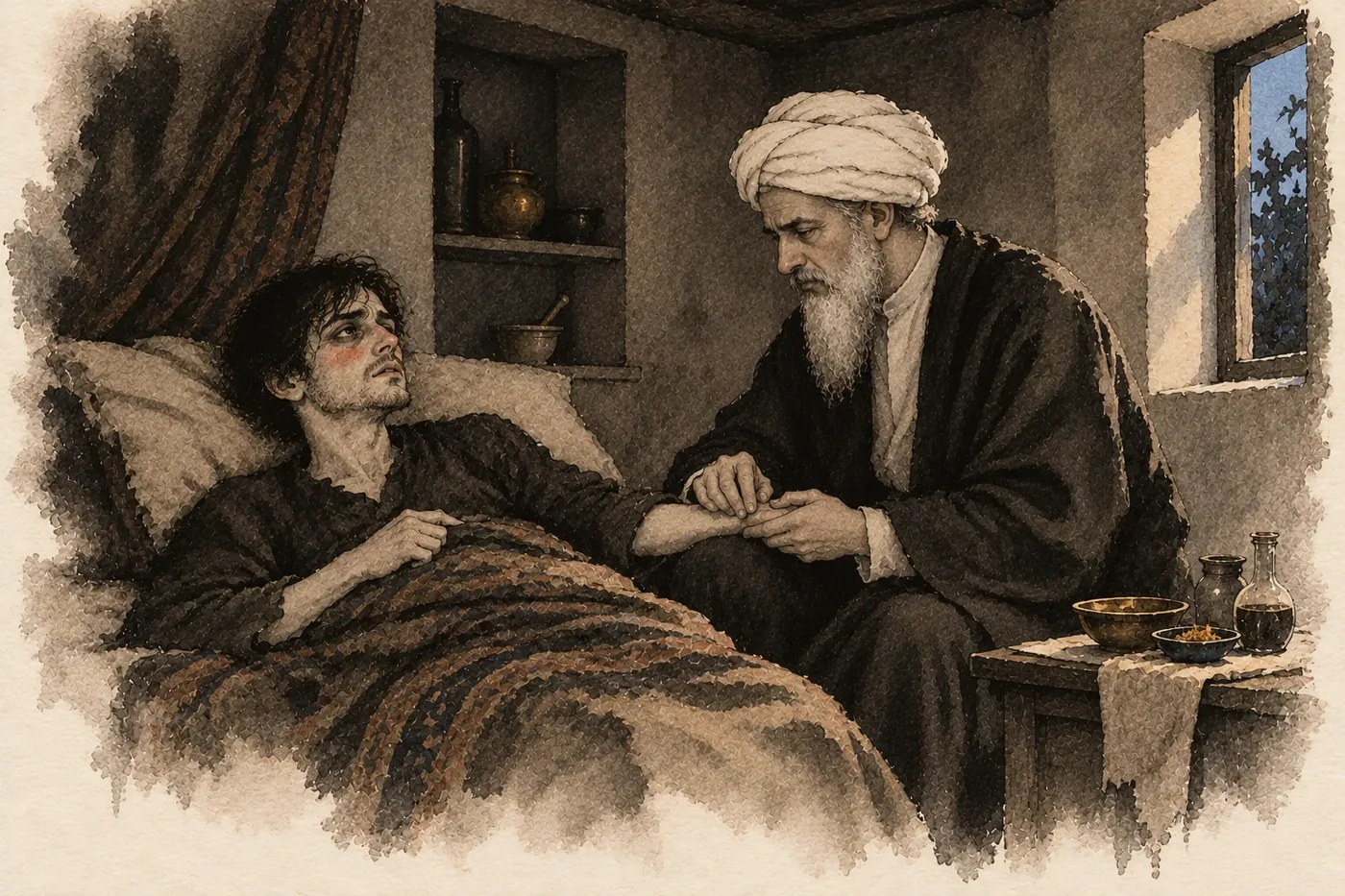
Day by day I wasted away. When I looked at myself in the mirror, my cheeks had turned red, the color of the meat in front of a butcher’s shop.1 My body burned with fever, and my eyes had taken on a heavy-lidded, sorrowful look. I took pleasure in this new state of mine. In my eyes I had seen the dust of death. I had seen that I must go.
At last they sent for the physician: the physician of the rabble, the family physician who, as he put it, had brought us up. He came in with a turban the color of milk and sugar,2 and a beard three fistfuls long. He was proud of having given my grandfather a potion for his manhood, of having poured flixweed and rock sugar down my throat, and of having bound cassia to my aunt’s navel. Well, as soon as he came, he sat down by my pillow, took my pulse and looked at my tongue. He told me to drink she-donkey’s milk and barley water, and to be fumigated twice a day with frankincense and arsenic. He also handed my nurse several long prescriptions, for herbal brews and strange, outlandish oils, such as hyssop, olive, licorice extract, camphor, maidenhair fern, chamomile oil, goose fat, flaxseed, pine seed and other rubbish.3
Notes
- ◇ The color of meat. The same words were used in the first part of the book for the red that came into the girl’s cheeks: “like the color of the meat in front of a butcher’s shop”. ↩
- ◇ The same turban. The physician’s turban, the color of milk and sugar (a creamy white), is the one wound round the head of the old junk dealer. ↩
- the physician’s cures: the remedies of traditional Persian medicine, which treated illness by balancing the hot and cold natures of the body. The narrator has no faith in them. ↩
This scene on the loop
The lit bead is this scene; red beads are the thread you pick. Pick a thread to see where that figure or object comes back; tap any bead to read that scene. The whole loop, with every thread and echo.
This scene in the Persian and literal English, line by line · the scene’s page, with who and what is in it · all scenes