 New Naqqali
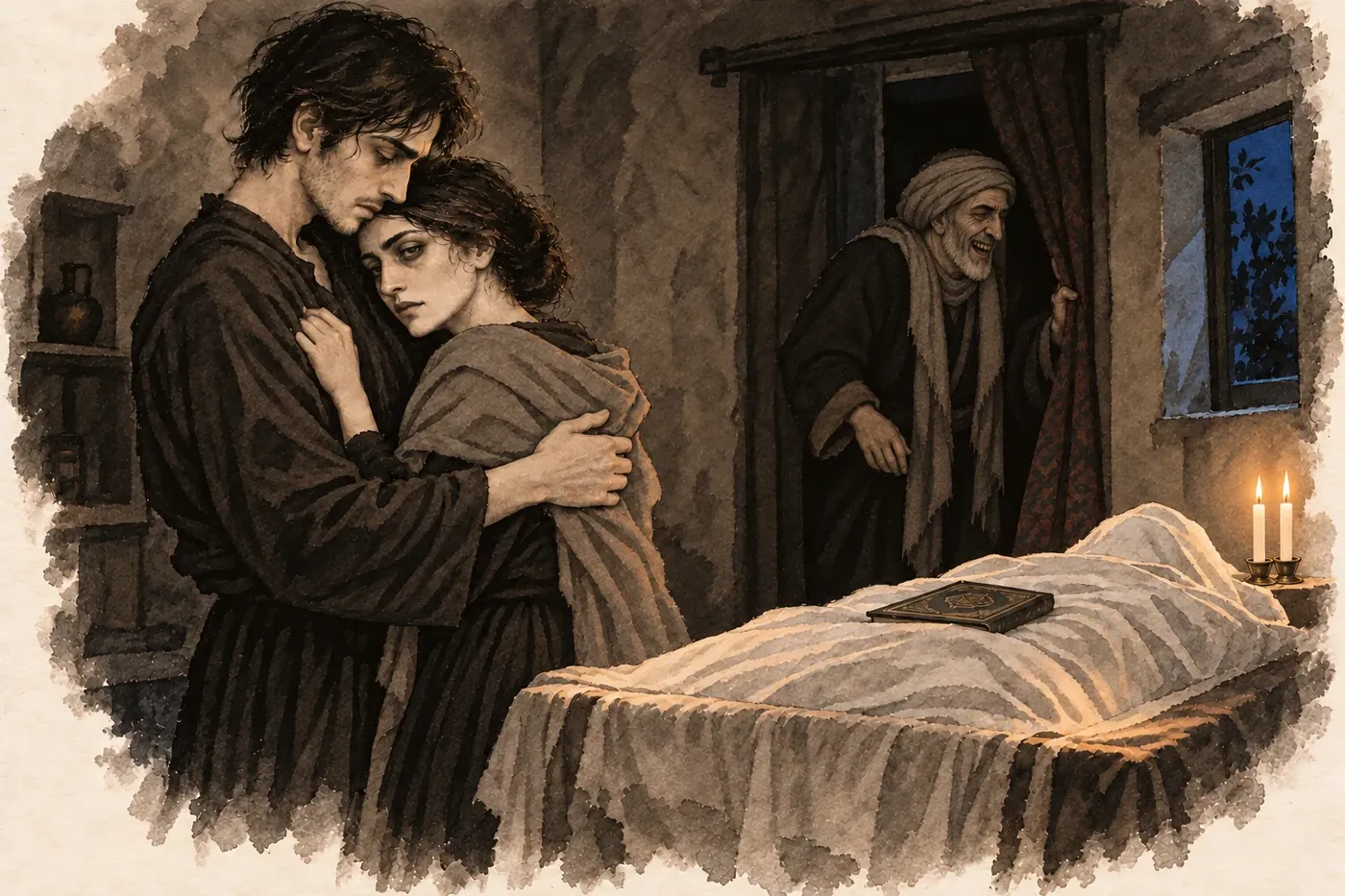
In any case, I was a baby at the breast when they put me in the arms of this same Naneh-Joon, and Naneh-Joon was nursing my aunt’s daughter too, this same harlot wife of mine. And I grew up in this same house, in the care of my aunt, that tall woman with gray hair over her forehead, together with her daughter, this same harlot. For as long as I can remember, I took my aunt for my mother, and I loved her. I loved her so much that later on I married her daughter, my own milk-sister,1 because she looked like her. That is, I was forced to marry her. Only once did this girl give herself to me. I will never forget it. And that was at the bedside of her dead mother. It was late in the night. To say a last goodbye, as soon as the whole household had gone to sleep, I got up in my shirt and drawers and went into the dead woman’s room. I saw two camphor candles burning at her head. They had laid a Quran on her belly so that the devil would not enter her body.2 When I drew back the cloth from her face, I saw my aunt, with that dignified, striking look of hers. It was as though every earthly attachment had melted away from her face. There was something in it that made me bow. But at the same time, death seemed to me an ordinary, natural thing. A mocking smile had dried at the corner of her lips. I wanted to kiss her hand and leave the room. But when I turned round, I saw to my surprise that this same harlot, who is now my wife, had come in. And in front of the dead mother, her own mother, with what heat she pressed herself against me and drew me to her, and what wet kisses she gave me! I wanted to sink into the ground for shame. But I did not know what to do. The dead woman, with her bared teeth, seemed to be mocking us. It seemed to me that the calm smile on the dead woman’s face had changed. Without meaning to, I took her in my arms and kissed her. But at that moment the curtain of the adjoining room was drawn back, and my aunt’s husband, this same harlot’s father, came into the room, hunched, a scarf wound round his neck. He gave a dry, grating, sickening laugh. It made your hair stand on end. His shoulders shook with it, but he did not look our way. I wanted to sink into the ground for shame, and if I could have, I would have slapped the dead woman hard across the face, for she was looking at us mockingly. What disgrace! In terror I ran out of the adjoining room.
Notes
- milk-sister: in Islamic law, children nursed at the same breast are brother and sister “by milk”, and may not marry. Naneh-Joon nursed them both. ↩
- camphor candles … a Quran on her belly: the customs of a Persian house with a death in it. Camphor was used in preparing the body, and the holy book was laid on the dead to keep evil away until burial. ↩
This scene on the loop
The lit bead is this scene; red beads are the thread you pick. Gold arcs join it to the scenes it echoes (5, 14, 46). Pick a thread to see where that figure or object comes back; tap any bead to read that scene. The whole loop, with every thread and echo.
This scene in the Persian and literal English, line by line · the scene’s page, with who and what is in it · all scenes