 New Naqqali
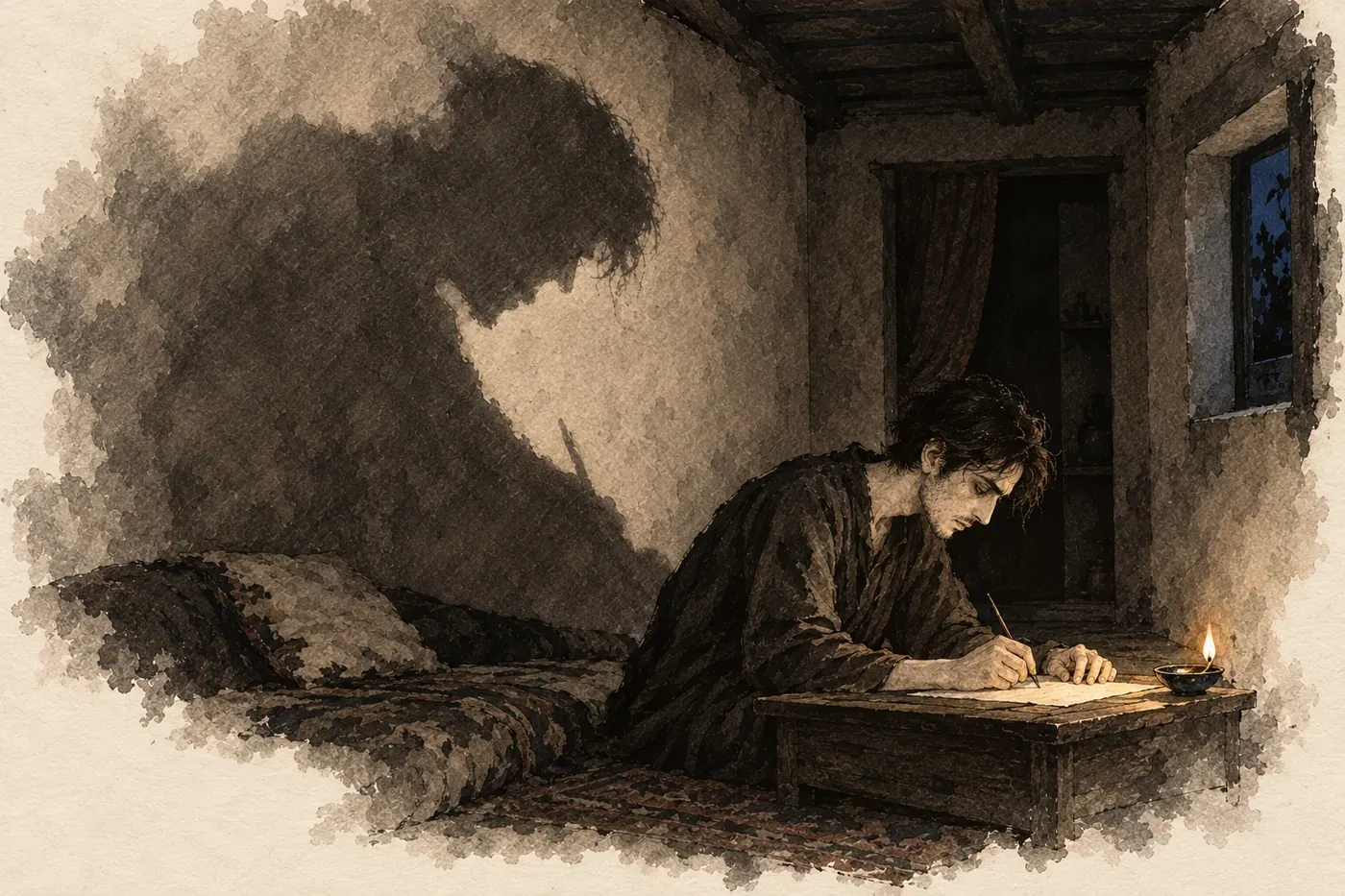
Some wounds in life eat away at the soul slowly, in solitude, like a canker.1 You cannot tell anyone about pains like these. People tend to file such unbelievable suffering away among rare and strange happenings, and if someone speaks or writes about them, they measure it against common beliefs and their own, and meet it with a doubting, mocking smile. Mankind has found no cure for this pain. Its only medicine is forgetting: through wine, or through the false sleep of opium and drugs.2 But sadly, these medicines work only for a while. After that, instead of easing the pain, they make it worse.
Will anyone ever uncover the secrets of these happenings that lie beyond the natural world, this reflection of the soul’s shadow that shows itself in a kind of trance, in the space between sleeping and waking?
I will tell of only one of these happenings. It happened to me, and it shook me so deeply that I will never forget it. Its dark mark will poison my life for as long as I live, from the first day of time to the last, as far as the mind can reach and beyond. I wrote “poison,” but what I meant is that I have always carried its scar with me, and always will.
I will try to write down what I remember, whatever has stayed in my mind of how things were connected, so that perhaps I can come to some judgment about it. No: only so that I can be sure of it, or even just believe it myself. Whether others believe it or not makes no difference to me. My only fear is that I may die tomorrow without ever having known myself. Life has taught me that a terrible gulf lies between me and other people. I learned that it is best to stay silent, as far as I can, and to keep my thoughts to myself. If I have now decided to write, it is only to introduce myself to my shadow, the shadow bent over on the wall, which seems to swallow everything I write with a great appetite. It is for my shadow that I want to try this, to see whether we can come to know each other better. Ever since I cut all my ties with other people, I have wanted to know myself better.
Empty thoughts? So be it. But they torment me more than any truth. These people who look like me, who seem to have my needs and desires, are they not here only to deceive me? Are they not a handful of shadows, created only to mock and fool me? Is everything I feel, see and judge not imaginary, and utterly different from what is real?
I write only for my own shadow, cast on the wall by the lamp. I must introduce myself to it.
Notes
- canker (Persian khoreh): a sore that slowly eats away the flesh. This opening sentence is one of the most quoted in Persian literature. ↩
- opium: in 1930s Iran opium was common, smoked from a long pipe over a brazier of coals. The narrator relies on it throughout the book, and much of what he describes may be seen through it. ↩
This scene on the loop
The lit bead is this scene; red beads are the thread you pick. Gold arcs join it to the scenes it echoes (28, 29, 60, 74). Pick a thread to see where that figure or object comes back; tap any bead to read that scene. The whole loop, with every thread and echo.
This scene in the Persian and literal English, line by line · the scene’s page, with who and what is in it · all scenes