 New Naqqali
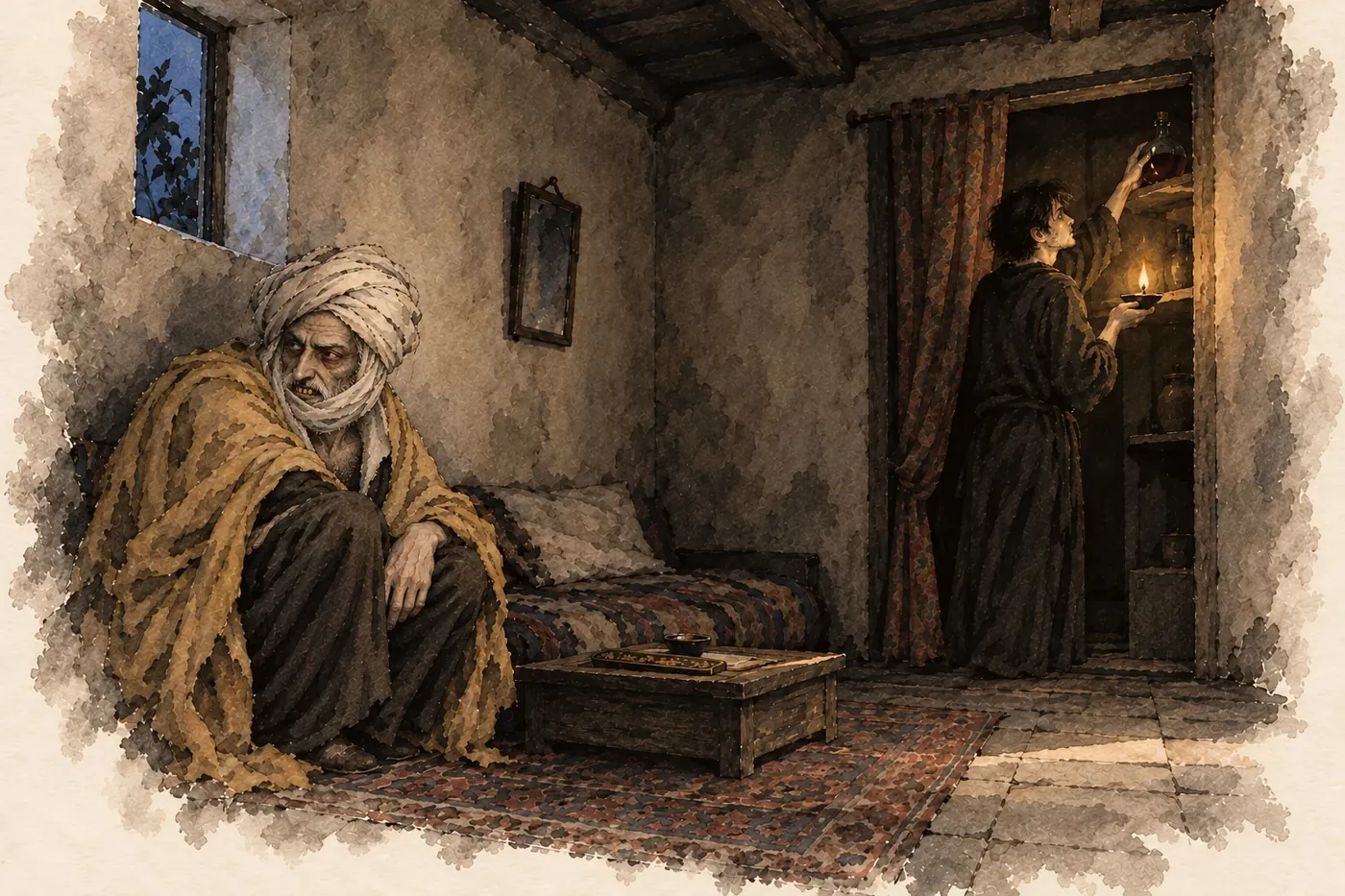
The scene seemed to me both far away and close at hand. I cannot remember exactly. Something has just come back to me. I said I must write down my memories, but this happened much later and has nothing to do with the subject; and it was because of this very event that I gave up painting altogether. Two months ago (no, two months and four days have passed) it was the thirteenth day of the New Year, Sizdah Bedar.1 Everyone had poured out of the city into the countryside. I had closed the window of my room so that I could paint in peace. Near sunset, while I was absorbed in my painting, the door suddenly opened and my uncle came in. Or at least, he said he was my uncle. I had never seen him, because he had left on a long journey at the start of his youth. I believe he was a ship’s captain. I imagined he might have some business with me, since I had heard that he also traded.
Anyway, my uncle was a hunchbacked old man with an Indian turban wound round his head, a torn yellow cloak over his shoulders, and his head and face wrapped in a scarf. His collar was open and his hairy chest showed. The few hairs of his beard that poked out from under the scarf could be counted one by one. He had raw red eyelids and a harelip. He looked like me in a distant, ridiculous way, as if my reflection had fallen on a distorting mirror. This was just how I had always pictured my father.2 As soon as he came in, he went to the side of the room and squatted down. It occurred to me that I should offer him something. I lit the lamp and went into the dark back closet of my room. I searched every corner, hoping to find something he might like, although I knew there was nothing in the house: I had no opium or drink left. Suddenly, as if it had been revealed to me, my eyes fell on the high shelf. There stood a flask of old wine that I had inherited; apparently it had been made when I was born. I had never thought of it. I had completely forgotten that such a thing was in the house.
Notes
- Sizdah Bedar: “the thirteenth, out of doors”, the last day of the Persian New Year (early April), when families leave the city for the day to cast off bad luck. The narrator stays home with the window shut. ↩
- ◇ A face that returns. The hunchback, the raw red eyelids, the harelip, the yellow cloak: the uncle shares his face with the old man on the pen case, with the narrator’s father, and with other old men still to come. Hedayat means the reader to notice. ↩
This scene on the loop
The lit bead is this scene; red beads are the thread you pick. Gold arcs join it to the scenes it echoes (6, 11, 18, 32, 36). Pick a thread to see where that figure or object comes back; tap any bead to read that scene. The whole loop, with every thread and echo.
This scene in the Persian and literal English, line by line · the scene’s page, with who and what is in it · all scenes