
New Naqqali
The Blind Owl · read · scene 34 of 77

The Bugam-Dasi of the Lingam temple

Memory · his parents in India

Scene 34 of 77 · part two
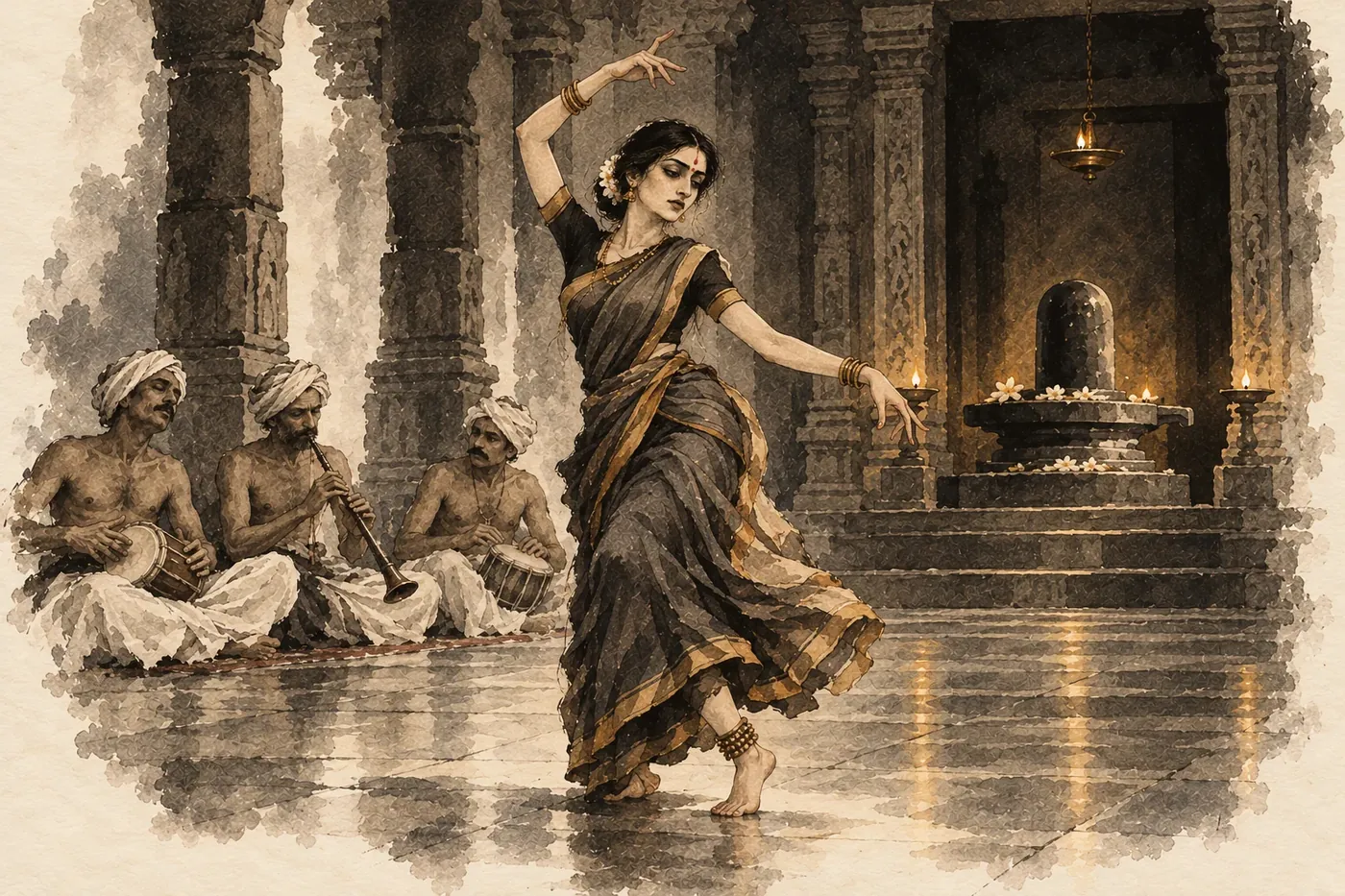
Scene 34, The Bugam-Dasi of the Lingam temple: ink-and-wash drawing
P101

After a while my father falls in love with a virgin girl, a Bugam-Dasi,1 a dancer of the Lingam temple. This girl’s work was to perform the sacred dance before the great idol of the Lingam, and to serve in the temple. She was a warm-blooded, olive-skinned girl with breasts like lemons, large slanting eyes, and thin eyebrows that met in the middle, where she put a red mark.2 Now I can picture her to myself, the Bugam-Dasi (that is, my mother), in a colored silk sari embroidered with gold, her breast bare, a band of brocade round her head, her heavy black hair, dark as the night before time began, knotted at the back of her head, bangles on her ankles and wrists, a gold ring through the side of her nose, her large black eyes heavy-lidded and slanting, her teeth gleaming. She danced with slow, measured movements to the sound of the sitar, the drum, the lute, the cymbals and the horn: a soft, monotonous music played by naked men in turbans, a music full of meaning, in which all the secrets of magic, the superstitions, the lusts and the sufferings of the people of India were gathered and condensed. With her balanced movements and her arousing gestures (sacred movements), the Bugam-Dasi opened like the petals of a flower, sent a quiver along her shoulders and arms, bent, and drew herself in again. These movements carried a meaning of their own and spoke without words. What effect might they have had on my father? Above all, the sharp, peppery smell of her sweat, mixed with the scent of mogra jasmine and sandalwood oil, must have added to the sensual meaning of the scene: a perfume that has the smell of the sap of faraway trees, and brings distant, smothered feelings to life. The smell of a medicine chest, the smell of the medicines from India that are kept in a nursery, the unknown oils of a land full of meaning and of ancient customs: it must have smelled like my own herbal brews. All this woke my father’s distant, dead memories. My father becomes so infatuated with the Bugam-Dasi that he converts to the dancing girl’s religion, the religion of the Lingam. But some time later, when the girl becomes pregnant, they turn her out of the service of the temple.

Notes

  1. Bugam-Dasi: the narrator’s form of the Indian devadasi, “servant of the god”: a girl given to a temple to dance and serve there. The Lingam is the stone emblem of the god Shiva, worshipped in his temples. ↩
  2. ◇ The same features. Slanting eyes, and thin eyebrows that meet: the narrator’s mother has the features of the girl in black, and of the face painted on the Ragha jar. ↩

This scene on the loop

part one · the lamp-lit sidepart two · the shadow sidethe twistScene 1: The shadow on the wallScene 2: A passing gleamScene 3: The house among the ruins, and the picture on the pen caseScene 4: The uncle arrives on Sizdah BedarScene 5: The vision through the air-holeScene 6: A door ajar like a dead man’s mouthScene 7: The air-hole sealed like leadScene 8: Two months of searching at sunsetScene 9: The figure in black on the doorstepScene 10: Eyes like black diamond in tearsScene 11: Wine through clenched teethScene 12: Cold hair: the dead girl and the mandrake embraceScene 13: Joined to all thingsScene 14: Drawing the dead girl by candlelightScene 15: The eyes open at dawnScene 16: The drawing in the tin box; night leaves on tiptoeScene 17: The bone-handled knife and the suitcaseScene 18: The old man under the cypress offers his hearseScene 19: The hearse through the geometric countryScene 20: The grave by the dry river; the Ragha jarScene 21: One last look into the suitcaseScene 22: The spreading bloodstainScene 23: Gift of the jar in the cemeteryScene 24: Night ride home with the jar on his chestScene 25: Her face on the jarScene 26: The ancient fellow-suffererScene 27: Opium before the two portraits; the fall down the wellScene 28: Waking in the ancient room with bloody handsScene 29: The wine of my life, for my shadow’s throatScene 30: A room like a tomb, and two windows on RayScene 31: The butcher and the black packhorsesScene 32: The old junk dealer under the archScene 33: Naneh-Joon, the aunt, and the twin brothersScene 35: The ordeal of the cobraScene 36: The poisoned wine left as a keepsakeScene 37: Beside the dead auntScene 38: The wedding night, and the floorScene 39: Bringing her lovers to herScene 40: The physician of the rabbleScene 41: The nurse’s tales and the cradle for twoScene 42: A cool hand in the darkScene 43: The tomb of my life, and the harlot’s nameScene 44: Flight through the geometric lanesScene 45: By the Soren streamScene 46: Cookies and a bitter kiss on the platformScene 47: The headless shadowScene 48: The gallows at MohammadiyehScene 49: The water jar breaks; morningScene 50: The embroidered curtain above the korsiScene 51: The overturned soup; opium prescribedScene 52: The nurse in the courtyard; prayers against deathScene 53: Night window: call to prayer and drunken watchmenScene 54: The figure behind the curtain; the mirrorScene 55: The dream city of the stiffened deadScene 56: The butcher seen from upstairsScene 57: The knife under the pillowScene 58: A coffin passes the windowScene 59: The room a coffin: death, fears and masksScene 60: His shadow on the bathhouse wallScene 61: The picture on the pen caseScene 62: Talking to the mirrorScene 63: The nurse’s tale: “Undo your neck-scarf!”Scene 64: Buying the jar from the junk dealerScene 65: The beggar like a demigodScene 66: The harlot comes in, fully made upScene 67: Weeping at her feet; soot like black snowScene 68: Masks of soot in the mirrorScene 69: A ring of fire, and poisoned wine for twoScene 70: The first night with the knifeScene 71: The knife comes backScene 72: “How does a person die?”Scene 73: Eternity by the Soren streamScene 74: The owl on the wallScene 75: “Undo your neck-scarf!”Scene 76: The old man in the mirrorScene 77: The old man goes into the mist with the jarpart one · the lamp-lit sidepart two · the shadow sidethe twistScene 1: The shadow on the wallScene 2: A passing gleamScene 3: The house among the ruins, and the picture on the pen caseScene 4: The uncle arrives on Sizdah BedarScene 5: The vision through the air-holeScene 6: A door ajar like a dead man’s mouthScene 7: The air-hole sealed like leadScene 8: Two months of searching at sunsetScene 9: The figure in black on the doorstepScene 10: Eyes like black diamond in tearsScene 11: Wine through clenched teethScene 12: Cold hair: the dead girl and the mandrake embraceScene 13: Joined to all thingsScene 14: Drawing the dead girl by candlelightScene 15: The eyes open at dawnScene 16: The drawing in the tin box; night leaves on tiptoeScene 17: The bone-handled knife and the suitcaseScene 18: The old man under the cypress offers his hearseScene 19: The hearse through the geometric countryScene 20: The grave by the dry river; the Ragha jarScene 21: One last look into the suitcaseScene 22: The spreading bloodstainScene 23: Gift of the jar in the cemeteryScene 24: Night ride home with the jar on his chestScene 25: Her face on the jarScene 26: The ancient fellow-suffererScene 27: Opium before the two portraits; the fall down the wellScene 28: Waking in the ancient room with bloody handsScene 29: The wine of my life, for my shadow’s throatScene 30: A room like a tomb, and two windows on RayScene 31: The butcher and the black packhorsesScene 32: The old junk dealer under the archScene 33: Naneh-Joon, the aunt, and the twin brothersScene 35: The ordeal of the cobraScene 36: The poisoned wine left as a keepsakeScene 37: Beside the dead auntScene 38: The wedding night, and the floorScene 39: Bringing her lovers to herScene 40: The physician of the rabbleScene 41: The nurse’s tales and the cradle for twoScene 42: A cool hand in the darkScene 43: The tomb of my life, and the harlot’s nameScene 44: Flight through the geometric lanesScene 45: By the Soren streamScene 46: Cookies and a bitter kiss on the platformScene 47: The headless shadowScene 48: The gallows at MohammadiyehScene 49: The water jar breaks; morningScene 50: The embroidered curtain above the korsiScene 51: The overturned soup; opium prescribedScene 52: The nurse in the courtyard; prayers against deathScene 53: Night window: call to prayer and drunken watchmenScene 54: The figure behind the curtain; the mirrorScene 55: The dream city of the stiffened deadScene 56: The butcher seen from upstairsScene 57: The knife under the pillowScene 58: A coffin passes the windowScene 59: The room a coffin: death, fears and masksScene 60: His shadow on the bathhouse wallScene 61: The picture on the pen caseScene 62: Talking to the mirrorScene 63: The nurse’s tale: “Undo your neck-scarf!”Scene 64: Buying the jar from the junk dealerScene 65: The beggar like a demigodScene 66: The harlot comes in, fully made upScene 67: Weeping at her feet; soot like black snowScene 68: Masks of soot in the mirrorScene 69: A ring of fire, and poisoned wine for twoScene 70: The first night with the knifeScene 71: The knife comes backScene 72: “How does a person die?”Scene 73: Eternity by the Soren streamScene 74: The owl on the wallScene 75: “Undo your neck-scarf!”Scene 76: The old man in the mirrorScene 77: The old man goes into the mist with the jar
Follow a thread

The lit bead is this scene; red beads are the thread you pick. Gold arcs join it to the scenes it echoes (5, 35). Pick a thread to see where that figure or object comes back; tap any bead to read that scene. The whole loop, with every thread and echo.

This scene in the Persian and literal English, line by line · the scene’s page, with who and what is in it · all scenes