 New Naqqali
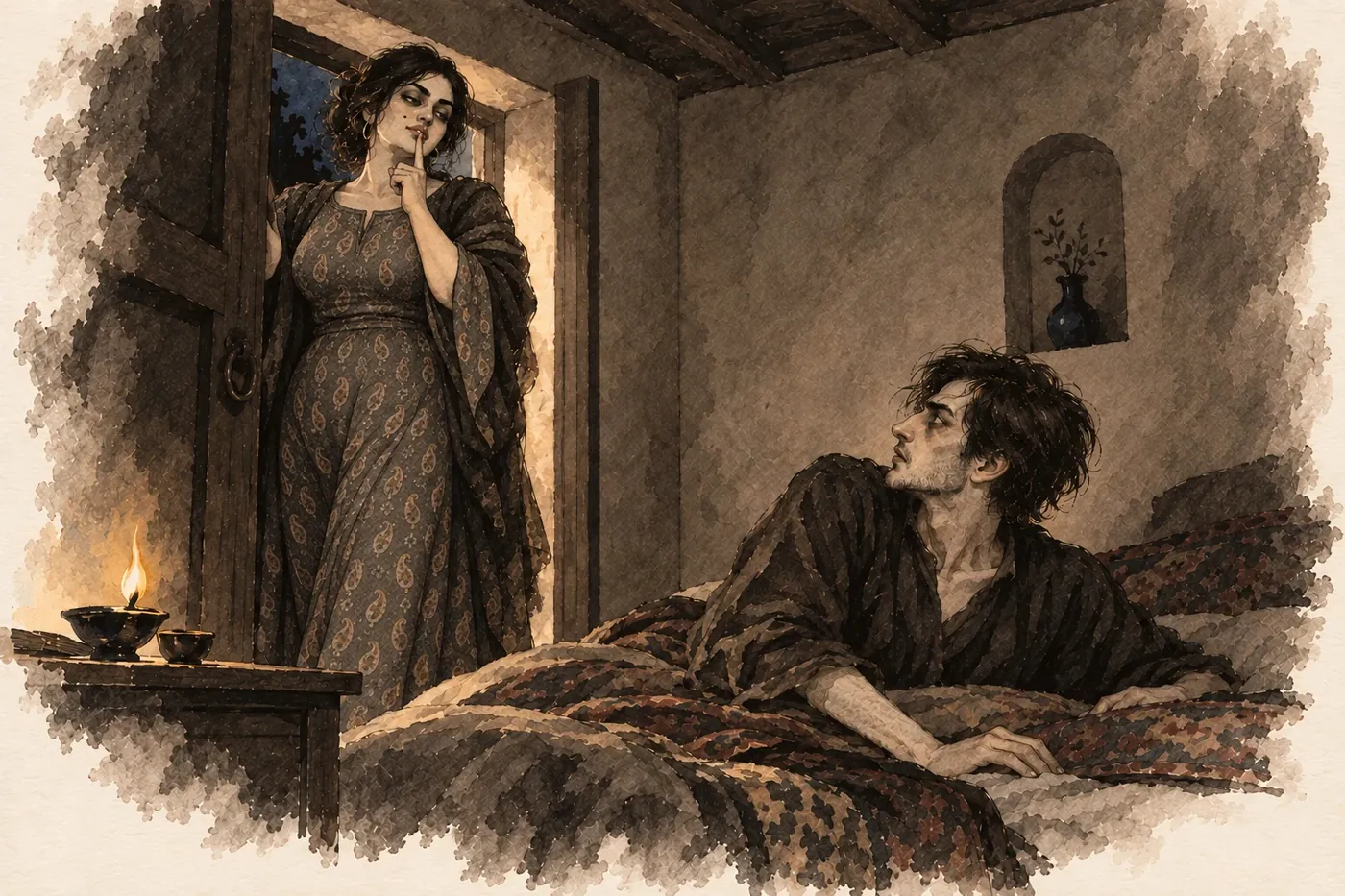
The sun had turned yellow. The mournful sound of the kettledrums1 rose, a sound of helplessness and pleading that woke all the superstitions handed down to us, and the fear of the dark. The crisis came: the state I had felt in my heart beforehand, and that I had been waiting for. A burning heat had seized me from head to foot. I was suffocating. I went and fell into bed and closed my eyes. The fever was so strong that everything seemed to have grown larger, with edge upon edge around it. Instead of coming down, the ceiling had gone up. My clothes pressed on my body. For no reason I got up and sat in my bed. I murmured to myself: “More than this is not possible… It is unbearable…” Suddenly I fell silent. Then, slowly and loudly, in a mocking voice, I said: “More than this…” And then I added: “I am a fool!” I was not paying attention to the meaning of the words I spoke. I only enjoyed the vibration of my voice in the air. Perhaps I was talking to my own shadow, to drive away my loneliness! At that moment I saw something unbelievable. The door opened and that harlot came in. So it seems she does think of me sometimes. There is still something to be thankful for! She too knew that I was alive, that I was suffering and would slowly die. There was still something to be thankful for. I only wanted to know whether she knew that it was for her sake that I was dying! If she knew, then I would die at peace and happy. Then I would be the happiest man on earth. When this harlot came into my room, my evil thoughts fled. I do not know what rays flowed from her being, from her movements, that soothed me so! This time she looked better. She had grown plump and matronly. She was wearing a gray tunic with a pattern of little triangles. She had plucked the hair below her eyebrows, put on a beauty spot, darkened her brows with woad, and used rouge, white powder and kohl. In short, she came into my room made up with all seven cosmetics.2 She seemed pleased with her life, and without thinking she put the forefinger of her left hand to her mouth.3 Was this the same delicate woman, the same slender, ethereal girl who wore a pleated black dress, and with whom I played hide-and-seek beside the Soren stream? The same girl with the free, childlike, fleeting manner, whose sensual ankle showed beneath the hem of her dress? Until now, when I looked at her, I had not really noticed. At this moment it was as if a veil fell from my eyes! I do not know why, I thought of the sheep at the door of the butcher’s shop! To me she had become no more than a piece of lean meat, and she had lost all her old charm. She had become a settled woman, staid and respectable, with her mind on the business of living: a real woman! My wife! With fear and dread I saw that my wife had grown up and come of age, while I myself had stayed a child. To tell the truth, I was ashamed before her face, before her eyes. A woman who gave herself to everyone except me; and I comforted myself only with an illusory memory of her childhood, of the time when she had a simple, childlike face and a faint, fleeting look, and the marks of the teeth of the old junk dealer on the corner could not yet be seen on her face. No, this was not the same person.
She asked mockingly: “How are you?” I answered her: “Aren’t you free? Don’t you do whatever you like? What’s my health to you?” She slammed the door and left. She did not even turn round to look at me. It seemed I had forgotten how to talk to the people of this world, to living people! She, that same woman I had thought was without any feeling at all, was hurt by what I did.
Notes
- kettledrums (naqqareh): in old Persian towns, drums and horns were sounded from a gatehouse or tower at sunset and at dawn. ↩
- all seven cosmetics (haft qalam): the traditional full make-up of a Persian woman, several of which the narrator has just named: woad to darken the brows, kohl for the eyes, rouge, white powder, a beauty spot. Plucking the hair around the brows was a sign of a married woman. ↩
- ◇ A finger at the mouth. The old man on the pen case holds the forefinger of his left hand to his lips. The same gesture now passes to her. ↩
This scene on the loop
The lit bead is this scene; red beads are the thread you pick. Gold arcs join it to the scenes it echoes (31, 45). Pick a thread to see where that figure or object comes back; tap any bead to read that scene. The whole loop, with every thread and echo.
This scene in the Persian and literal English, line by line · the scene’s page, with who and what is in it · all scenes