
New Naqqali
The Blind Owl · read · scene 29 of 77

The wine of my life, for my shadow’s throat

Reflection · the narrator, now (second account)

Scene 29 of 77 · part two
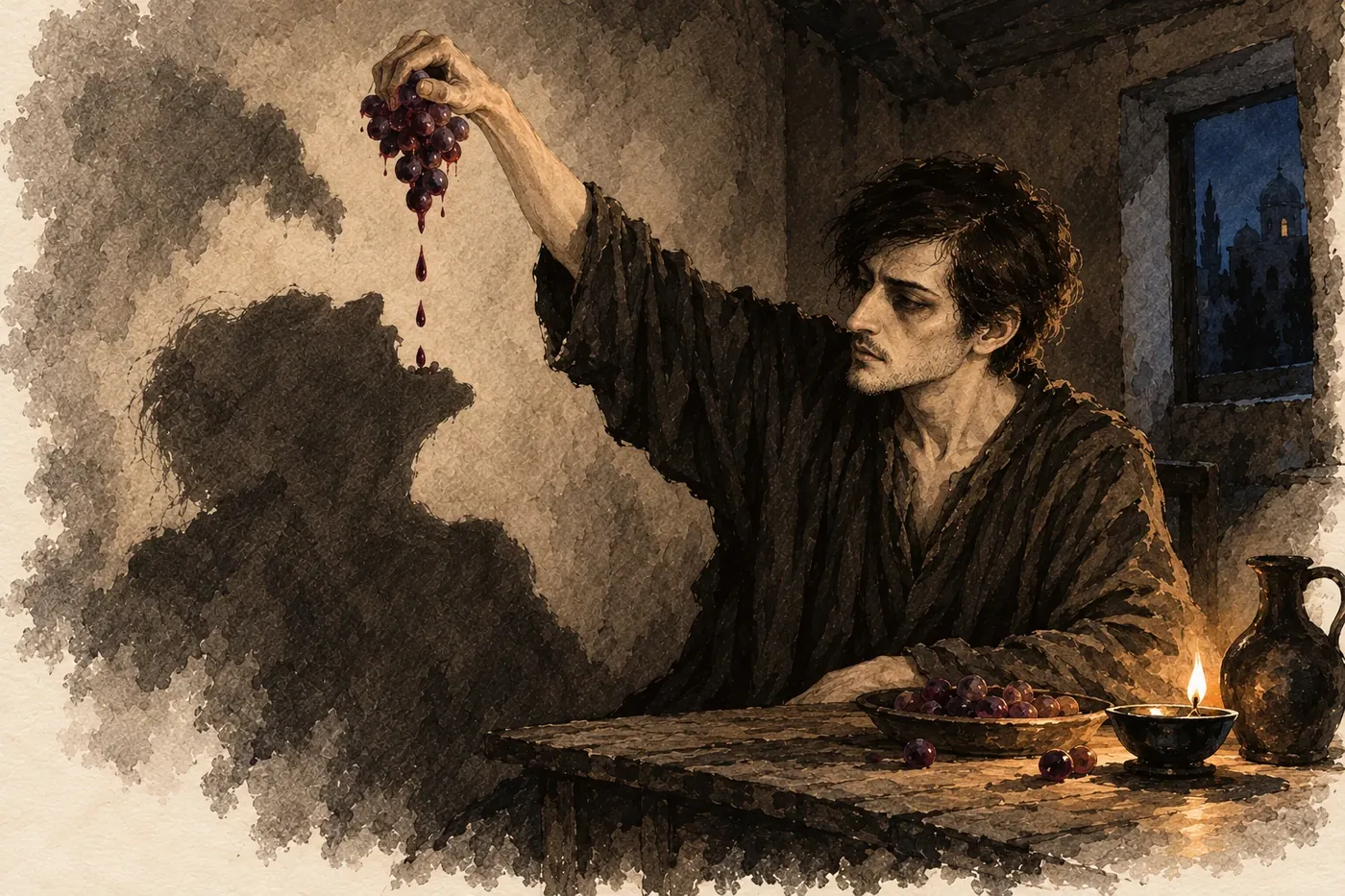
Scene 29, The wine of my life, for my shadow’s throat: ink-and-wash drawing
P085

I always used to think that silence was the best of all things. I thought it better for a man to spread his wings like the butimar1 by the sea and sit alone. But now it is no longer up to me, because what should not have happened has happened. Who knows? Perhaps this very minute, or an hour from now, a band of drunken watchmen will come to arrest me! I have no wish at all to save my own carcass. Besides, there is no room left for denial, even if I were to wipe away the spots of blood. But before I fall into their hands, I will drink a cup from that flask of wine, my inherited wine, which I have put on the high shelf.

P086

Now I want to squeeze the whole of my life in my hand like a bunch of grapes, and drip its juice (no, its wine) drop by drop into the dry throat of my shadow, like holy water.2 Before I go, I only want to put on paper the pains that have eaten away at me bit by bit in the corner of this room, like a canker or a tumor, because this way I can better sort and order my thoughts. Do I mean to write a will? Never! For I have no property for the state to swallow, and no faith for the devil to carry off. And besides, what on earth could have the slightest value for me? Whatever was life I have lost; I let it go, I wanted it to slip from my hands… And after I am gone, to hell with it! Let someone read my scraps of paper, or let no one read them for seventy black years. I write only because of this need to write, which for now has become a necessity to me. I need, more than ever I need, to pass my thoughts on to my imaginary being, to my shadow: this ominous shadow bent over on the wall in the light of the tallow lamp, which seems to read carefully whatever I write, and swallow it. This shadow surely understands better than I do! Only with my own shadow can I really talk. It is my shadow that makes me speak. Only it can know me. It surely understands.

P087

I want to drip the juice (no, the bitter wine) of my life drop by drop into my shadow’s dry throat, and say to it: “This is my life!”

P088

Whoever saw me yesterday saw a broken, sickly young man. But today they see a hunchbacked old man with white hair, raw, inflamed eyes and a harelip. I am afraid to look out of the window of my room, or to look at myself in the mirror, because everywhere I see my own shadows, multiplied. But to be able to explain my life to my bent shadow, I must tell a story. How many stories there are about childhood, about love, sex, marriage and death, and not one of them is true! I am tired of tales and fine phrases.

P089

I will try to squeeze this bunch. But will there be the least trace of truth in it or not?! That I no longer know. I do not know where I am, or whether this patch of sky above my head, or these few spans of ground I sit on, belong to Nishapur, or Balkh, or Benares. In any case, I am sure of nothing.

P090

I have seen so many contradictory things and heard so many words of every kind, and my eyes have rubbed so long against the surfaces of different things, this thin, hard crust behind which the spirit hides, that now I believe in nothing. Even now I doubt the weight and solidity of things, the plain and obvious truths. I do not know whether, if I struck my fingers against the stone mortar in the corner of our courtyard and asked it, “Are you fixed and solid?”, and it answered yes, I should believe it or not!

P091

Am I a separate, distinct being? I do not know. But just now, when I looked in the mirror, I did not recognize myself. No, that former “I” has died and decayed, yet there is no wall, no barrier between us. I must tell my own story. But I do not know where one should begin! The whole of life is tales and stories. I must squeeze the bunch of grapes and pour its juice, spoonful by spoonful, into the dry throat of this old shadow.

P092

Where should one begin? For all the thoughts boiling in my head right now belong to this very moment. They have no hour, no minute, no date. Something that happened yesterday may be older to me, and touch me less, than something that happened a thousand years ago.

P093

Perhaps it is because all my ties with the world of the living have been cut that memories of the past take shape before me! Past, future, hour, day, month and year are all the same to me. The different stages of childhood and old age are nothing to me but empty words. They hold true only for ordinary people, for the rabble (rajjaleh,3 with the double j: that was the very word I was looking for), for the rabble, whose life has its fixed season and limit, like the seasons of the year, and lies in the temperate zone of life. But my life has had only one season and one state. It is as if it has passed in a cold land, in eternal darkness, while inside my body a flame always burns and melts me like a candle.

Notes

  1. butimar: a heron-like bird of Persian lore that sits alone and silent on the shore, grieving, and will not drink for fear the water will run dry. ↩
  2. holy water (ab-e torbat): water in which a little earth from the shrine of Imam Hossein at Karbala has been dissolved. It was dripped into the mouths of the dying. ↩
  3. ◇ rajjaleh: “the rabble”, the narrator’s word for ordinary people, the crowd he despises. He stops to fix its exact form, with the doubled j. The word returns often from here on. ↩

This scene on the loop

part one · the lamp-lit sidepart two · the shadow sidethe twistScene 1: The shadow on the wallScene 2: A passing gleamScene 3: The house among the ruins, and the picture on the pen caseScene 4: The uncle arrives on Sizdah BedarScene 5: The vision through the air-holeScene 6: A door ajar like a dead man’s mouthScene 7: The air-hole sealed like leadScene 8: Two months of searching at sunsetScene 9: The figure in black on the doorstepScene 10: Eyes like black diamond in tearsScene 11: Wine through clenched teethScene 12: Cold hair: the dead girl and the mandrake embraceScene 13: Joined to all thingsScene 14: Drawing the dead girl by candlelightScene 15: The eyes open at dawnScene 16: The drawing in the tin box; night leaves on tiptoeScene 17: The bone-handled knife and the suitcaseScene 18: The old man under the cypress offers his hearseScene 19: The hearse through the geometric countryScene 20: The grave by the dry river; the Ragha jarScene 21: One last look into the suitcaseScene 22: The spreading bloodstainScene 23: Gift of the jar in the cemeteryScene 24: Night ride home with the jar on his chestScene 25: Her face on the jarScene 26: The ancient fellow-suffererScene 27: Opium before the two portraits; the fall down the wellScene 28: Waking in the ancient room with bloody handsScene 30: A room like a tomb, and two windows on RayScene 31: The butcher and the black packhorsesScene 32: The old junk dealer under the archScene 33: Naneh-Joon, the aunt, and the twin brothersScene 34: The Bugam-Dasi of the Lingam templeScene 35: The ordeal of the cobraScene 36: The poisoned wine left as a keepsakeScene 37: Beside the dead auntScene 38: The wedding night, and the floorScene 39: Bringing her lovers to herScene 40: The physician of the rabbleScene 41: The nurse’s tales and the cradle for twoScene 42: A cool hand in the darkScene 43: The tomb of my life, and the harlot’s nameScene 44: Flight through the geometric lanesScene 45: By the Soren streamScene 46: Cookies and a bitter kiss on the platformScene 47: The headless shadowScene 48: The gallows at MohammadiyehScene 49: The water jar breaks; morningScene 50: The embroidered curtain above the korsiScene 51: The overturned soup; opium prescribedScene 52: The nurse in the courtyard; prayers against deathScene 53: Night window: call to prayer and drunken watchmenScene 54: The figure behind the curtain; the mirrorScene 55: The dream city of the stiffened deadScene 56: The butcher seen from upstairsScene 57: The knife under the pillowScene 58: A coffin passes the windowScene 59: The room a coffin: death, fears and masksScene 60: His shadow on the bathhouse wallScene 61: The picture on the pen caseScene 62: Talking to the mirrorScene 63: The nurse’s tale: “Undo your neck-scarf!”Scene 64: Buying the jar from the junk dealerScene 65: The beggar like a demigodScene 66: The harlot comes in, fully made upScene 67: Weeping at her feet; soot like black snowScene 68: Masks of soot in the mirrorScene 69: A ring of fire, and poisoned wine for twoScene 70: The first night with the knifeScene 71: The knife comes backScene 72: “How does a person die?”Scene 73: Eternity by the Soren streamScene 74: The owl on the wallScene 75: “Undo your neck-scarf!”Scene 76: The old man in the mirrorScene 77: The old man goes into the mist with the jarpart one · the lamp-lit sidepart two · the shadow sidethe twistScene 1: The shadow on the wallScene 2: A passing gleamScene 3: The house among the ruins, and the picture on the pen caseScene 4: The uncle arrives on Sizdah BedarScene 5: The vision through the air-holeScene 6: A door ajar like a dead man’s mouthScene 7: The air-hole sealed like leadScene 8: Two months of searching at sunsetScene 9: The figure in black on the doorstepScene 10: Eyes like black diamond in tearsScene 11: Wine through clenched teethScene 12: Cold hair: the dead girl and the mandrake embraceScene 13: Joined to all thingsScene 14: Drawing the dead girl by candlelightScene 15: The eyes open at dawnScene 16: The drawing in the tin box; night leaves on tiptoeScene 17: The bone-handled knife and the suitcaseScene 18: The old man under the cypress offers his hearseScene 19: The hearse through the geometric countryScene 20: The grave by the dry river; the Ragha jarScene 21: One last look into the suitcaseScene 22: The spreading bloodstainScene 23: Gift of the jar in the cemeteryScene 24: Night ride home with the jar on his chestScene 25: Her face on the jarScene 26: The ancient fellow-suffererScene 27: Opium before the two portraits; the fall down the wellScene 28: Waking in the ancient room with bloody handsScene 30: A room like a tomb, and two windows on RayScene 31: The butcher and the black packhorsesScene 32: The old junk dealer under the archScene 33: Naneh-Joon, the aunt, and the twin brothersScene 34: The Bugam-Dasi of the Lingam templeScene 35: The ordeal of the cobraScene 36: The poisoned wine left as a keepsakeScene 37: Beside the dead auntScene 38: The wedding night, and the floorScene 39: Bringing her lovers to herScene 40: The physician of the rabbleScene 41: The nurse’s tales and the cradle for twoScene 42: A cool hand in the darkScene 43: The tomb of my life, and the harlot’s nameScene 44: Flight through the geometric lanesScene 45: By the Soren streamScene 46: Cookies and a bitter kiss on the platformScene 47: The headless shadowScene 48: The gallows at MohammadiyehScene 49: The water jar breaks; morningScene 50: The embroidered curtain above the korsiScene 51: The overturned soup; opium prescribedScene 52: The nurse in the courtyard; prayers against deathScene 53: Night window: call to prayer and drunken watchmenScene 54: The figure behind the curtain; the mirrorScene 55: The dream city of the stiffened deadScene 56: The butcher seen from upstairsScene 57: The knife under the pillowScene 58: A coffin passes the windowScene 59: The room a coffin: death, fears and masksScene 60: His shadow on the bathhouse wallScene 61: The picture on the pen caseScene 62: Talking to the mirrorScene 63: The nurse’s tale: “Undo your neck-scarf!”Scene 64: Buying the jar from the junk dealerScene 65: The beggar like a demigodScene 66: The harlot comes in, fully made upScene 67: Weeping at her feet; soot like black snowScene 68: Masks of soot in the mirrorScene 69: A ring of fire, and poisoned wine for twoScene 70: The first night with the knifeScene 71: The knife comes backScene 72: “How does a person die?”Scene 73: Eternity by the Soren streamScene 74: The owl on the wallScene 75: “Undo your neck-scarf!”Scene 76: The old man in the mirrorScene 77: The old man goes into the mist with the jar
Follow a thread

The lit bead is this scene; red beads are the thread you pick. Gold arcs join it to the scenes it echoes (1, 74). Pick a thread to see where that figure or object comes back; tap any bead to read that scene. The whole loop, with every thread and echo.

This scene in the Persian and literal English, line by line · the scene’s page, with who and what is in it · all scenes