 New Naqqali
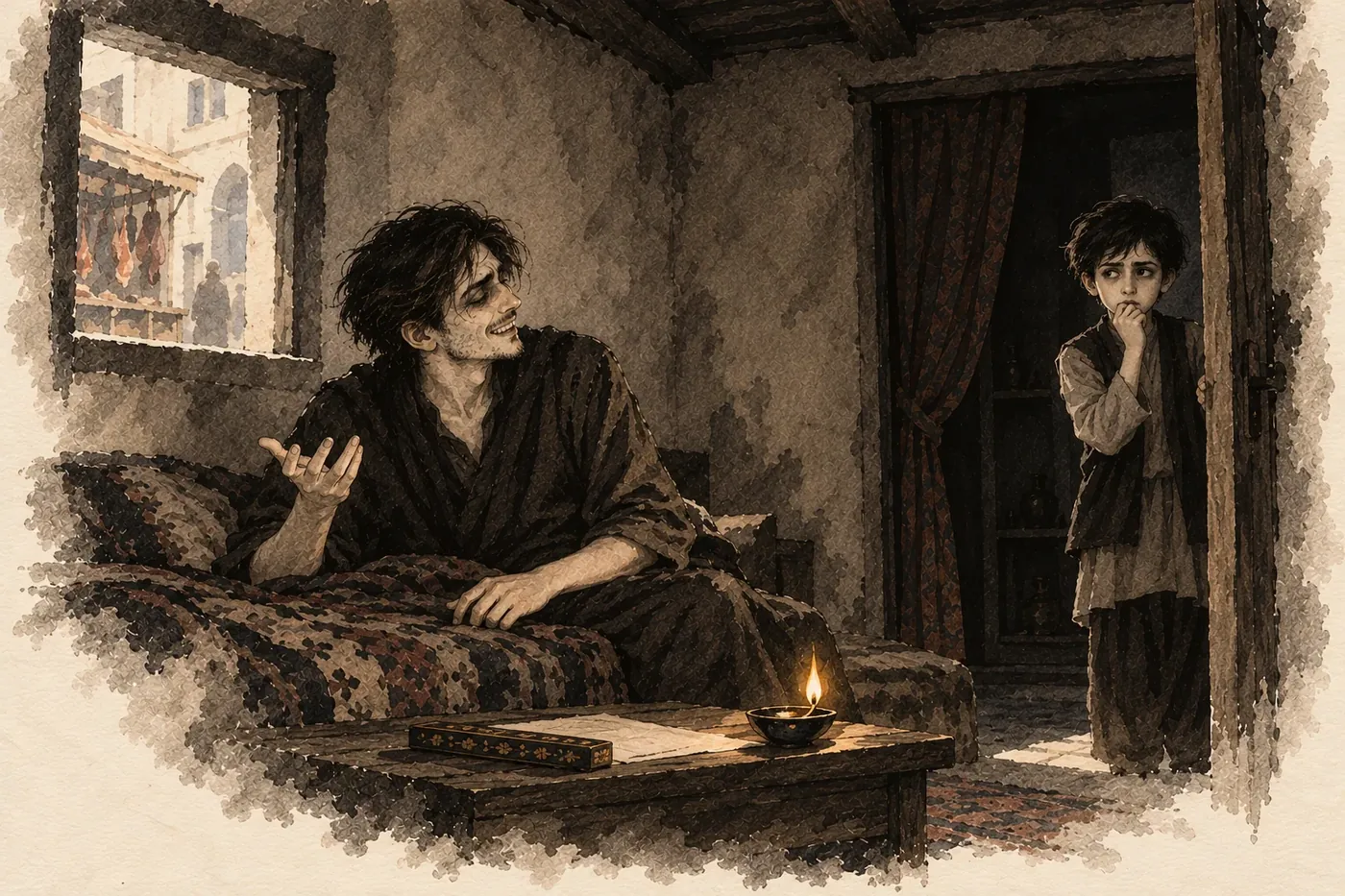
In the afternoon the door of my room opened. Her little brother (the harlot’s little brother) came in, chewing his nail. Anyone who saw them would know at once that they were brother and sister. Such a likeness! A small, narrow mouth, full lips, moist and sensual, heavy, languid eyelids, slanting, astonished eyes, high cheekbones, untidy chestnut hair and a wheat-colored complexion. He looked exactly like the harlot, and he had a piece of her devilish spirit. He had one of those Turkmen faces, unfeeling and soulless, shaped to suit the struggle with life: a face that would allow itself anything in order to go on living. It was as if nature had foreseen it, as if their ancestors had lived long under sun and rain and had fought with nature, and had handed down to them not only their own looks, somewhat changed, but also their endurance, their lust, their greed and their hunger. I knew the taste of his mouth. It was like the taste of the stalk end of a cucumber, bitter and mild. When he came into the room, he looked at me with his astonished Turkmen eyes and said: “Shah-joon says the physician said you’re going to die and we’ll be rid of you. How does a person die, anyway?” I said: “Tell her I’ve been dead a long time.” “Shah-joon said: if I hadn’t lost my baby, the whole house would have been ours.” Without meaning to, I burst out laughing. It was a dry, grating laugh that made your hair stand on end, so that I did not recognize my own voice. The boy ran out of the room. Now I understood why the butcher took such pleasure in wiping the bone-handled knife on the thighs of the sheep! The pleasure of cutting lean meat in which the dead blood, the clotted blood, had gathered like sludge, while from the sheep’s windpipes bloody water dripped onto the ground, drop by drop. The yellow dog in front of the butcher’s shop, and the severed cow’s head lying on the floor of the shop, stared straight ahead with their dim eyes, and so did the heads of all the sheep, with eyes on which the dust of death had settled. They too had seen. They too knew!
This scene on the loop
The lit bead is this scene; red beads are the thread you pick. Gold arcs join it to the scenes it echoes (31, 46). Pick a thread to see where that figure or object comes back; tap any bead to read that scene. The whole loop, with every thread and echo.
This scene in the Persian and literal English, line by line · the scene’s page, with who and what is in it · all scenes